Rent keeps climbing. Groceries cost more than they did two years ago. One car repair can undo a month of careful budgeting. If you’re wondering how to make money in the side without upending your main job, you’re not alone—but most guides on the topic oversell the upside and skip the parts that actually determine whether it works.
This one doesn’t. You’ll get a framework for choosing the right method, honest numbers, expert perspective on where the space is headed, the tax rules nobody explains clearly, and a 30-day plan to get started.
How to Make Money in the Side: The Real Numbers

According to Bankrate’s 2025 survey, 27% of U.S. adults currently have a side hustle—down nine points from 36% the year before. Bankrate senior industry analyst Ted Rossman attributes the drop to a cooling job market and easing inflation, which took some of the financial pressure off. Fewer people need extra income right now—that’s different from side income drying up.
Other surveys tell a less tidy story. Forbes reporting on a 2026 Omnisend survey puts participation closer to 31%, with side hustlers collectively bringing in a substantial sum in extra income each month nationwide.
The gap between surveys usually comes down to how each one defines “side hustle”—treat any single statistic, including the ones here, as a directional signal rather than a precise figure.
Earnings per person vary just as widely. A handful of high performers can pull the reported average well above what a typical person actually makes, so don’t anchor your expectations to headline numbers.
Answer Four Questions Before You Pick Anything.
Most people fail at side income not because the method was bad, but because it didn’t fit their actual life. Before signing up for anything, be honest with yourself about:
- Time. Evenings only? Weekends? A real 5–10 hours a week?
- Existing assets. A car, a spare room, writing or design skills, a closet full of clothes you don’t wear?
- Startup capital. Zero, under $100, or more?
- Risk tolerance. Do you need cash this week, or can you invest time now for a better return later?
The single biggest predictor of whether someone sticks with a side hustle is whether the method matched their real constraints—not how trendy it was.
If You Need Cash Fast
These convert effort into money within days, not months:
- Rideshare and delivery driving (Uber, Lyft, DoorDash, Instacart) — flexible hours, but earnings swing hard based on location, time of day, and tips. Weeknight and weekend evenings tend to pay better.
- Selling what you already own—Poshmark or Depop for clothes, Facebook Marketplace or eBay for household goods. Lowest barrier to entry of anything on this list.
- Dog walking or pet sitting—Rover and Wag connect you with local clients; rates vary widely by city and service type.
- Task-based local gigs—running errands or small jobs through task-matching apps.
Track your mileage and expenses from day one. The IRS allows deductions for legitimate gig-work costs, and reconstructing them in April is painful.
If You’d Rather Work From Home

All you need is a laptop and reliable internet:
- Freelance writing, design, or virtual assistant work (Upwork, Fiverr)
- Online tutoring or language teaching
- Transcription or proofreading
- Digital products or print-on-demand design
The upside is schedule control. The challenge is consistency—clients come and go. People who stick with this tend to start narrow (“blog editing for small SaaS companies,” not “freelance writer”) and expand only once they have repeat clients.
What Experts Say Is Coming Next
Several people who advise side-hustlers professionally are watching the same trend: side income is becoming less of a side note and more of a formal part of how people plan their finances and careers.
Tim Fung, CEO of task-marketplace Airtasker, told Forbes he expects side gigs to become a standard part of household budgeting rather than a stopgap, with skills built through gig work increasingly counted toward career growth.
Separately, business advisor Abigail Wright warned Forbes that most side businesses that fail do so on cash flow, not on a bad idea—fixed costs like software and taxes tend to creep up faster than founders expect, quietly eroding profit before anyone notices.
On which skills hold up, Metaintro co-founder Lacey Kaelani told GOBankingRates that specialized, skill-based work—trades, creative services, pet sitting—is likely to stay in demand even as competition increases, while oversaturated categories like generic content creation and data entry get harder to compete in.
The common thread across these predictions: durable side income now looks more like a small, deliberately run business and less like a quick gig.
If You’re Building for the Long Term
These take longer to pay off but can eventually decouple income from hours worked:
- A small content channel (YouTube, short-form video) built around a skill you already have
- Handmade or curated goods sold online
- Paid online workshops or classes
- Renting underused assets—a spare room, a parking spot, a car through a platform like Turo
Set a defined test period (three months is reasonable) with clear metrics before deciding whether to keep going. Vague “let’s see how it goes” experiments rarely end cleanly.
Protecting Your Day Job
Side income that damages your main job’s performance isn’t a net win. A few habits that keep the two separate:
- Block specific days or windows—”Tuesday and Thursday evenings,” not “whenever”
- Start with one method, not three at once
- Use dead time (commute, lunch) for low-effort tasks like listing items or answering messages
- Set a hard stop so side work doesn’t eat into sleep
If it starts affecting your health or your primary job, scale back immediately. There’s no side income worth losing the main one over.
Taxes: The Part Everyone Skips Until April.
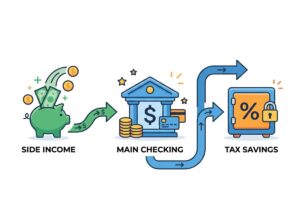
Earning the money is half the job. Keeping it is the other half, and this is where most people lose the most ground unnecessarily.
The IRS requires you to report side income even if you never receive a 1099. If your net self-employment earnings hit $400 or more in a year, you generally need to file a return and may owe self-employment tax on top of ordinary income tax.
A few habits make this painless instead of a scramble:
- Open a separate account—”Side Income – Taxes”—and move 25–30% of every payment into it immediately, before you can spend it
- Track income and expenses as you go, not retroactively
- Keep receipts for mileage, supplies, home-office costs, and platform fees
- If the income is modest, consider increasing withholding at your main job instead of filing quarterly estimated payments—it’s simpler and avoids underpayment penalties
Also factor in platform fees. Marketplaces and gig apps routinely take a cut before you ever see the money, and it’s easy to budget against gross earnings instead of what actually lands in your account.
Mistakes That Quietly Kill Side Income
- Picking a hustle that needs skills or equipment you don’t actually have
- Ignoring taxes until they’re due
- Spending every dollar the week it arrives instead of setting some aside
- Signing up for too many platforms at once and spreading effort too thin
- Believing “passive income” pitches that still require constant upkeep
Your 30-Day Plan

Week 1: Work through the four questions above. Pick one low-barrier method that actually fits your time and assets.
Week 2: Set up accounts or profiles. List your first items, or apply to your first three gigs.
Week 3: Do the work. Log every dollar earned and every hour spent—no estimating.
Week 4: Review the actual numbers. Continue, adjust the offer, or switch methods based on what happened, not on how it felt.
Success at this stage isn’t a polished system—it’s real transactions and real data you can make a decision from.
Conclusion:
Figuring out how to make money in the side isn’t about finding a secret trick. It’s about matching a realistic method to your actual life, learning from what people already doing this well have found, and protecting what you earn once it starts coming in.
Start small, track honestly, and let the numbers—not the hype—tell you what to do next.
Read More on Hustle Lab