Last updated: November 2026. Method note: temperature ranges come from the cited sources, including REDARC's technical explanation and Anker's guidance for one specific model, the SOLIX S2000. Ranges differ between products, so treat the numbers as examples and confirm yours in your manual. Runtime margins and the worked example are our own planning arithmetic, not manufacturer data. We did not lab-test any unit for this article.
Affiliate disclosure: some links on this page may earn Trendifacts a commission at no extra cost to you. It does not change what we recommend.
You can usually run a portable power station in freezing weather, but you should not charge it when the battery itself is below 32°F (0°C). Lithium batteries, including the LiFePO4 type used in most good power stations, can be permanently damaged by charging while frozen, and many units will refuse to charge until they warm up. Expect less runtime than the label suggests in deep cold, keep the station in a heated room if you can, and let a cold unit warm up before you plug it in.
This guide explains why charging and discharging have different limits, why solar charging can fail on a bright winter day, how to store the unit, and gives a worked example of planning a winter outage with a cold battery.
The Short Answer
| Question | Answer |
|---|---|
| Can I use it (discharge) in the cold? | Usually yes, within the rated discharge range |
| Can I charge it below 32°F (0°C)? | Not recommended; many units block it |
| Will runtime be shorter in the cold? | Yes, expect less than the label |
| Where should I store it in winter? | Indoors, in a dry, moderate room |
| Why won't my solar panel charge it in snow? | The battery may be below its charging floor |
| What do I do? | Bring it indoors, warm it to room temperature, then charge |
The Rule Everyone Should Know: Do Not Charge Below 32°F (0°C)
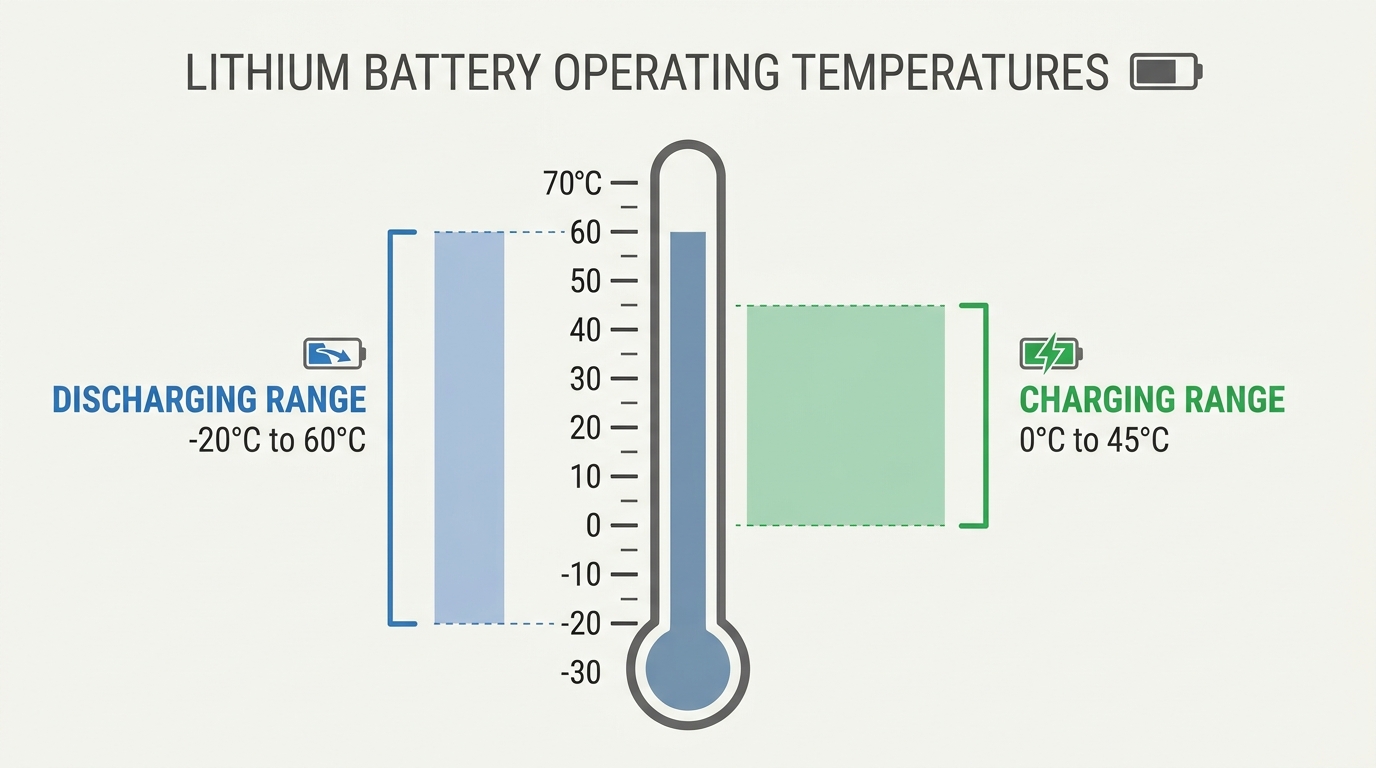
Lithium batteries should not be charged when the battery is below freezing. REDARC's technical explanation says charging below 0°C "must be avoided, as it can cause lithium plating." In plating, lithium ions build up on the surface of the anode instead of being absorbed into it.
The same source says this raises internal resistance and causes capacity loss that is permanent, with each plating event removing more. Our chemistry guide explains why LiFePO4 is popular for power stations, but chemistry does not remove this limit.
That is why manufacturers set a charging temperature floor. For example, Anker's guidance for its SOLIX S2000 lists a charging range of 32°F to 104°F (0°C to 40°C). Other models differ, and some manufacturers advertise special low-temperature charging features, so check your manual rather than assuming.
Discharging in the Cold Is More Forgiving
Running the station is a different matter. REDARC notes that the -30°C to +80°C (-22°F to +176°F) range many manufacturers quote is an operating range for discharging, with an optimal discharge range of -10°C to +50°C (14°F to 122°F), and recommends checking your own battery's specifications. Anker's S2000 page lists a discharge range of -4°F to 104°F (-20°C to 40°C).
| Activity | Example range (Anker S2000) | Notes |
|---|---|---|
| Charging | 32°F to 104°F (0°C to 40°C) | Charging below freezing risks plating |
| Discharging | -4°F to 104°F (-20°C to 40°C) | More tolerant, but runtime shrinks in the cold |
There are two practical catches:
- Capacity feels smaller. Anker explains that cold slows ion movement, so stored energy can be harder to access right away and runtime for items like a refrigerator or router may be shorter. Anker gives no percentage, and neither do we. If your station has been sitting in a freezing garage, expect less runtime than the label suggests and plan with extra margin.
- Charging may slow or stop. Even if discharge works fine, charging a very cold battery is the risk.
Why Solar Charging Can Fail in Winter
This catches people out. You set a panel in the snow on a sunny day and the station shows zero input, even though the sun is bright. Some units refuse to charge when the battery is below its charging floor, which protects the battery. If the battery temperature is below freezing, the problem is not your panel.
Think about what the unit does with the energy. Panels produce power whenever there is light, but the station's management system decides whether the battery may accept it. A station left outside overnight at 15°F may stay below 32°F all day even in sunshine, because the case is cold-soaked.
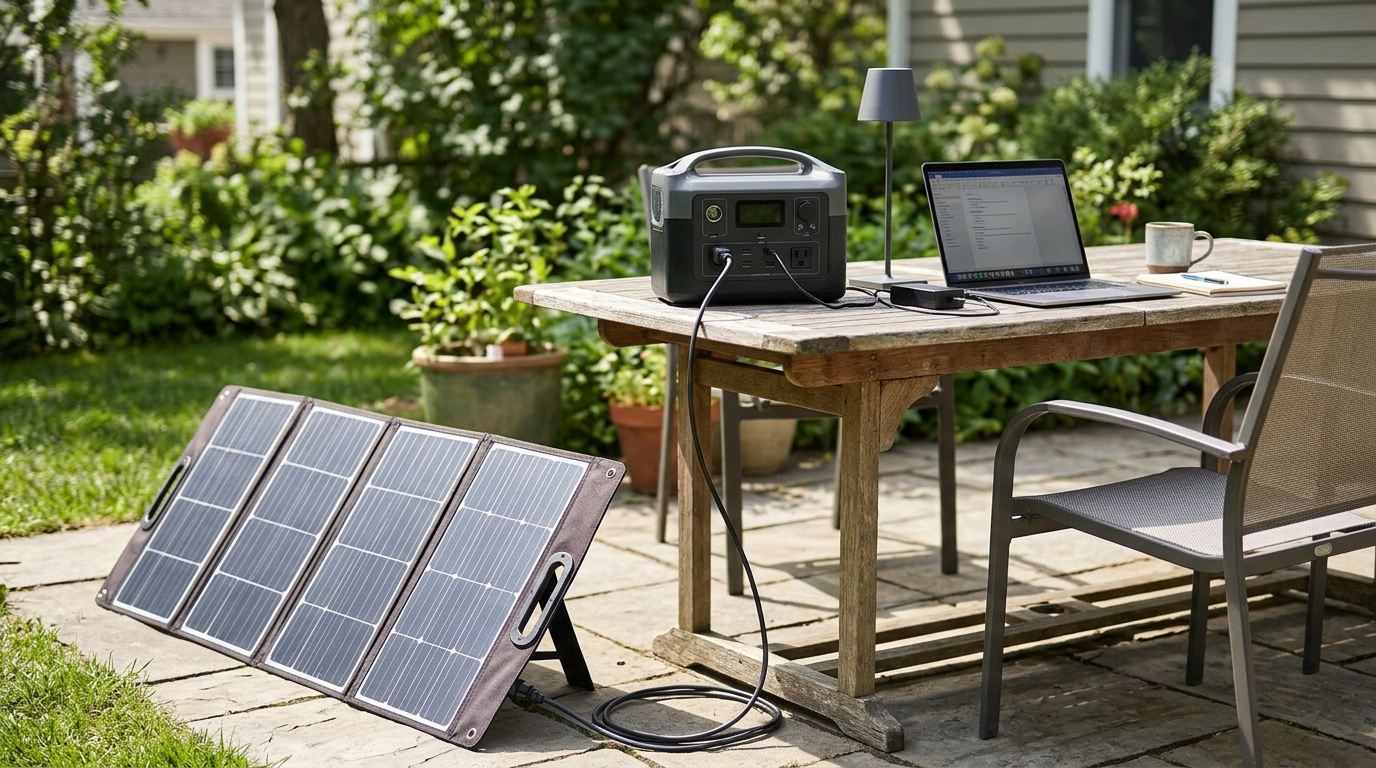
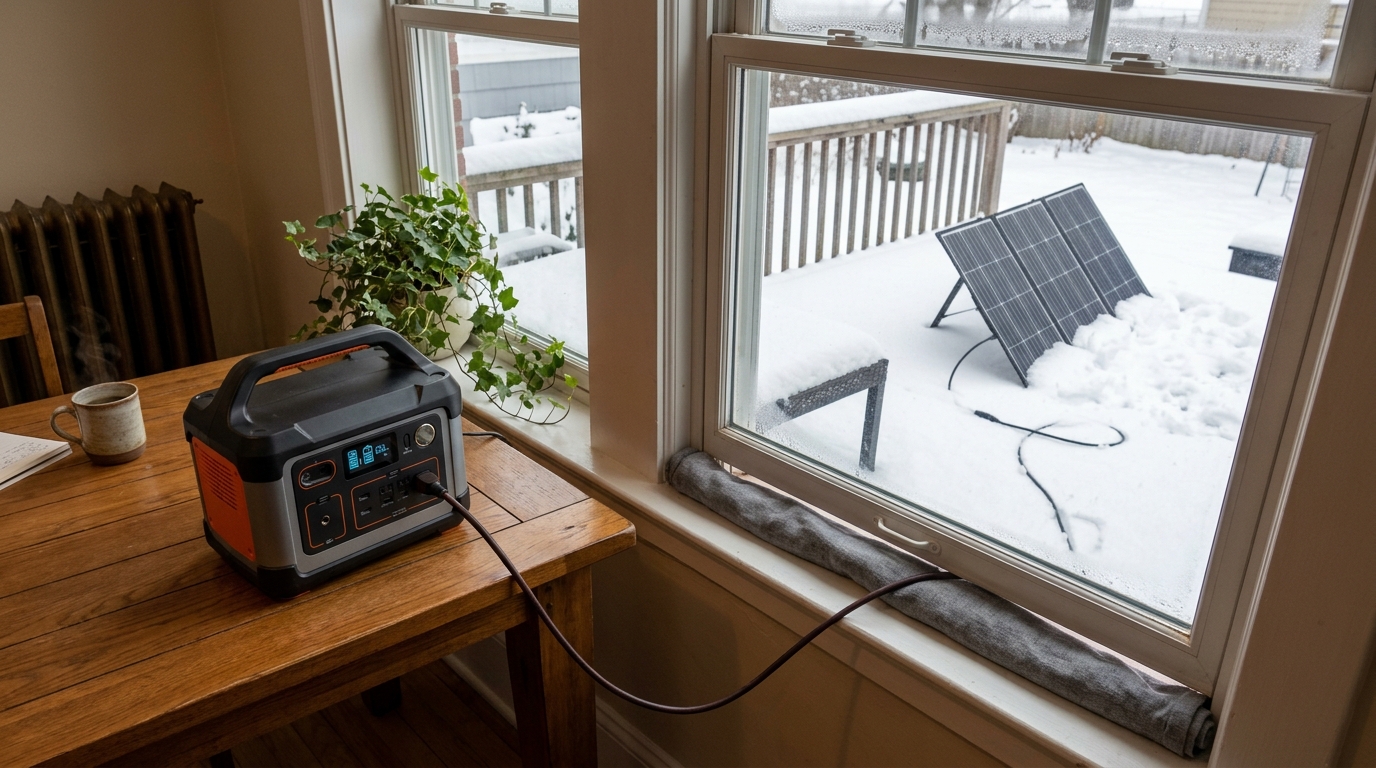
Bring it indoors to warm up first, then charge. If you want to charge while the panels sit outdoors, run the panel cable inside through a door or window gap and keep the station in a heated room.
Our solar panel guide and solar recharge chart cover the winter output you should expect: short days and a low sun angle mean far less energy per day than in summer.
What Happens Inside a Cold Battery
You do not need chemistry to use a power station, but a simple picture helps. A lithium battery works by moving lithium ions between two electrodes through a liquid electrolyte. Cold thickens that electrolyte and slows the ions, which has two effects. When you discharge, the battery can still deliver power but loses some usable capacity and voltage, so the inverter or low-voltage cutoff may trip earlier. When you charge, the ions arrive at the anode faster than they can be absorbed, and some pile up as metallic lithium instead. That is plating, and the damage does not reverse when the battery warms up again.
That is also why a battery that is cold when you plug it in is riskier than one that was merely used in the cold. If it is running a load, the battery warms itself slightly from its own internal resistance, but not reliably enough to count on.
How to Keep Your Station Ready for Winter
- Store it indoors. Anker's advice is to move the unit to a dry, moderate indoor room before winter, out of an unheated garage, basement or cold hallway. A closet in the heated part of your home is ideal.
- Warm it up naturally. If it has been very cold, let it reach room temperature before charging or running heavier loads like a refrigerator or pump. Do not move it straight from cold storage into high-demand use. Skip shortcuts such as pointing a heater at it or using a hair dryer, which can heat the case unevenly.
- Keep it charged. A full station is a ready station. Our hot garage guide covers storage charge levels, and the same principles apply in the cold.
- Do not leave it in a vehicle overnight in freezing weather.
- Check your manual. Specific temperature ranges differ between models, and the numbers above are examples, not a universal rule.
- Test before the first freeze. Plug in a known load and confirm the display, ports and charging all work.
Worked Example: Planning a Cold-Weather Outage
A renter keeps a 1,000Wh station in an unheated garage. A winter storm is forecast, with overnight lows around 15°F. Their needs are a CPAP (45W), a router and modem (18W) and two LED lights (10W), a total of 73W, running 8 hours overnight.
Step 1: Normal runtime. 1,000Wh x 0.85 = 850Wh usable. 73W x 8 hours = 584Wh for one night. That is about 1.45 nights of use in normal conditions.
Step 2: Add a cold margin. Because no source gives one number for every unit, we use a conservative planning assumption of keeping 25% spare. With 850Wh usable, that is about 640Wh planned use. One night at 584Wh still fits, but two nights do not.
Step 3: Move it. The renter brings the station into the bedroom the afternoon before the storm. At room temperature, it can be charged to 100% from the wall while the grid is still up, and it delivers its normal capacity.
Step 4: Plan the recharge. If power stays out, a 200W panel in 4 peak sun hours gives about 600Wh (200W x 4 x 0.75). On a cloudy winter day output may be a fraction of that. The panel is set in a window or a patch of sun, and the station stays indoors, so the battery stays above freezing and keeps accepting the charge.
The takeaway: the same station that would have failed to charge in the garage works as planned indoors, and the whole difference is where it sat before the storm. For the full plan, see our winter storm guide.
What About Outages in Freezing Weather?
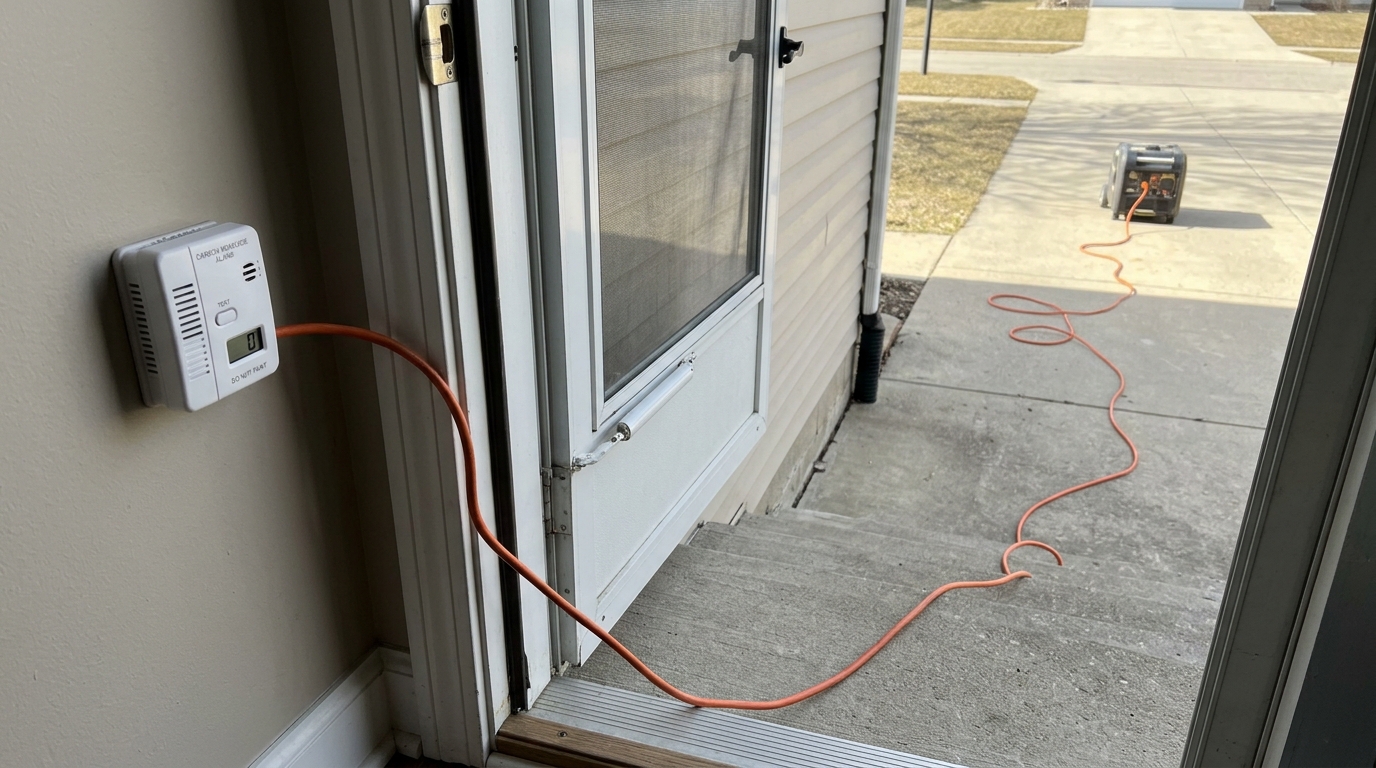
If the power is out and your home is cold, keep the station inside the warmest room you can. Prioritize the loads that matter: a CPAP, communications and low-wattage warmth rather than a space heater, which drains a battery in an hour or two. Our CPAP runtime math shows how much capacity the essentials need, and our sizing chart shows how much to buy for each household profile. Never use a generator, grill or camp stove indoors to stay warm; the U.S. Consumer Product Safety Commission warns about carbon monoxide at its CO information center.
Storing a Power Station Over the Winter
- Choose a dry, moderate indoor spot away from windows, vents and radiators.
- Keep it near the charge level your manual recommends for storage, and top it up on the schedule the manufacturer suggests.
- Do not store it where it can freeze for weeks, or where condensation forms when it is brought into a warm room. Let it warm up in its case or a dry room.
- Keep the vents and ports clear and covered if the manual says so.
FAQ
Can I use a power station outside in the snow? Often yes for discharging, within its rated range, but keep it dry and sheltered, and expect shorter runtime. Check your manual.
Why will my power station not charge in the cold? Many units block charging when the battery is below about 32°F to protect it. Warm it up indoors.
Does cold damage a power station that is not charging? Using it within the rated discharge range is generally fine. Charging while frozen is what causes permanent damage.
Can I charge it from a solar panel in winter? Yes, if the battery is above its charging floor. Keep the station indoors and run the panel cable to it.
How much runtime do I lose in the cold? It depends on the unit and temperature. Manufacturers do not give one number, so plan extra margin, such as 25%.
Is it safe to warm the battery with a heater? Do not point a heater at it. Let it warm to room temperature naturally.
The Bottom Line
Using a power station in the cold is generally fine within its rated discharge range; charging a frozen one is what to avoid, because lithium plating can cause permanent capacity loss. Keep the station indoors, let it warm up before charging, and plan for reduced runtime in deep cold. Always follow the temperature ranges in your own manual.
Temperature ranges in this article are examples from the cited sources, including one specific Anker model. Confirm the limits for your own power station in its manual or on the manufacturer's site.