Everything else in this series has covered power stations in the 300–1,500Wh range — good for a CPAP, a router, a laptop, maybe a fridge for part of a day.
The Delta Pro is a different category entirely: 3,600Wh, expandable to 25,000Wh, and priced closer to a used car down payment than a camping accessory. Here’s whether that jump is actually justified.
Quick Specs
| Spec | Value |
|---|---|
| Capacity | 3,600 Wh (expandable up to 25 kWh with add-on batteries) |
| AC Output | 3,600W continuous (7,200W surge, or with a second paired unit) |
| Battery Chemistry | LiFePO4 |
| Cycle Life | 3,000–6,500 cycles depending on discharge depth (sources vary) |
| AC Recharge Time | ~2.7 hours, 0–100% |
| Max Solar Input | 1,600W |
| Weight | 99 lbs |
| Price | MSRP ~$3,699, commonly discounted to $1,599–2,699 |
What This Actually Runs, Using Real Math
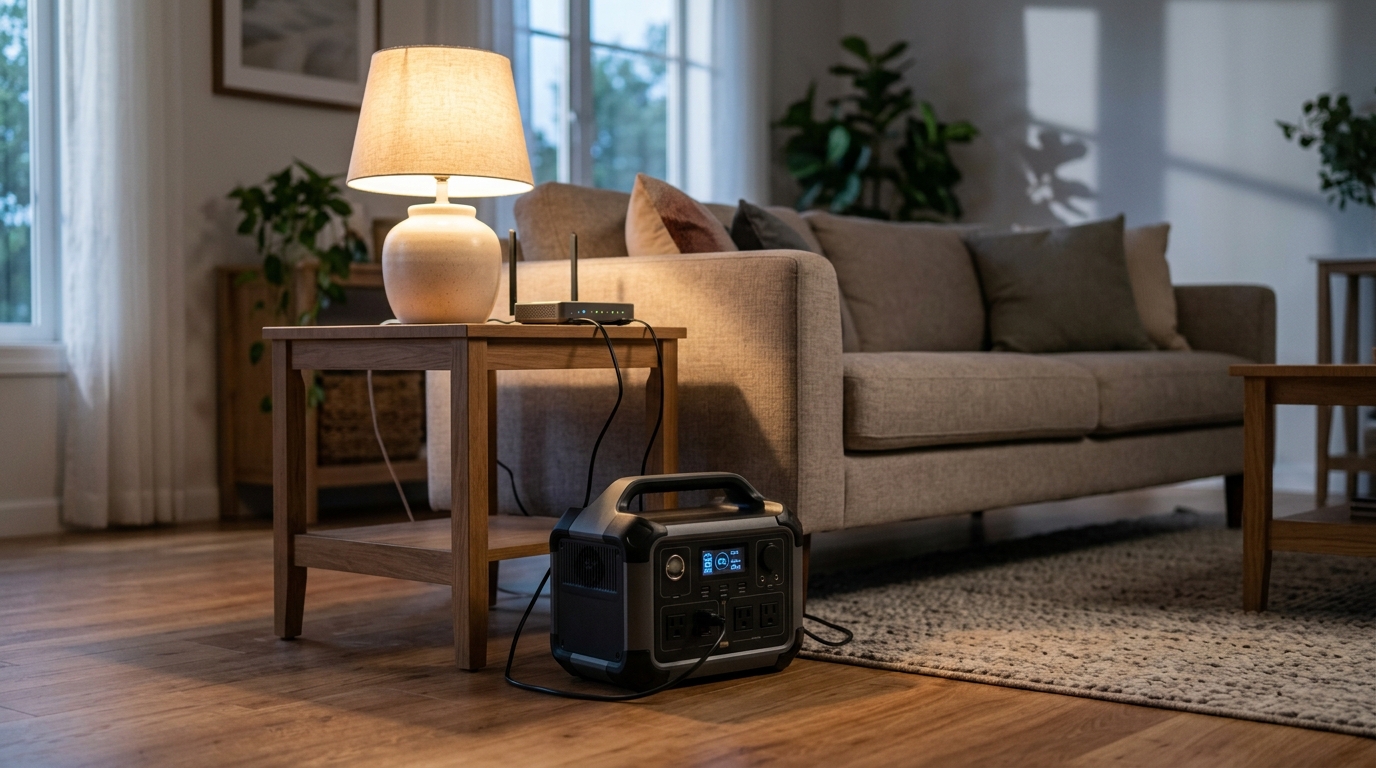
We tested the same “everything at once” scenario we’ve used throughout this series — a fridge (120W), some LED lighting (15W), and device charging (30W), for 165W combined.
At 3,600 Wh × 0.85 inverter efficiency ÷ 165 W, that works out to roughly 18.5 hours — comfortably a full day-and-night on a single charge, which is a different tier of coverage than anything else we’ve reviewed on this site.
Scaled to our established sizing chart profiles: a Delta Pro covers Profile D (full household including a fridge) for close to a full day per charge—something even a large 3,000 Wh unit in our original sizing chart fell short of.
If your outage-prep plan has consistently run into “even the big power stations don’t quite cover a fridge for a full day,” this is the capacity tier where that problem actually gets solved.
The Recharge Speed Is the Real Selling Point
At 2.7 hours for a full AC recharge—using EcoFlow’s 6,500W MultiCharge feature—the Delta Pro recovers from empty faster than some much smaller units in this series took to charge to just 80%.
That matters more than it sounds: in a rolling-blackout scenario, being able to fully top off during a short window of restored power is a genuinely different experience than needing most of a day to recharge.
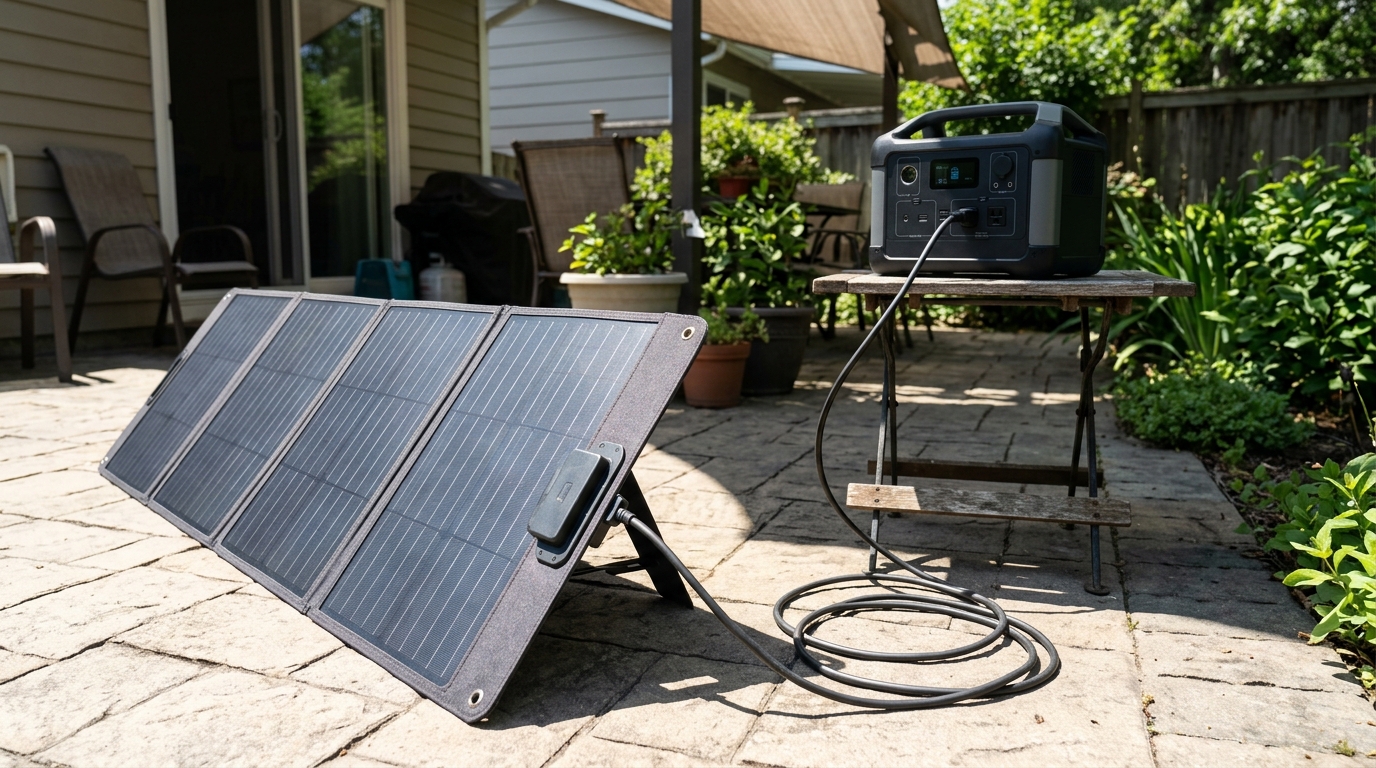
Solar recharging is similarly strong on paper—1,600 W max input, the highest of any single EcoFlow unit, theoretically recharging the full 3,600 Wh in about 2.5 hours of peak sun with the right panel setup.
In practice, apply the same real-world derating we covered in our solar recharge time guide — expect that “2.5 hours” to more realistically land in the 3–6 hour range once you account for panel angle, cloud cover, and imperfect conditions, still a strong result at this capacity.
Expandability: The Feature That Changes the Buying Calculus
The Delta Pro’s expansion path—up to 25kWh with add-on batteries—is worth weighing against the cost math we laid out in our expandable battery breakdown.
At this price tier, the expansion premium is a smaller percentage of the total cost than it is on a budget unit, which makes the “buy the base unit now, grow into more capacity later” strategy more reasonable here than it typically is for smaller stations.
Is It Worth the Price?
Here’s the honest framing: this isn’t really competing with the 1,000–1,500Wh units elsewhere in this series — it’s a different product category, closer to a genuine whole-home backup system than a portable emergency battery.
For a household that’s outgrown what a single mid-range power station can cover — particularly anyone who’s read our fridge or sizing chart articles and landed on “I need more than this” — the Delta Pro is a legitimate answer, not an overpriced version of the same thing.
Skip it if: your needs fit within Profile A, B, or C from our sizing chart (communication, medical devices, or light comfort use) — you’d be paying for capacity and output you’ll rarely use, and a unit in the EcoFlow vs Jackery vs Bluetti comparison range covers those cases at a fraction of the cost.
Consider it if: a full-size fridge, multiple simultaneous devices, or genuine multi-day household coverage is the actual goal — and the near-3-hour recharge speed matters for your specific outage pattern (frequent short outages versus rare long ones).
Pricing on this unit swings dramatically with sales—we found listings ranging from roughly $1,599 to the full $3,699 MSRP. Never buy at list price without checking for a current promotion first.