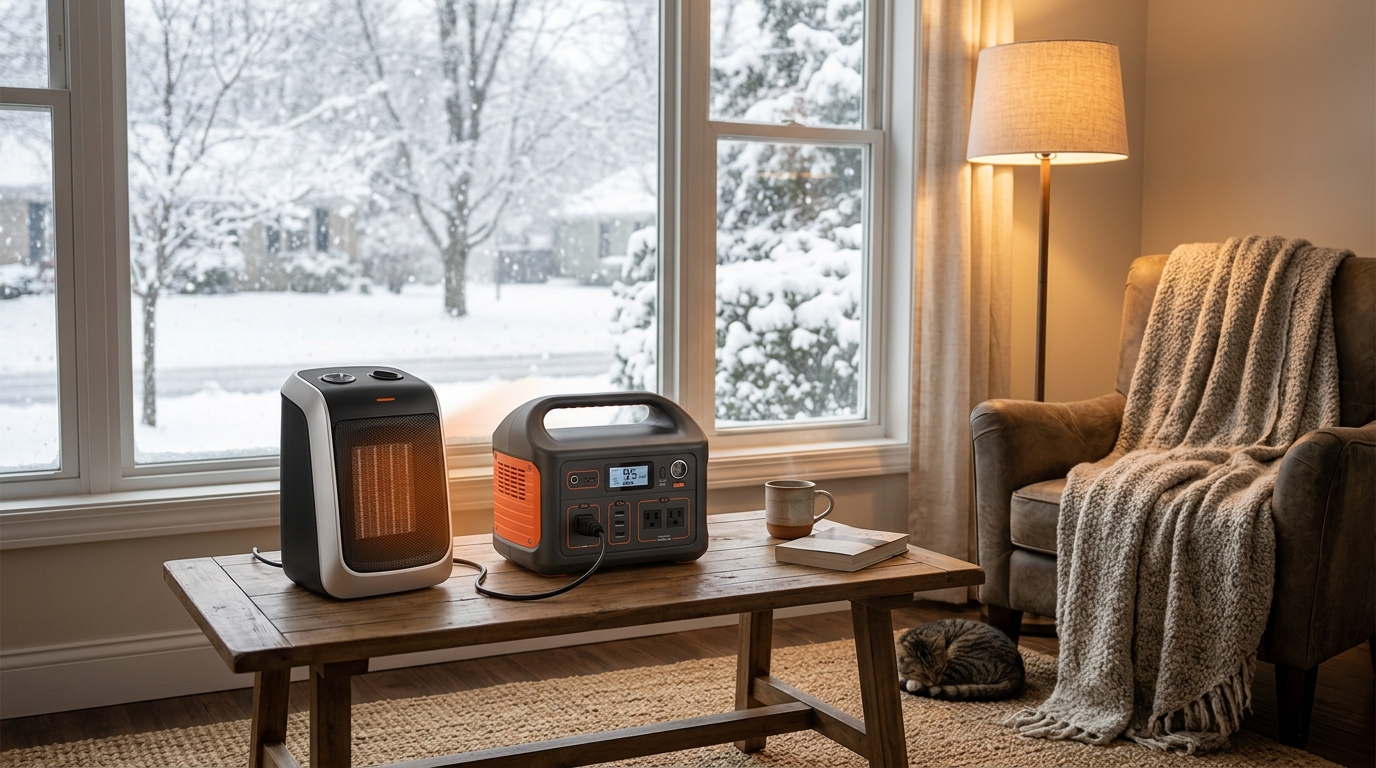
Winter outages come with a complication summer ones don’t: the cold doesn’t just threaten your comfort, it threatens your equipment too. A real field test during a December ice storm in Northern Michigan — 18 hours without power at 28°F, with cell towers down and 2,000+ homes dark — is a useful reminder that winter prep needs a different checklist than the rest of this series, not just a colder version of the same one.
The Cold-Weather Twist: Your Battery Needs Protecting Too
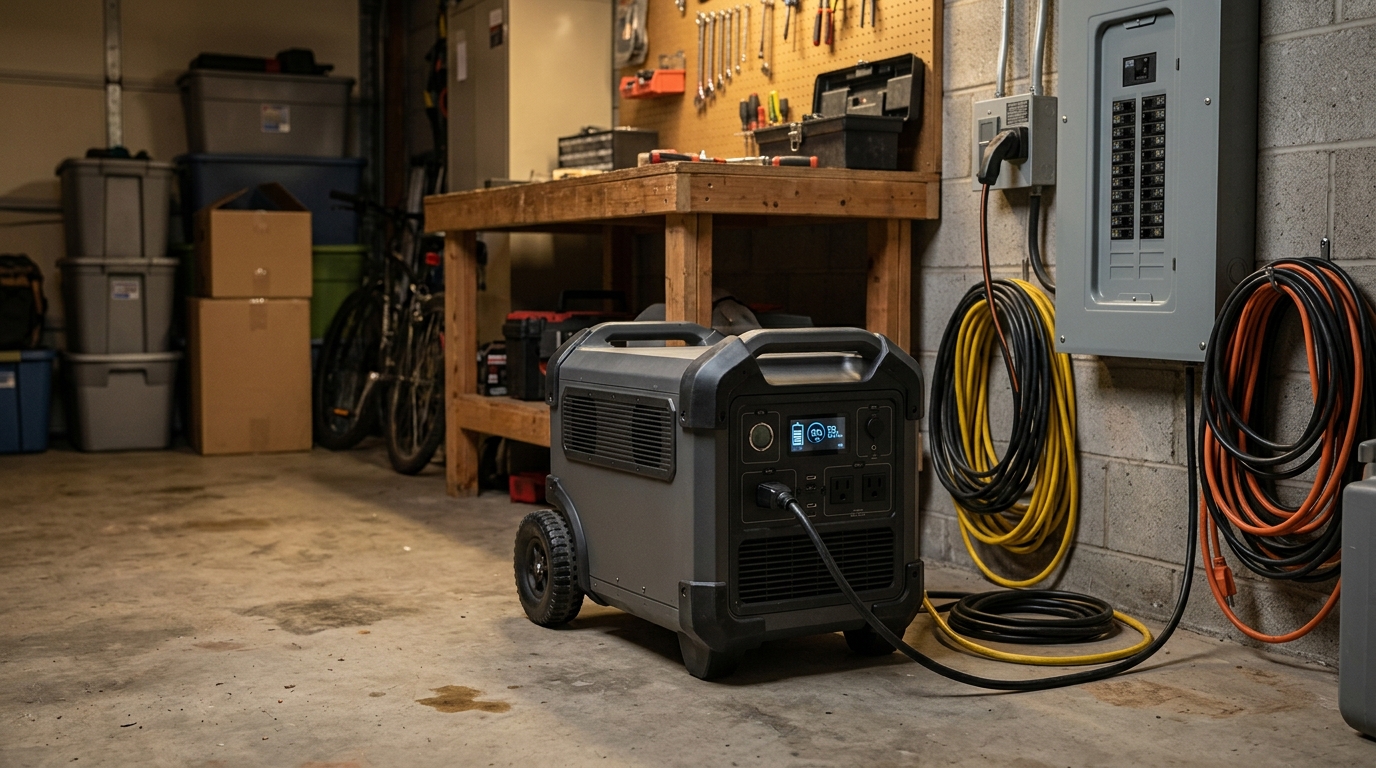
We covered this from the chemistry side in our LiFePO4 vs lithium-ion breakdown, but it’s worth restating plainly here: cold temperatures reduce your power station’s usable capacity, and charging below freezing can permanently damage the battery. If you’re storing your power station in an unheated garage or shed through winter, bring it inside — ideally somewhere in the 50–80°F range — well before a storm is forecast, not during it. A power station that’s been sitting at 20°F won’t deliver its full rated capacity even if the battery itself is undamaged.
What to Prioritize on Limited Power
Winter outages tempt people to run a space heater off their power station, and the math on that is rough — a typical space heater draws 750–1,500W, which would drain even a large power station in well under an hour. A far more efficient option: an electric blanket, which typically draws only 60–100W — roughly the same load range as a CPAP machine we calculated earlier in this series. That’s the difference between a few hours of warmth and potentially a full night or more from the same battery.
A few other ways field-tested winter prep prioritizes limited capacity:
- Save capacity for critical loads, not lighting. Battery-powered flashlights and headlamps cost you nothing from the power station — reserve that capacity for medical devices, communication, and warmth instead.
- Don’t run cooking appliances off the power station if you can avoid it. A propane camp stove (used safely, with ventilation) handles cooking without touching your limited battery capacity — the same logic as prioritizing your monitor and router over your laptop in our home office breakdown, just applied to a different set of devices.
- Use cold-rated extension cords. Standard indoor cords can become brittle and crack in freezing temperatures — worth checking before, not during, an outage.
Non-Power Cold Safety Worth Knowing
Some of the most damaging parts of a winter outage have nothing to do with your power station at all:
- Let faucets drip. Moving water is far less likely to freeze than standing water in a pipe.
- Insulate exposed pipes in unheated areas like a garage or crawl space, and open cabinet doors under sinks on exterior walls to let warm air reach the plumbing.
- Know how to shut off your main water valve. A frozen pipe that bursts can release significant water damage fast — even a small crack can spray a large volume of water per day.
- Never attempt to thaw a pipe with an open flame. Warm air from a hair dryer, or warm towels, are the safe methods.
- Never run a generator indoors, in a garage, or near windows and doors. This applies whether or not you’re renting — carbon monoxide risk doesn’t change based on homeownership.
Before the Storm Checklist
- Bring your power station indoors to a warm space if it’s been stored somewhere unheated
- Fully charge the power station and all devices while grid power is still available
- Set your refrigerator and freezer to their coldest setting in advance
- Check flashlights, battery-powered or hand-crank radios, and stock extra batteries
- Confirm you have a warm layer — electric blanket, extra blankets — that doesn’t depend on a space heater
- Let faucets know to drip and confirm you know your main water shutoff location
The Bottom Line
Winter power outages add a layer most guides skip: protecting your equipment from the same cold you’re trying to survive. Keep the power station itself warm when possible, prioritize genuinely efficient heat sources like an electric blanket over a power-hungry space heater, and don’t let non-electrical risks like frozen pipes go unaddressed just because your attention is on keeping the lights on. The devices in this series’ earlier math — CPAP, wifi, a laptop — still apply the same way in winter; the new variable is the cold itself working against both you and your equipment at the same time.