Last updated: November 2026. Method note: outage statistics come from the cited sources, runtimes are our own arithmetic with an 85% usable-capacity assumption, and storm terms follow National Hurricane Center definitions. This is general preparedness information, not emergency-services or medical advice. Always follow your local officials' evacuation orders.
Affiliate disclosure: some links on this page may earn Trendifacts a commission at no extra cost to you. It does not change what we recommend.
For a hurricane, plan for at least 72 hours without power and have a way to recharge, because real hurricane outages often last far longer. In 2024, Hurricane Helene left parts of North Carolina without power for more than 14 days and Hurricane Milton knocked out power to about 3.4 million Florida customers at landfall, according to PowerOutage.us.
The U.S. Energy Information Administration reports that major events, including Hurricanes Beryl, Helene and Milton, accounted for about 80% of the roughly 11 hours the average customer spent without power in 2024.
For apartment dwellers, that means a portable power station sized for essentials, a solar recharge plan, no generators, and a clear decision about when to leave.
This guide gives you a timeline from before the season through recovery, a power budget for 3 and 14 days, apartment-specific hazards, flood and safety rules, and a printable checklist.
The Short Answer
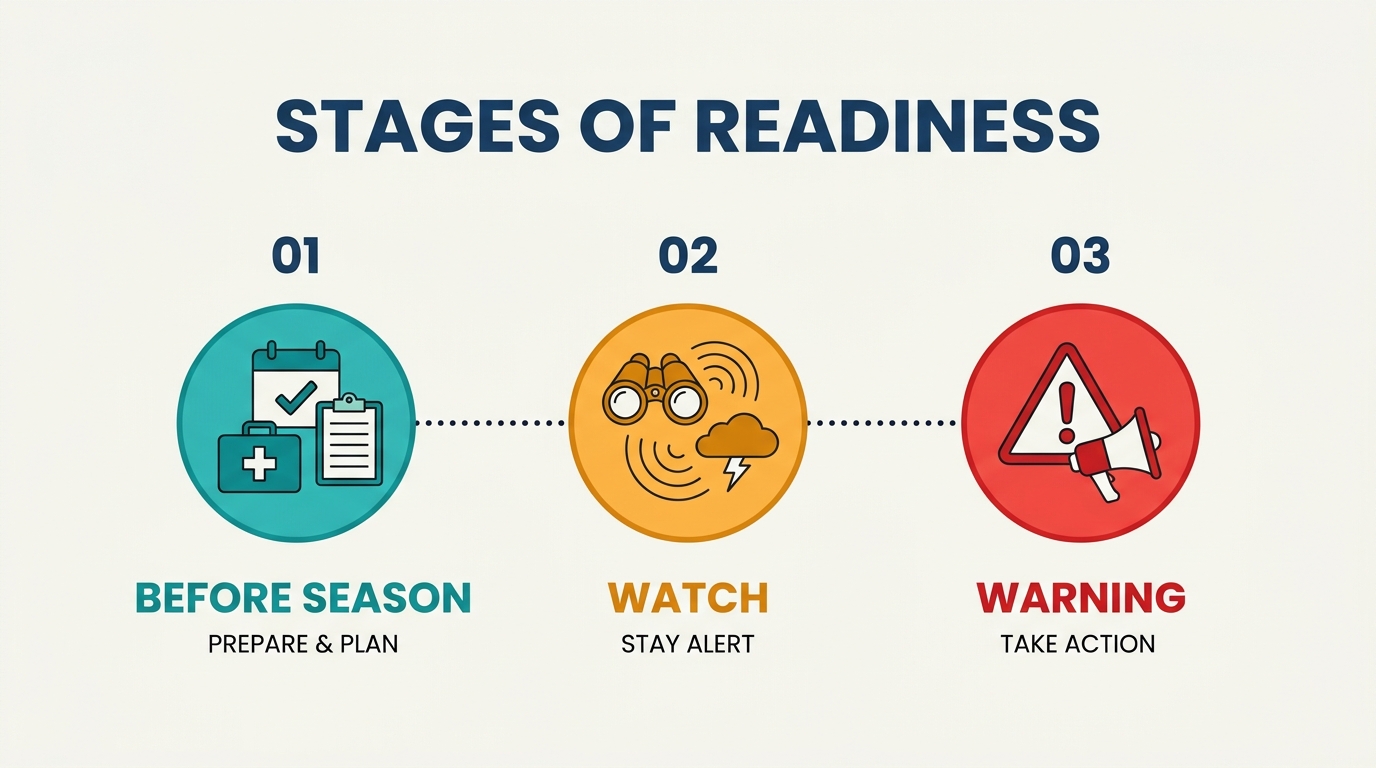
| Stage | What to do |
|---|---|
| Before the season (by June 1) | Size, buy and test your power station, panels and cables |
| Hurricane Watch | Charge everything, pre-cool the fridge, stage supplies |
| Hurricane Warning | Finish up; decide whether to evacuate; stay put only if safe |
| During the storm | Keep doors closed, ration power, stay away from windows |
| After | Beware downed lines, flood water and carbon monoxide; recharge by day |
The Real Scale of Hurricane Outages
Typical outages are short, but hurricanes are the exception. EIA's analysis of 2024 found the average U.S. customer was without power for about 11 hours, nearly twice the roughly 5 to 6 hours of the previous decade, with major events accounting for nearly 9 of those hours and the other causes only about 2 (EIA Today in Energy).
Averages hide the pain: a customer in the path of Helene or Milton could be dark for days or weeks. Plan around the real range, not the best case.
Hurricane Timeline and What Each Stage Means
The Atlantic hurricane season runs June 1 through November 30, with activity usually peaking from mid-August through October. The National Hurricane Center uses two key terms. A Hurricane Watch means hurricane conditions are possible in the area, generally within about 48 hours.
A Hurricane Warning means hurricane conditions are expected, generally within about 36 hours. Warnings are the point at which preparation should already be finished, because winds and conditions can turn dangerous before the storm's center arrives. Check the NHC or your local National Weather Service office for the exact definitions and current alerts.
Before the Season Starts
- Size your power station. Use our sizing chart to match a unit to what you must run.
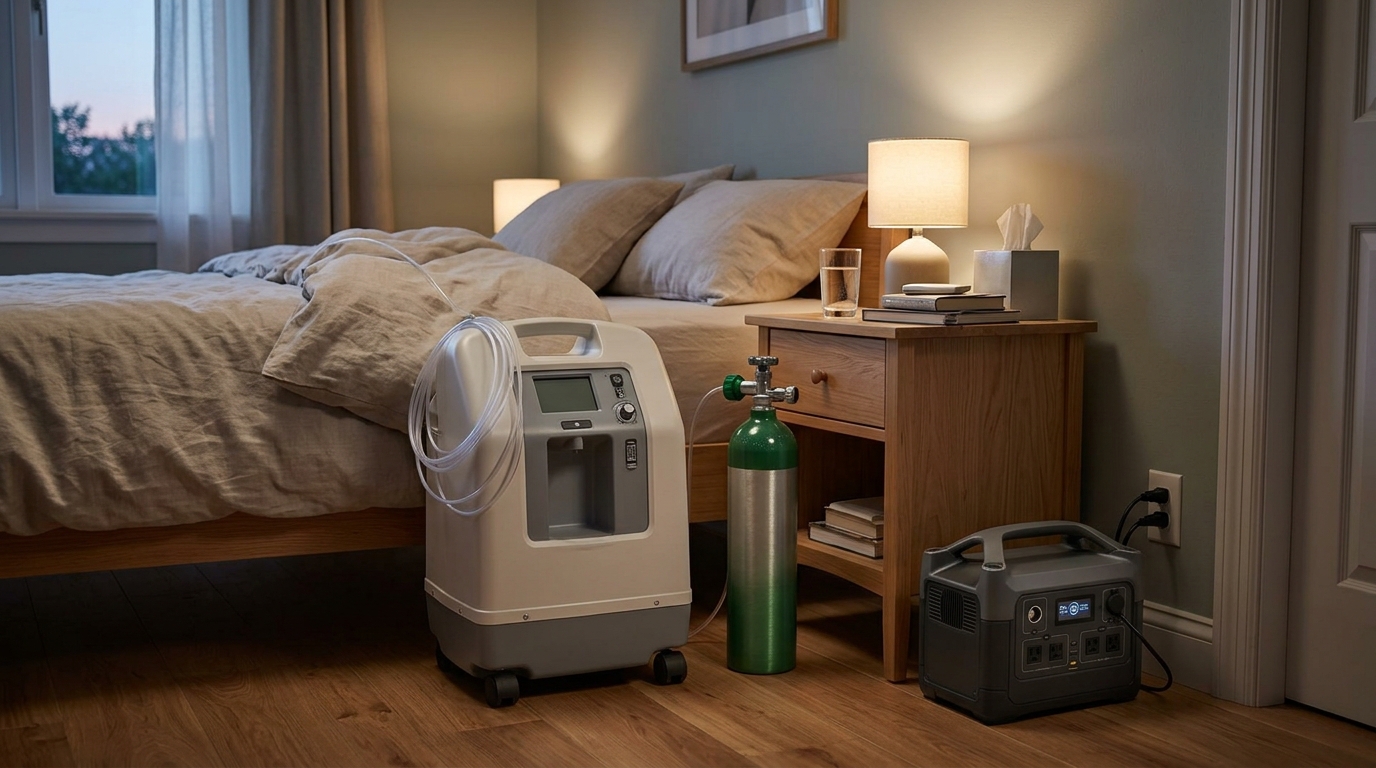
- Test everything once. Run your CPAP, router and fridge from the station for a full night, as in our CPAP guide.
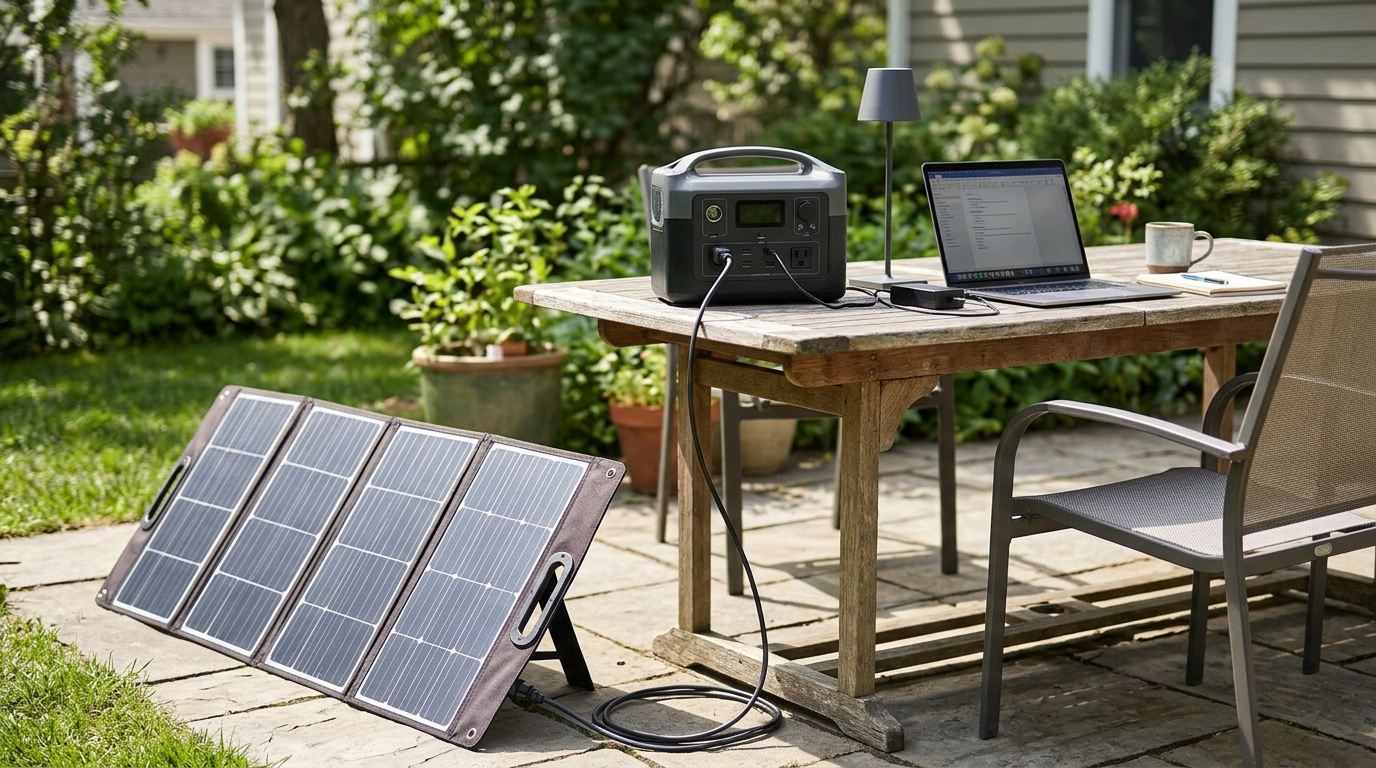
- Check solar gear. If solar is part of your plan, unfold the panels, confirm connectors and cables, and see what watts they actually produce. Our solar recharge chart explains realistic output, and our balcony solar guide covers renter-friendly options.
- Manage the battery. Keep the unit cool and at a sensible charge level in the off-season, then fully charged during storm season. See our storage guide.
- Write a plan. Decide where you would go, what you would take, and who you would check on.
When a Storm Enters the Forecast (Watch Stage)
- Charge the power station to 100% while grid power is available. Also charge phones, power banks, laptops and medical device batteries.
- Pre-cool the fridge and freezer. Set them colder, and fill empty space with water bottles. A closed fridge keeps food safe for only about 4 hours without power, a full freezer about 48 hours, per USDA and CDC guidance summarized in our food safety guide.
- Prepare medication cooling. If you use refrigerated medicine, set up a cooler and ice packs now, before ice runs out. See keeping medication cold.
- Fill containers with water, and keep bottled water. Water pressure in many apartment buildings depends on electric pumps.
- Withdraw some cash. Card readers and ATMs fail in outages.
- Get your documents together in a waterproof bag.
- Move valuables up, and away from windows.
Once a Hurricane Warning Is Issued
- Finish your preparations; this is not the time to start.
- Stage the power station and panels somewhere accessible, dry and protected from wind and flooding. Not on an exposed balcony, and not on the floor of a ground-level unit that might flood.
- Know your evacuation route and zone. If you live above the ground floor and elevators may fail, plan for stairs.
- If evacuation is ordered for your zone, leave. A power station is for riding out an outage safely at home. It is not a reason to ignore an evacuation order.
- If you have a medical need that requires reliable power, talk to your provider and local emergency management about special-needs registries and shelters before the storm.
During the Storm
- Keep fridge and freezer doors closed.
- Stay away from windows.
- Ration the power station: medical devices first, communication second, then warmth or cooling, then everything else.
- Do not run a generator, grill or camp stove inside. The CPSC warns about carbon monoxide.
- Use flashlights, not candles.
- Keep a battery-powered or hand-crank radio nearby.
After the Storm
- Stay away from downed power lines, and report them.
- Avoid flood water. It can be electrified or contaminated. Never use a power station or any electrical device while standing in or near water.
- Be careful with generators near you. Most storm carbon monoxide poisonings come from generators running too close to a building.
- Check your food. Discard perishables that were above 40°F for more than about 2 hours. When in doubt, throw it out.
- Follow local water advisories. Boil or use bottled water if told to.
- Recharge during the day, and do not wait until the battery is empty.
- Check on neighbors, especially older adults and people with medical needs.
How Much Power Do You Need for 3 Days and 14 Days?
We use the household profiles from our sizing chart. Daily energy: A (wifi and phone) about 447Wh, B (adds CPAP) about 927Wh, C (adds laptop and lights) about 1,287Wh, D (adds a full-size fridge) about 2,787Wh. Rated capacity needed is the energy divided by 0.85.
| Profile | Daily energy | Rated Wh for 3 days, no recharge | Rated Wh for 14 days, no recharge |
|---|---|---|---|
| A: wifi and phone | about 447Wh | about 1,580Wh | about 7,360Wh |
| B: plus CPAP | about 927Wh | about 3,270Wh | about 15,270Wh |
| C: plus laptop, lights | about 1,287Wh | about 4,540Wh | about 21,200Wh |
| D: plus fridge | about 2,787Wh | about 9,840Wh | about 45,900Wh |
No portable battery covers 14 days of anything but the lightest load, which is why recharging is the plan. With solar, a 400W array yields about 1,500Wh a day in good sun (400W x 5 sun hours x 0.75), which can nearly cover Profile B on its own. In storm conditions with clouds, output may be a fraction of that, as we explain in the solar guide.
So have a layered plan: a power station for essentials, solar for recharging, rationing for the rest, and a decision to relocate if conditions become unsafe.
For heavier needs, see our guides to what a 4,000Wh station can run and solar panels for a large station. For heat, remember that a power station is a poor way to cool an apartment. Fans use 20 to 100W and a window AC averages a few hundred watts; see our window AC guide.
A Worked Example: A One-Bedroom Renter Riding Out a Storm
Take a renter on the third floor with a router and modem, a CPAP, a laptop and a few lights, which is Profile C at about 1,287Wh a day. They own a 1,500Wh station (about 1,275Wh usable) and a 400W foldable panel. Day one uses about 1,287Wh, leaving the station nearly empty by the end of the first full day with no recharge.
If the panel can be placed in sun for even four hours, it adds about 1,200Wh (400W x 4 hours x 0.75), which roughly refills the day's use. In a cloudy post-storm week, that output might fall to a fifth of that, so the household trims the laptop, turns off the CPAP humidifier with their clinician's approval, and runs the router only part of the day.
The plan works on paper only because they tested the setup before the season and decided in advance what to cut.
Apartment-Specific Hazards
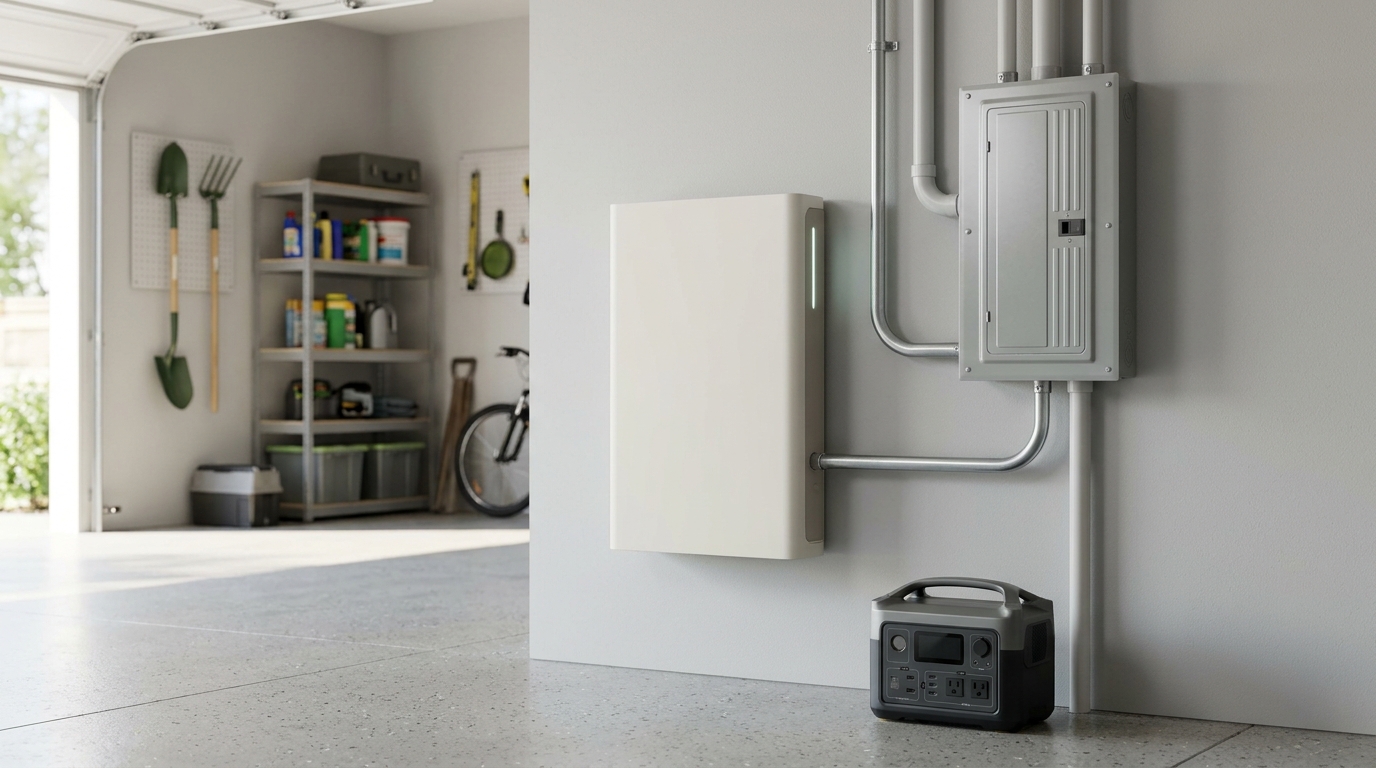
- No generators, even on a balcony. The CPSC says portable generators belong outdoors, at least 20 feet from the building, and an apartment balcony does not qualify.
- Elevators stop. Plan stairs for evacuation and supplies.
- Water and garage doors depend on power. See our renter checklist.
- Windows. Do not tape windows; it does not prevent breakage. Move away from them instead.
- Shared spaces. Hallways and stairwells may be dark; keep a headlamp.
- Building rules. Check your lease about balcony equipment, and secure anything that wind can launch.
What to Keep in a Go-Bag
- Phone chargers and a power bank
- A small power station if you evacuate by car, with its cables
- Medications and prescriptions, with a cooler if refrigerated
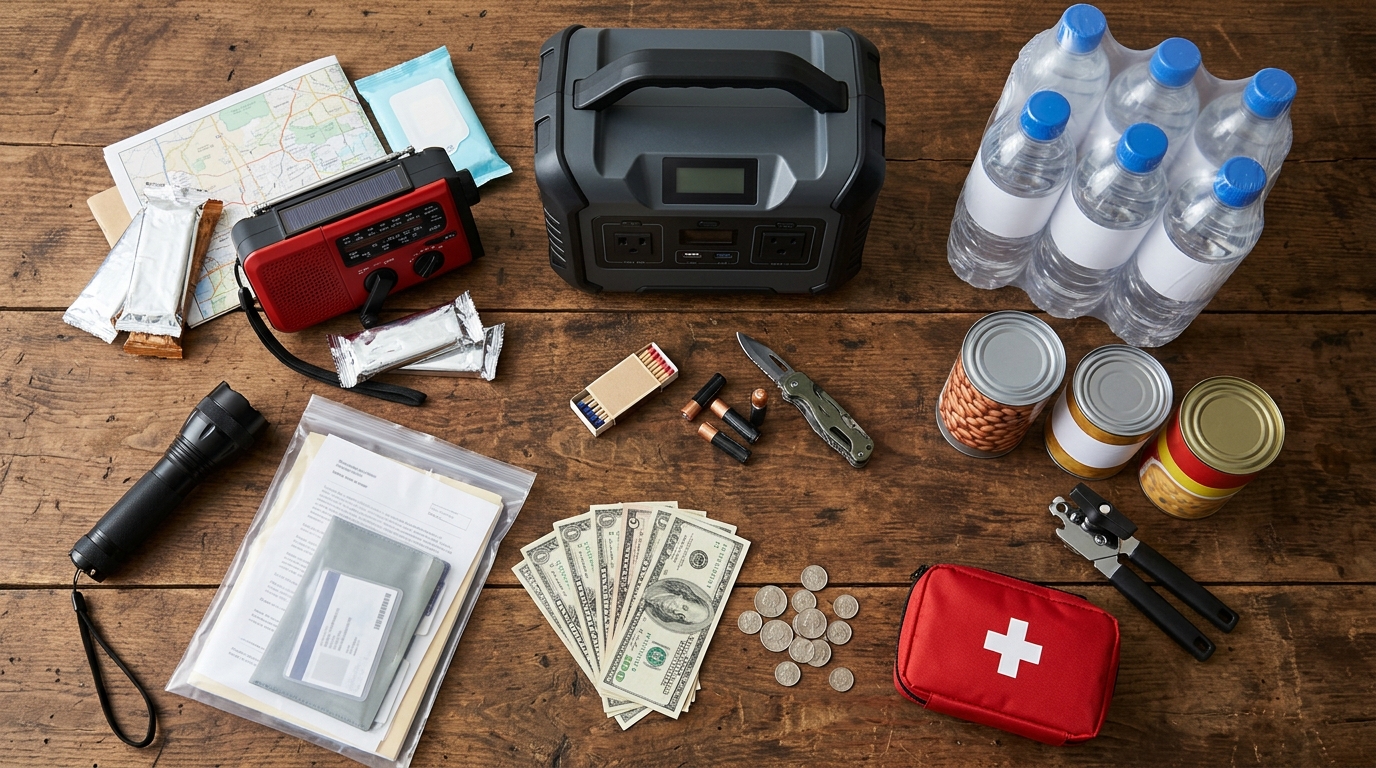
- Documents, cash, a radio and a flashlight
- Water and non-perishable food
- Pet supplies
FAQ
How long should I plan to be without power after a hurricane?
At least 72 hours, and be ready for longer. Helene left some areas without power for more than 14 days.
Can I use a generator on my apartment balcony?
No. Generators belong outdoors, at least 20 feet from buildings, with exhaust directed away.
Is a power station enough for a hurricane?
For essentials for a few days, yes, especially with solar. It will not run a whole apartment for two weeks.
When should I charge my power station?
At the Watch stage, while grid power is available.
Should I stay or evacuate?
If you are ordered to evacuate, go. A power station does not change that.
What do I do about refrigerated medicine?
Use a cooler with ice and a thermometer, and follow our medication guide.
The Bottom Line
Hurricane prep uses the same power station, sizing math and solar strategy as any outage plan, but the stakes and the timeline are bigger. Have everything charged and staged before the Watch becomes a Warning, plan for days rather than hours, and treat evacuation orders as final.
Statistics and alert definitions come from the cited sources and change over time. Check your local emergency management office for current guidance.