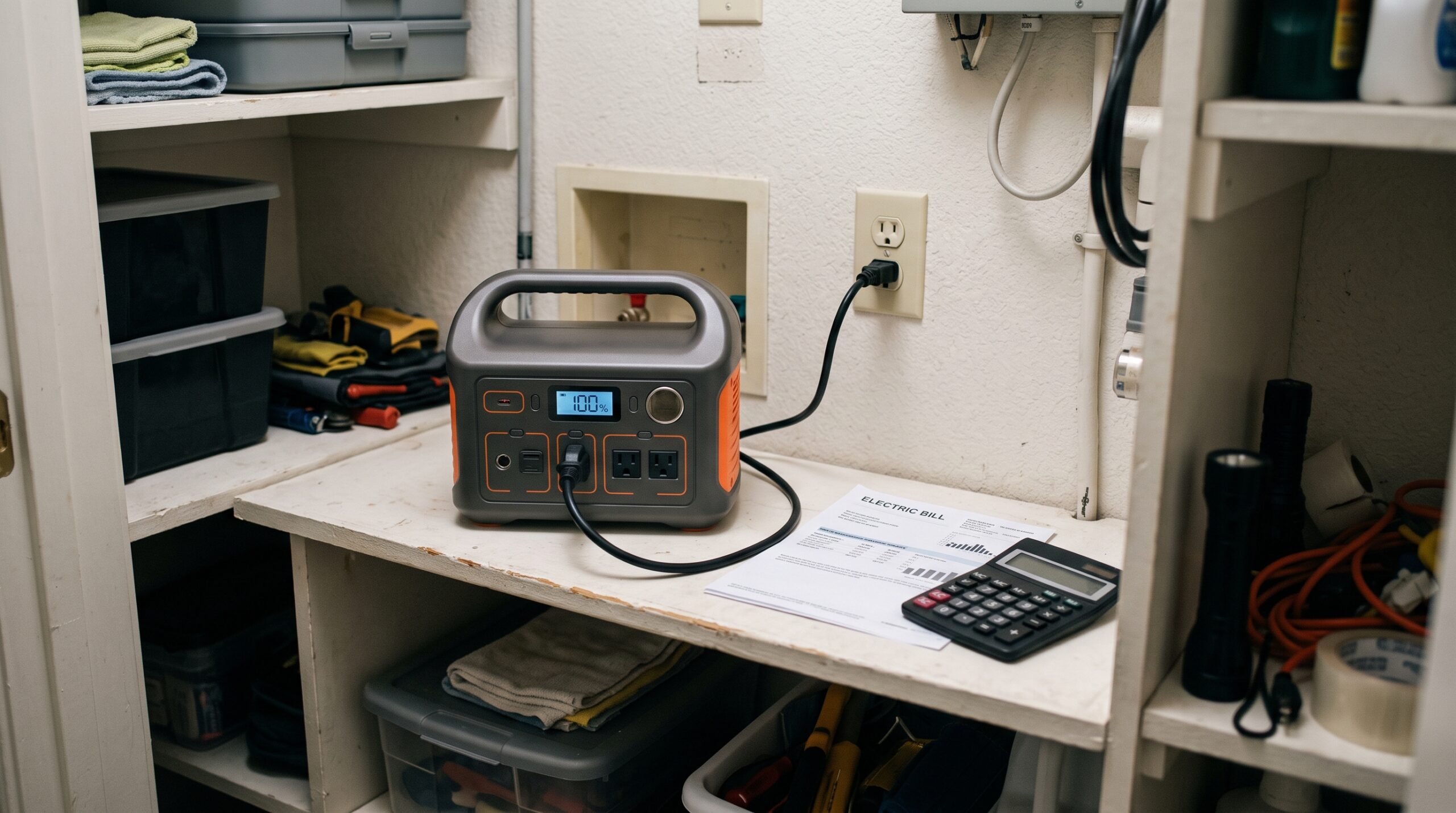
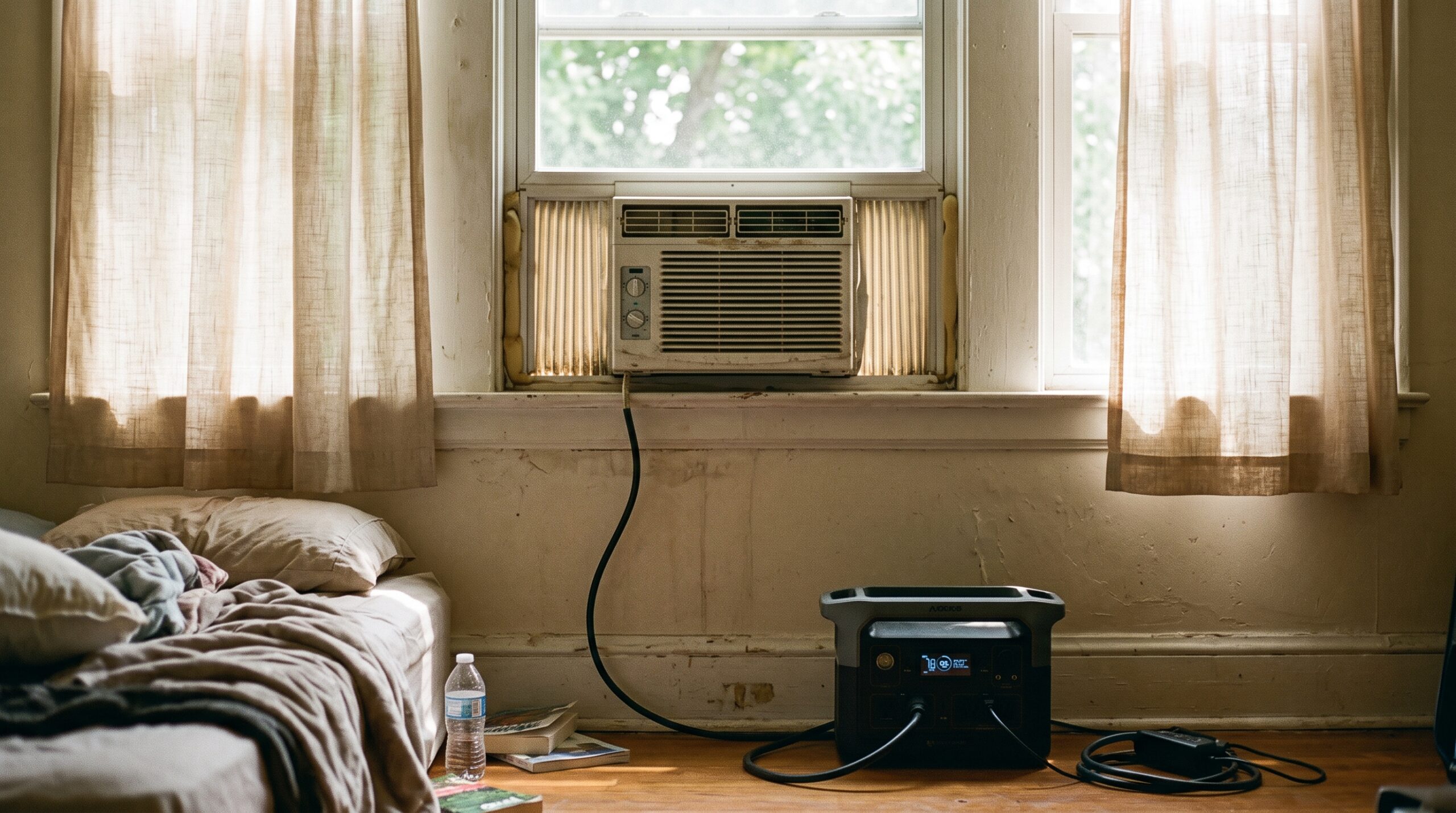
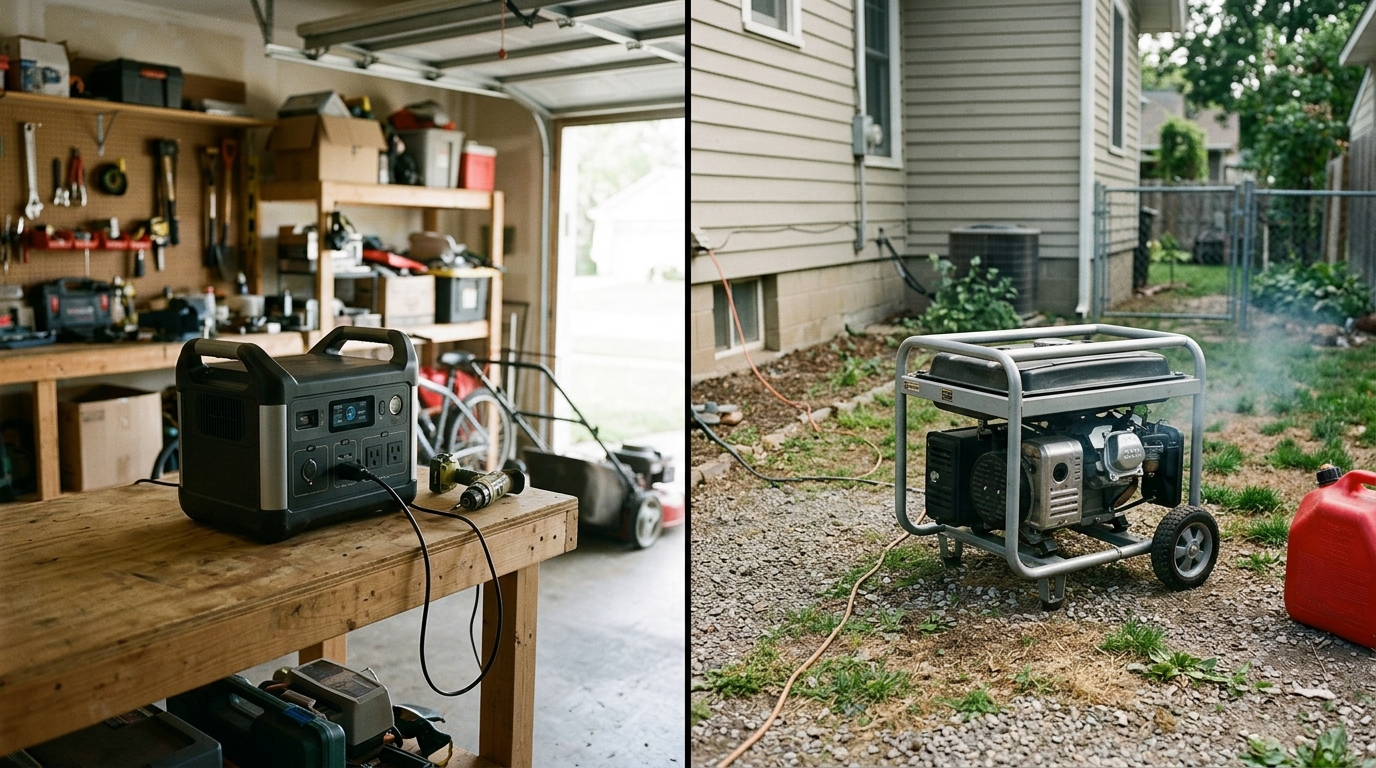
Please read this first. If you or someone you care for depends on supplemental oxygen, a power station can be one layer of a backup plan, but it should never be the only layer. This article explains the power math so you can make an informed plan with your care team and equipment supplier. It is general planning information, not medical advice, and it does not replace your prescriber’s or supplier’s instructions. Never change a prescribed flow rate to save battery.
Start With the Backup That Is Designed for This
Home oxygen concentrators stop when the power stops. The standard safety net is a backup oxygen cylinder, and your supplier should already have set one up. NHS Highland’s guidance on home oxygen during power outages (a UK source) notes that a backup cylinder typically lasts about 10 to 20 hours depending on the prescribed flow rate, that patients should know how to connect it themselves or have a plan for who will, and that people on oxygen should register with their energy provider as priority customers. The same document also says never to use candles around oxygen.
US readers should do the equivalent: ask your oxygen supplier what backup cylinders you have and how many hours they cover, ask your electric utility whether it keeps a medical-needs or priority registry, and write the supplier’s emergency number where you can find it in the dark. The same principle shows up in healthcare planning: the U.S. Department of Health and Human Services’ ASPR TRACIE oxygen tip sheet stresses holding backup cylinders and supplier contracts that specify emergency delivery times, because that, not just battery power, is what bridges a longer outage.
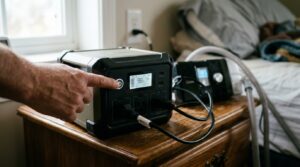
A power station is useful for the part of the plan where you want the concentrator to keep running for some hours instead of burning through cylinder oxygen.
How Much Power Does an Oxygen Concentrator Use?
A stationary concentrator is a continuous-duty compressor, so it draws steadily rather than cycling like a fridge. A sustainable-energy technical document from SEforALL lists typical stationary 5 LPM concentrators at roughly 280-350W, and units above 5 LPM at roughly 400-600W. Your concentrator’s label or manual lists its real number, so check it. Portable oxygen concentrators, the battery-powered travel type, are a separate category and draw far less when plugged in; this article is about stationary home units.
Runtime Math
Applying our standard ~85% usable-capacity assumption, here is how long common station sizes would keep a stationary concentrator running:
| Concentrator Draw | 1,000Wh Station | 2,000Wh Station | 3,000Wh Station |
|---|---|---|---|
| 300W (typical 5 LPM) | ~2.8 hrs | ~5.7 hrs | ~8.5 hrs |
| 350W (upper 5 LPM) | ~2.4 hrs | ~4.9 hrs | ~7.3 hrs |
| 600W (higher-flow unit) | ~1.4 hrs | ~2.8 hrs | ~4.3 hrs |
This is the same arithmetic we used for the CPAP runtime breakdown, but the result looks very different, because a concentrator draws roughly five times what a CPAP does and runs around the clock for many users. Running 300W for a full day is about 7.2 kWh, more than any portable power station in this series stores. Even a 3,000Wh unit covers well under half a day.
What This Means in Practice
- A power station buys hours, not days. Think of it as a bridge for short outages or for the time between losing power and getting a cylinder or help.
- Cylinders and the supplier plan carry the long outage. That is what they are for.
- Match the size to the gap you’re bridging, not to an imagined multi-day outage. Our sizing chart helps you budget watt-hours.
- Solar helps at the margin only. A concentrator’s draw is well above what a portable panel supplies; see our solar panel guide.
Compatibility Checks Before You Buy
Medical equipment is the place to be careful about specifications:
- Pure sine wave output. Most good power stations provide it, but confirm it on the spec sheet and check your concentrator’s manual, since motors and electronics can be sensitive. We make the same point in our CPAP power station guide.
- Surge capacity. Compressor-driven devices can draw more at startup. Check your concentrator’s starting draw against the station’s surge rating, the same issue we explain in our sump pump article.
- Ask your supplier. Many oxygen suppliers have views on backup power for the specific model they provided. Ask before you assume.
- Test it before you need it. Run the concentrator on the station for an hour during a calm day so you know it works and what the station’s display reports.
- Keep it charged and cool. A backup is only useful if it is full when the lights go out. Our hot garage storage guide covers storage, and our medication cold-storage article covers another common medical-backup need.
Safety Basics
Oxygen supports combustion. Keep it away from open flames, candles, and heat sources, and do not use a fuel-burning generator indoors or in an attached garage to power medical equipment, a risk we detail in our power station vs. generator comparison. If anything about your equipment or backup plan is unclear, call your supplier or care team before an outage, not during one.
The Bottom Line
A power station can keep a stationary oxygen concentrator running for a few hours: roughly 3 hours per 1,000Wh for a typical 5 LPM unit. That makes it a useful layer, and a poor foundation. Build your plan around backup cylinders, your supplier’s emergency line, and a utility priority registry, then add a power station sized for the gap you want to cover. Verify compatibility with your supplier and test the setup before you rely on it.
This article is for general power-planning purposes only and is not medical advice. Always follow your prescriber’s and equipment supplier’s instructions, and call emergency services if you have a medical emergency.