Affiliate disclosure: some links on this page may earn Trendifacts a commission at no extra cost to you. It does not change what we recommend.
For a home-backup power station that mostly sits waiting for an outage, choose LiFePO4 (LFP). The reason is not the headline cycle count, which you will almost never use up, but three quieter advantages: a higher thermal-runaway threshold, better tolerance of sitting fully charged and aging over a decade, and the fact that nearly every current flagship model has already switched to it.
NMC lithium-ion is lighter and holds up slightly better in deep cold, but those advantages rarely decide a home-backup purchase. Cold-weather charging limits apply to both, so check your specific unit's protections regardless of chemistry.
This guide covers what actually differs, why cycle life matters less than the spec sheets suggest, what "calendar aging" means for a unit that sits in a closet, a real-model table of chemistry and ratings, cold and heat behavior, safety, and a buying rule.
The Short Answer
| If you... | Choose |
|---|---|
| Keep a unit for outages and use it a few times a year | LiFePO4 |
| Cycle it daily (van life, off-grid, daily CPAP use) | LiFePO4, strongly |
| Need the absolute lightest unit and will use it occasionally | NMC may be acceptable |
| Are shopping a budget unit | Check the label; some cheaper units are NMC |
What Is Actually Different
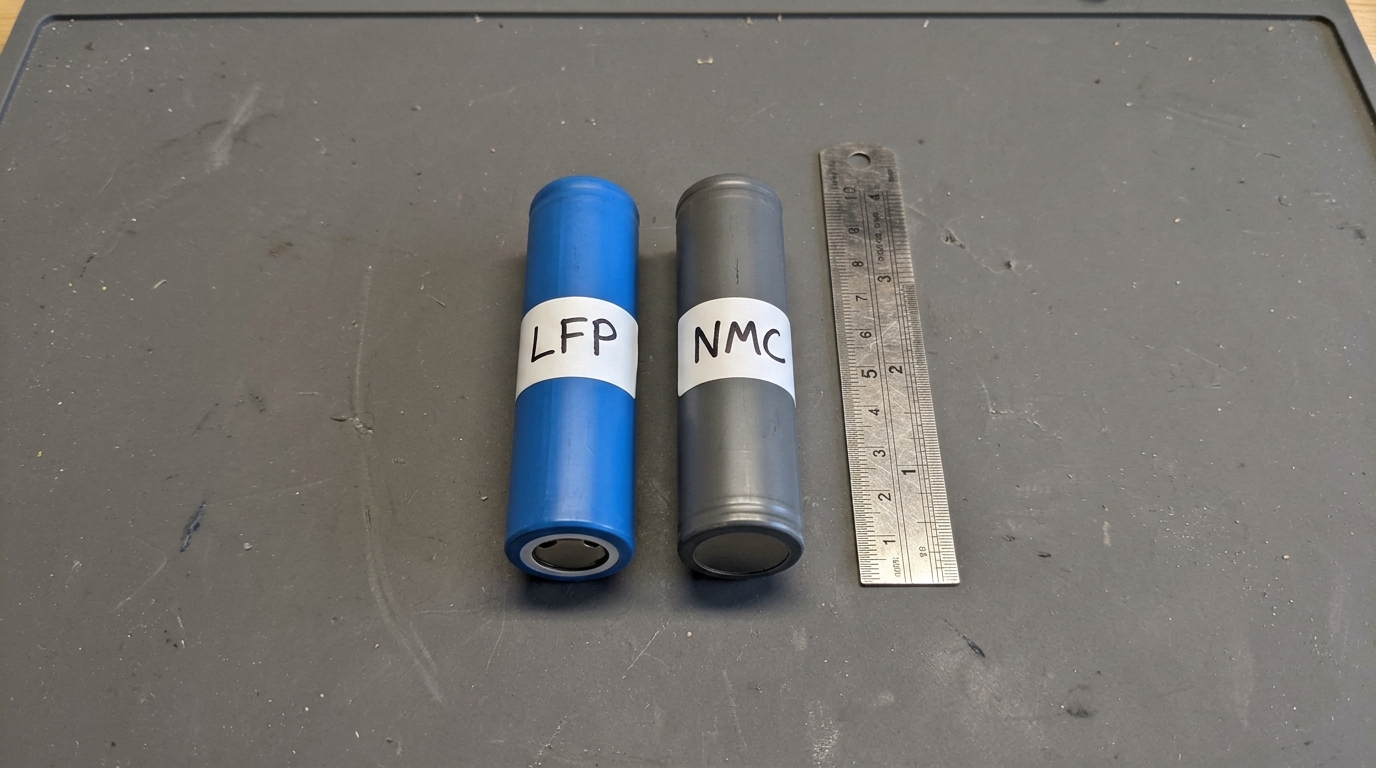
Both are lithium-ion batteries. They differ in the cathode material, which changes cycle life, safety margin, weight and cold behavior.
| Factor | LiFePO4 (LFP) | NMC (standard lithium-ion) |
|---|---|---|
| Typical cycle life | 3,000 to 10,000+ cycles | 500 to 1,500 cycles |
| Thermal runaway temperature | about 270°C (518°F), per OffGridBenchmark | about 150°C (302°F) |
| Energy density | Lower: heavier per Wh | Higher: lighter per Wh |
| Upfront cost | 20 to 40% more in older comparisons | Lower sticker price |
| Cold-weather discharge | Slightly more capacity loss | Slightly better retention |
These are ranges, not guarantees. Cycle-life ratings depend on the discharge depth and end-of-life threshold each maker uses (for example, "to 80% capacity" versus "to 70%"), so compare like with like.
What Real Models Use
Here are chemistry and rated cycle life for units we cover, from manufacturer pages and the cited reviews:
| Model | Chemistry | Rated cycle life | Source |
|---|---|---|---|
| EcoFlow DELTA Pro 3 | LiFePO4 | 4,000 cycles to 80% | B&H listing |
| Jackery Explorer 1500 v2 | LiFePO4 | 6,000 cycles to 70%+ | Jackery comparison |
| Jackery Explorer 1000 v2 | LiFePO4 | 4,000 cycles to 70%+ | Same page |
| Anker SOLIX F3800 | not stated in sources we opened | 3,000 cycles | TechRadar |
| BLUETTI AC70, EcoFlow River 2 Pro | LiFePO4 | 3,000+ cycles | BackupPowerHub |
| Jackery Explorer 500 | NMC (older model) | lower | see our CPAP picks |
Notice that the Jackery Explorer 1000 v2 is LiFePO4. Some older guides, and an earlier version of one of our own articles, called it NMC. Always read the current spec page for the exact model and year. Our Jackery 1000 v2 vs 1500 v2 comparison has the details.
Why Cycle Life Matters Less Than You Think
Cycle life is the number every spec sheet leads with, and for daily users it is the whole story. A van-lifer cycling once a day uses 365 cycles a year, so 4,000 cycles is about 11 years and 500 cycles is under 2.
But a home-backup station might see 5 to 20 cycles a year. At 12 cycles a year, even NMC's low-end 500 cycles would take over 40 years to use up, and LFP's 3,000 would take 250. Cycle count will never be the limit. What limits a rarely used battery is calendar aging: the slow loss of capacity from time, heat and the state of charge it sits at. That is why storage conditions matter more than cycle rating for outage-only buyers, and why we wrote separate guides on heat and cold.
Jackery says its 1500 v2 has a lifespan of about 10 years, according to one review, which is a vendor claim. A realistic planning horizon for any lithium station is 8 to 12 years of useful life if it is stored well.
Storage and Self-Discharge
A power station bought for outages spends nearly all its life sitting charged in a closet. Two things matter:
- Self-discharge. All batteries slowly lose charge. Anker's guidance puts it at about 3% per month for its stations, a figure we cite in our annual cost guide. Chemistry-by-chemistry monthly rates vary by source, and we could not find a trustworthy head-to-head, so we do not claim one chemistry holds charge better. What matters is checking and topping up every few months.
- State of charge in storage. Guides for LiFePO4 recommend storing around 40 to 60% for long idle periods and avoiding sitting at 100% for months in heat; one guide also warns against full discharge. We cover the details in the hot-garage article. For outage readiness, many people keep units near full during storm season and lower in the off-season.
Cold Weather: The Nuance Most Guides Skip
Both chemistries lose capacity in the cold. A battery guide at Large Battery reports NMC retaining roughly 70 to 80% of capacity at -20°C versus 50 to 70% for LFP, depending on the source. That is a manufacturer-side comparison, and real units differ with their battery management and heating.
The more important point applies to both: charging below freezing (32°F or 0°C) can cause lithium plating and permanent damage. Most modern stations have a battery management system that refuses to charge in the cold. If charging stalls on a freezing morning, that is the unit protecting itself, not a defect. Read the temperature range in your manual, and bring the unit inside before a storm. Our cold-weather charging guide and winter storm prep guide have the practical steps.
Heat and Safety
LFP's thermal runaway threshold is roughly 120°C higher than NMC's, per OffGridBenchmark, and LFP is commonly described as not releasing oxygen when it overheats, which affects whether a fire can sustain itself. We could not verify the oxygen point in a primary source for this article, so treat it as a commonly stated difference rather than a proven guarantee for every product. What we can say is that a quality station includes temperature protection that cuts off charging or discharging before dangerous ranges. For a device you might keep indoors near a bedroom, a higher safety margin is a real advantage.
Practical safety, whatever the chemistry:
- Do not use a unit with a swollen case, odd smell or damage.
- Keep it ventilated, off soft bedding, and away from heaters.
- Use the manufacturer's charger and cables.
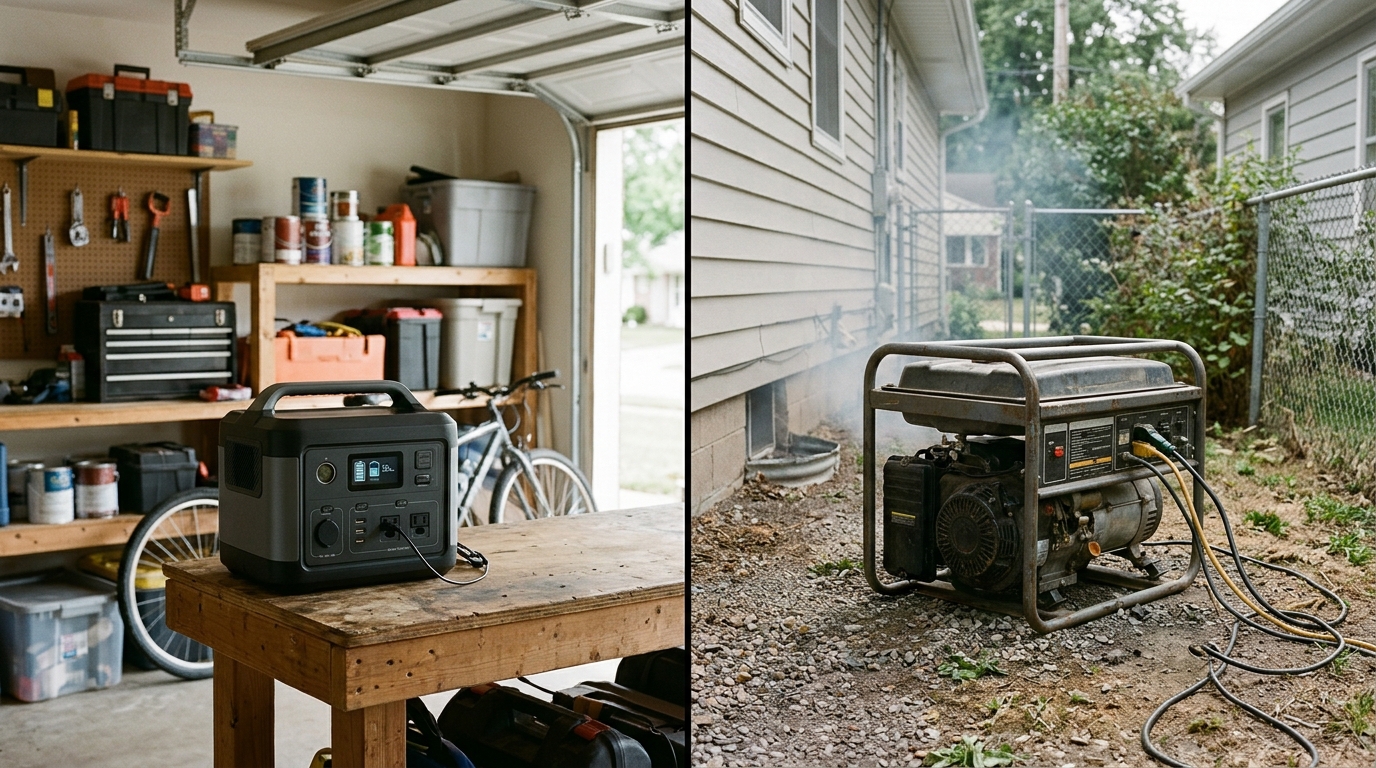
- Do not charge or store it in a hot vehicle.
Weight and Cost
LFP is heavier per Wh. The Jackery 1000 v2 weighs 23.8 lb for 1,070Wh, while a lighter older NMC unit like the Explorer 500 weighs about 13 lb for 518Wh, which is a similar weight per Wh in practice. The cost premium for LFP has shrunk as more makers switched. At $0.46 to $0.47 per Wh for the Jackery units at sale prices (see our comparison), LFP is no longer an expensive niche. Do the per-Wh math on current prices before paying a premium for either chemistry.
Which Should You Buy for Home Backup?
As of 2026, most flagship units from EcoFlow, BLUETTI and Jackery are LFP. In practice that makes LFP the default. You are more likely to meet NMC in older models, ultra-light compact units, and some budget options. Choose LFP unless weight is your top constraint and you accept a shorter service life.
A practical checklist:
- Find the chemistry on the spec page, not the marketing page.
- Compare cycle ratings with the same end-of-life threshold.
- Check the warranty length (3 to 5 years is typical in the models above).
- Check temperature ranges for charging and discharging.
- Plan where you will store it, using our hot garage guide.
A Worked Example: Ten Years of Ownership
Imagine two households. The first buys a 1,000Wh LFP station for outage backup, uses it six times a year, and stores it indoors at about 60% charge between storm seasons. After ten years it has seen about 60 cycles, a tiny fraction of a 3,000-cycle rating, and what has aged it is calendar time. The second household runs a CPAP from a similar unit every night during travel, about 200 cycles a year. After ten years that is 2,000 cycles, which is within an LFP rating of 3,000 to 4,000 but well past an NMC rating of 500 to 1,500. The first household would be fine on either chemistry, though LFP's safety margin still helps. The second household needs LFP. The lesson is that your usage pattern, not the marketing, tells you how much cycle life to pay for.
What to Ask the Seller
Before you buy, ask or look up: what exact chemistry does this model year use, what is the cycle rating and to what remaining capacity, what is the warranty period and does it cover capacity loss, what temperature range is allowed for charging and storage, and is there a battery management system that blocks cold charging. If the listing cannot answer these, check the manufacturer's manual or support page. Marketing pages often skip the details that matter for a unit that will sit in storage.
Common Mistakes
- Paying for cycle life you will never use, while ignoring storage conditions.
- Leaving the unit at 100% in a hot garage for months.
- Charging in freezing temperatures.
- Assuming old reviews still describe the current model.
- Assuming "lithium" means "dangerous." Both chemistries are generally safe in quality products, and LFP has the larger margin.
FAQ
Is LiFePO4 the same as lithium-ion?
LiFePO4 is a type of lithium-ion battery with a different cathode material. "Lithium-ion" in marketing often means NMC.
How many years does a LiFePO4 power station last?
Cycle ratings suggest decades for occasional use, but calendar aging limits real life, so plan on 8 to 12 years if stored well.
Is LiFePO4 safer?
It has a higher thermal-runaway threshold and is considered more stable, though quality electronics matter more than chemistry alone.
Does LiFePO4 work in the cold?
It discharges in the cold with some capacity loss. Do not charge it below freezing.
Which Jackery models use LiFePO4?
The Explorer 1000 v2 and 1500 v2 do, per Jackery's comparison page. The older Explorer 500 is NMC.
Can I use my power station every day?
Yes. LFP is the better choice for daily cycling.
The Bottom Line
For daily users, LiFePO4's long cycle life is the reason to pay for it. For home backup, the quieter advantages matter more: a safer chemistry, a better fit for a decade of sitting, and the fact that it is now the default in most flagship models. Cold charging limits apply to both, so check your unit's protections. Whatever you buy, manage the storage temperature and state of charge.
Specifications and ratings come from the cited sources and change by model year. Confirm details on the manufacturer's current spec page.