Last updated: November 27, 2026
The Bluetti AC180 is a 1,152Wh LiFePO4 portable power station built for buyers who want extra overnight battery capacity at a sharp price per watt-hour. It delivers 1,800W of continuous pure sine wave AC output (2,700W Power Lifting / surge), fast 1,440W Turbo wall charging, 500W of solar input, a built-in 15W wireless charging pad, 20 ms UPS switchover, and a 5-year warranty. Because its 1,152Wh battery sits roughly 10% to 12% larger than standard 1,024Wh rivals, it is one of the few stations in its price bracket that cleanly covers a full 24-hour CPAP-and-Wi-Fi household day on a single charge.
Its real trade-offs are weight (35.3 lb / 16 kg—nearly 10 to 12 pounds heavier than newer compact rivals), noticeable fan noise under heavy loads, and the arrival of Bluetti's newer, lighter Elite 100 V2 (1,024Wh, ~25 lb). Near its older $799–$1,199 list prices, the AC180 is an easy skip. On sale around $499 (~$0.43 per Wh), it remains a strong capacity-per-dollar pick for a closet or bedroom backup station you do not plan to haul around every weekend.
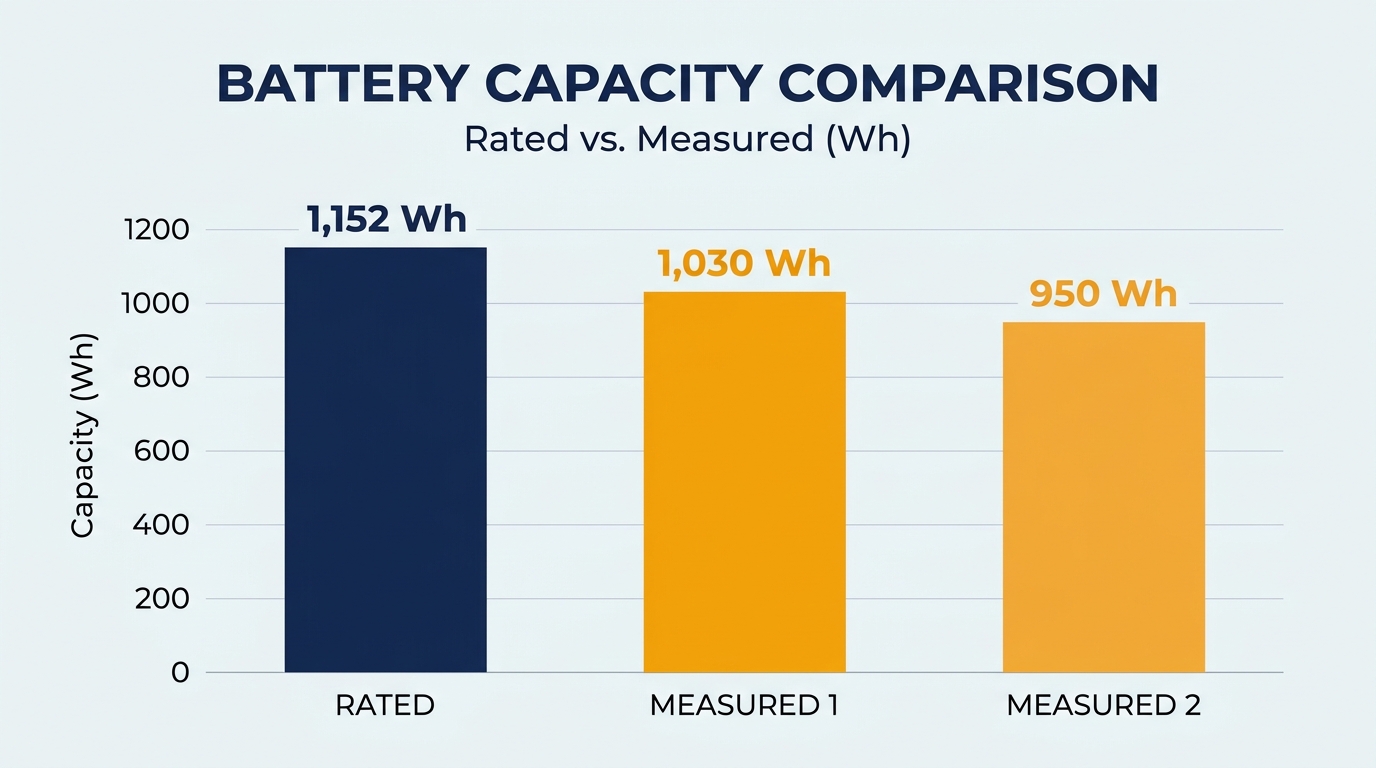
How we built this review: Rather than in-house bench testing, Trendifacts evaluates the Bluetti AC180 using published manufacturer specifications, seasonal price-per-watt-hour benchmarks, and conservative appliance runtime arithmetic. Real-world AC usable capacity on the AC180 ranges from roughly 950Wh (~82.5% conservative floor) to 1,030Wh (~89.4% under steady mid-range loads), straddling our standard 85% (979Wh) sizing rule. We plan around the conservative 950Wh figure below so your outage setup never comes up short.
Advertisement
Bluetti AC180 (1,152Wh)
Best capacity-per-dollar step-up in the 1,000Wh+ class when bought near $499 (~$0.43/Wh): clears a full 24-hour CPAP and Wi-Fi day with 1,800W output, 1,440W Turbo charging, and a 5-year warranty.
The Short Answer
| Feature | Bluetti AC180 |
|---|---|
| Rated Capacity | 1,152Wh (32V, 36Ah LiFePO4) |
| Usable AC Capacity | 950Wh conservative (~82.5%) / 979Wh standard 85% / up to 1,030Wh (~89.4%) |
| AC Output | 1,800W continuous across 4 outlets / 2,700W Power Lifting (resistive loads) |
| Battery Longevity | 3,500+ cycles to ≥80% original capacity |
| Weight | 35.3 lb (16.0 kg) |
| Wall Recharge Speed | 1,440W max Turbo (~1.3 to 1.8 hours full; 0–80% in ~45 min) |
| Max Solar Input | 500W (12–60V DC, 10A max; ~3 hours in ideal peak sun) |
| UPS Switchover | ≤20 ms (fine for routers and CPAPs; not for sensitive IT servers) |
| Warranty | 5 years |
| Best For | Stationary home backup buyers wanting 1,152Wh capacity at ~$0.43/Wh |
| Watch Out For | Heavy 35.3 lb carry weight, fan noise under high loads, lighter Elite 100 V2 successor |
Full Specifications
| Specification | Published Value | Practical Note |
|---|---|---|
| Battery Capacity | 1,152Wh LiFePO4 (32V, 36Ah) | Expect ~950–1,030Wh delivered at AC outlets (~1,360Wh drawn from wall to refill) |
| Cycle Life | 3,500+ cycles to ≥80% capacity | Roughly 10 years of daily cycling |
| AC Output | 4× 120V outlets, 1,800W continuous | Pure sine wave; 2,700W Power Lifting Mode lowers voltage for resistive heaters/kettles |
| USB-C Port | 1× 100W PD max | Only one USB-C port—multi-laptop desks may need a wall charger on AC |
| USB-A Ports | 4× USB-A (shared banks) | Plenty of ports for phones, flashlights, and radios |
| 12V DC Output | 1× regulated 12V/10A car socket (120W) | Stable voltage for 12V coolers and DC CPAP adapters |
| Wireless Charging | 1× 15W top pad | Handy for overnight phone top-ups without hunting for cables |
| AC Wall Input | 1,440W max (Turbo) / ~1,000W (Standard) / ~280W (Silent) | Charging mode is switched inside the Bluetti app; Silent Mode targets ~45 dB |
| Solar Input | 500W max (12–60V DC, 10A) | Supports simultaneous AC + solar pass-through charging |
| Car Input | 12V / 24V via cigarette lighter port | Useful for slow road-trip top-ups |
| Weight & Dimensions | 35.3 lb (16.0 kg) / 13.39 × 9.72 × 12.48 in | Wide, flat top stacks easily on shelves, but feels heavy on stairs |
| UPS Mode | ≤20 ms switching | Keeps Wi-Fi routers and lamps online; not a substitute for a dedicated IT/NAS UPS |
| Expansion | No native parallel expansion port | Supports Power Bank Mode (DC recharging from B80/B230/B300 packs via solar input) |
| Certifications & Warranty | UL, CEC, DOE, FCC, CA Prop 65 / 5-year warranty | Confirm authorized seller status at checkout so the 5-year warranty applies |
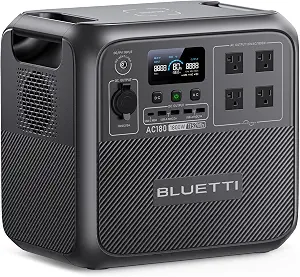
Bluetti AC180 (1,152Wh)
Check Price on Amazon ↗Efficiency, Charging Modes & Pricing Reality Check
Two practical trade-offs determine whether the Bluetti AC180 makes sense over newer 1,024Wh units: real-world efficiency and price per watt-hour.
- Real usable energy vs. wall draw: While its 1,152Wh pack delivers up to ~1,030Wh under steady mid-range loads, heavier or mixed loads can drop usable AC output closer to ~950Wh (~82.5%). Refilling the battery from completely empty pulls roughly 1,360Wh from the wall (~70% to 76% round-trip efficiency). Using 950Wh as your planning floor keeps your backup math safe regardless of load mix.
- Three distinct AC charging speeds:
- Turbo Mode (~1,440W): Reaches 80% in about 45 minutes and 100% in roughly 1.3 hours (real charging tapers near the top, so it takes longer than the 48 minutes raw wattage alone suggests). Fans are loud in this mode.
- Standard Mode (~1,000W): Balances heat and noise for regular pre-storm charging in roughly 1.6 to 1.8 hours.
- Silent Mode (~283W): Targets ~45 dB for overnight bedroom charging, taking roughly 4.5 to 5 hours from completely empty once charging overhead (1,360Wh ÷ 283W = ~4.8 hours) is factored in.
- Price per watt-hour tells the whole story: The AC180 launched around $1,199 ($1.04/Wh), later settled around a $699–$799 list tier ($0.61–$0.69/Wh), and dropped to $499 ($0.43/Wh) during seasonal sales—right alongside Bluetti's newer Elite 100 V2 at $498.99 ($0.49/Wh for 1,024Wh).
| Pricing Tier | Example Price | Price per Wh (1,152Wh) | Value Verdict |
|---|---|---|---|
| Launch-Era List | ~$1,199 | $1.04/Wh | Completely outdated—never pay this |
| Mid-Tier List | ~$699–$799 | $0.61–$0.69/Wh | Overpriced compared to lighter newer rivals |
| Seasonal Sale Benchmark | ~$499 | $0.43/Wh | Strong capacity-per-dollar value for stationary backup |
| Comparable Bluetti Elite 100 V2 | ~$498.99 (1,024Wh) | $0.49/Wh | Better pick at equal price if weight and noise matter more than +128Wh |
Check current live pricing against competing 1,000Wh-class units in our power station price-per-watt-hour guide and Black Friday power station deals 2026 guide.
What It Runs: Worked Runtime Math
The table below shows realistic single-charge runtimes across both our 950Wh conservative planning floor (~82.5%) and the 1,030Wh upper bound (~89.4%):
| Appliance / Load | Typical Power Draw | Conservative Runtime (950Wh) | Upper-Bound Runtime (1,030Wh) |
|---|---|---|---|
| Wi-Fi Router & Modem | ~18W | ~53 hours | ~57 hours |
| CPAP (no heated humidifier) | 40 to 55W | ~17 to 24 hours | ~19 to 26 hours |
| CPAP (with heated humidifier) | 55 to 130W | ~7.3 to 17 hours | ~7.9 to 19 hours |
| Laptop (active work/charging) | ~60W | ~16 hours | ~17 hours |
| Full-Size Refrigerator | ~1,000 to 2,000Wh/day | ~11.4 to 23 hours | ~12.4 to 25 hours |
| Space Heater (1,500W high) | 1,500W | ~38 minutes | ~41 minutes |
Household Outage Profiles (No Recharging)
Mapping our 950Wh conservative usable capacity against the four daily outage profiles in our power station outage sizing chart (and see our what a 1,000Wh power station can run breakdown):
- Profile A (Wi-Fi router and phones — ~447Wh/day): ~2.1 days (~51 hours)
- Profile B (Adds a CPAP without humidifier — ~927Wh/day): ~1.03 days (~24.6 hours)
- Profile C (Adds a work laptop and LED lights — ~1,287Wh/day): ~0.74 days (~17.7 hours)
- Profile D (Adds a full-size refrigerator — ~2,787Wh/day): ~0.34 days (~8.2 hours)
This is the exact niche where the AC180's extra 128Wh pays off: even on a strict 950Wh usable floor (and 979Wh at our standard 85% baseline), it clears a full 24-hour Profile B CPAP household day without recharging—something 1,024Wh units fall slightly short of. Want to run your own exact mix of appliances? Plug their wattages into our calculator below:
⚡ Power Station Size Calculator
Enter your appliance's wattage to see exactly which portable power station you need.
Solar & Fast-Charge Scenarios
- Solar recharge math: Accounting for ~90% solar charging efficiency (1,152Wh ÷ 0.90 = 1,280Wh of solar input needed from empty) and conservative panel output (Panel Watts × Peak Sun Hours × 0.75):
- 500W max solar array (5 peak sun hours): Produces 1,875Wh/day—refilling from empty in roughly 0.68 days (~3.4 peak sun hours) in clear sunshine.
- Single 200W panel (5 peak sun hours): Produces 750Wh/day—taking roughly 1.7 sunny days (~8.5 peak sun hours) from empty.
- Single 200W panel in winter/cloudy weather (2 peak sun hours): Produces 300Wh/day—stretching a full recharge to ~4.3 days.
- Compare panel pairings in our solar panel wattage vs. recharge time chart and portable solar panels guide.
- Wall charging versatility: Turbo Mode gets you back to 80% in roughly 45 minutes between rolling blackouts, while Silent Mode lets you top it up overnight without waking the house. Compare wall speeds across major brands in our EcoFlow vs. Jackery vs. Bluetti recharge times comparison and check decibel trade-offs in our power station noise levels comparison.
Strengths
- Strong capacity per dollar on sale: Near $499 (~$0.43/Wh), its 1,152Wh battery undercuts most 1,024Wh rivals on cost per watt-hour while giving enough extra margin to finish a full 24-hour CPAP household day.
- Capable 1,800W pure sine wave inverter: Easily handles fridges, coffee makers, microwaves, and power tools, with 2,700W Power Lifting Mode for resistive heating loads.
- Adjustable three-speed wall charging: Choose between 1,440W Turbo speed, 1,000W Standard, or ~283W Silent Mode depending on whether you need fast turnaround or quiet bedrooms.
- Simultaneous AC + solar charging & 500W solar cap: Recharges faster off-grid than 400W-capped competitors and lets you combine wall and solar inputs.
- LiFePO4 longevity & 5-year warranty: Rated for 3,500+ cycles to 80% capacity—see why LFP matters for multi-year home backup in our LiFePO4 vs. lithium-ion power station guide.
- Practical daily touches: Dedicated physical section buttons (AC, DC, power), regulated 12V output, and a built-in 15W wireless charging pad on top.
Weaknesses
- Heavy 35.3 lb (16 kg) carry weight: Roughly 10 to 12 pounds heavier than the ~24 lb Jackery Explorer 1000 v2 and ~25 lb Bluetti Elite 100 V2, making it awkward to haul up stairs or pack frequently for camping.
- Modest efficiency under heavy loads: Real-world AC delivery can dip to ~82.5% (~950Wh) with ~70%–76% round-trip wall-to-AC efficiency—worse than newer high-efficiency rivals.
- Noticeable fan noise under high draw or Turbo charging: Fans spin up aggressively during 1,440W charging and heavy AC loads.
- App required to switch charging speeds: You must connect to the Bluetti app via Bluetooth to toggle Turbo or Silent charging modes.
- No true parallel battery expansion & only 1 USB-C port: Unlike units with a dedicated expansion bus, you cannot snap on a unified extra battery (only recharge it via DC Power Bank Mode)—see our expandable battery power stations guide.
- Newer internal competition: Bluetti's own Elite 100 V2 fixes the AC180's biggest complaints (weight and noise) at nearly the same street price, and like all 1kWh units, its UPS mode is not meant for sensitive servers and space heaters drain it in under 40 minutes (see our space heater runtime guide).
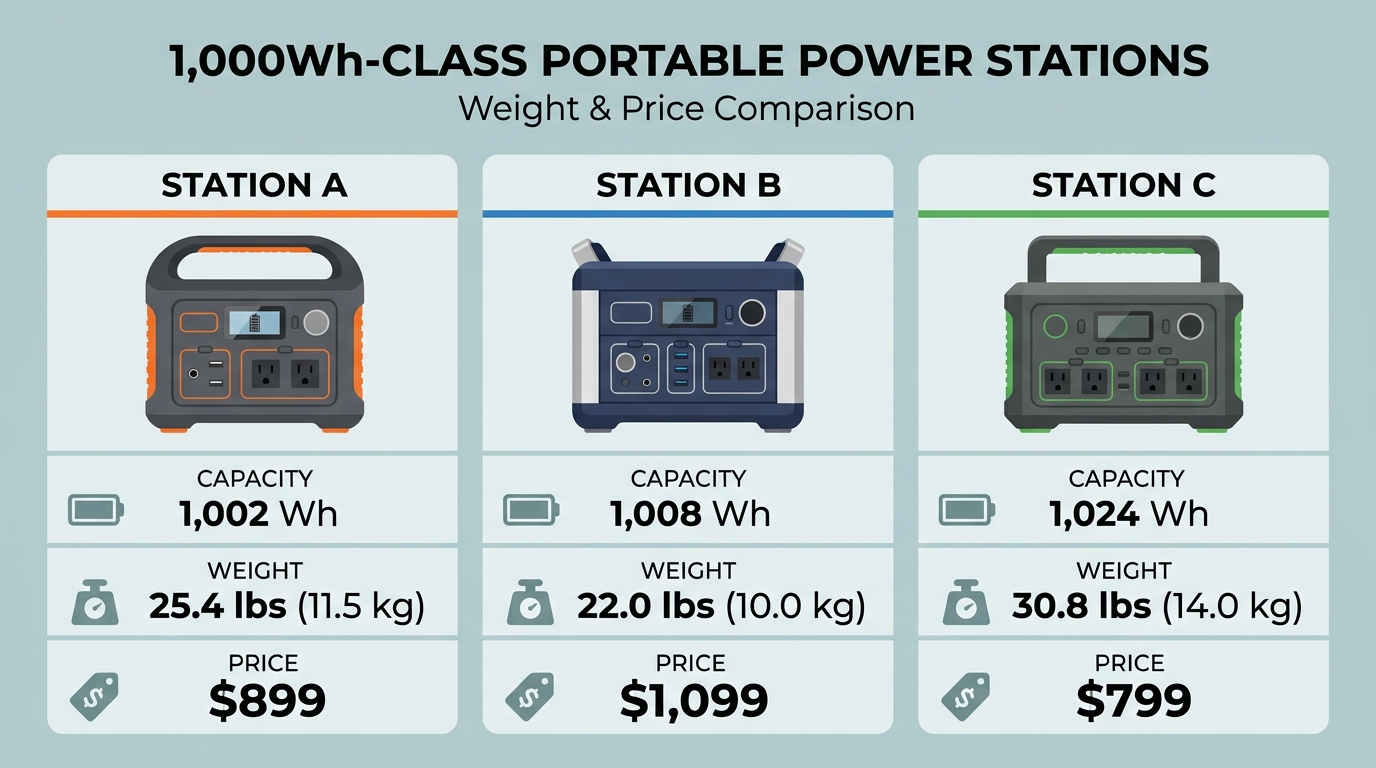
Bluetti AC180 vs. Bluetti Elite 100 V2 vs. Jackery Explorer 1000 v2
| Specification | Bluetti AC180 | Bluetti Elite 100 V2 | Jackery Explorer 1000 v2 |
|---|---|---|---|
| Rated Capacity | 1,152Wh (~950–979Wh usable) | 1,024Wh (~870Wh usable) | 1,070Wh* (~910Wh usable) |
| AC Output | 1,800W (2,700W Power Lifting) | 1,800W (2,700W Power Lifting) | 1,500W (3,000W surge) |
| Weight | 35.3 lb (16 kg) | ~25 lb | 23.8 lb |
| Seasonal Sale Benchmark | ~$499 | ~$498.99 | ~$450–$499 (standalone) / ~$639 (w/ 100W panel) |
| Price per Rated Wh | $0.43/Wh | $0.49/Wh | ~$0.42–$0.47/Wh (standalone) |
| Best Strength | Most capacity per dollar | Lighter, quieter newer Bluetti | Lightest carry & quietest bedroom charging |
*Updated Jackery Explorer 1000 v2 US listings may show 1,024Wh.
The choice comes down to mobility versus watt-hours: if the battery will live in a hallway closet or bedroom corner and you want the extra 128Wh for a full CPAP day at the lowest price per watt-hour, the AC180 earns its spot. If you carry it to a car, camper, or upstairs bedroom regularly, the Bluetti Elite 100 V2 or Jackery Explorer 1000 v2 is far easier to live with. Compare deeper specs in our Jackery Explorer 1000 v2 review, EcoFlow DELTA 2 review, Anker SOLIX C1000X review, and best portable power stations for home backup.
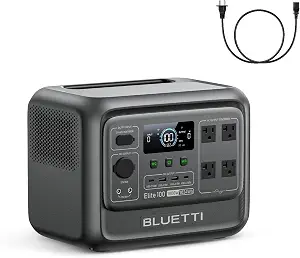
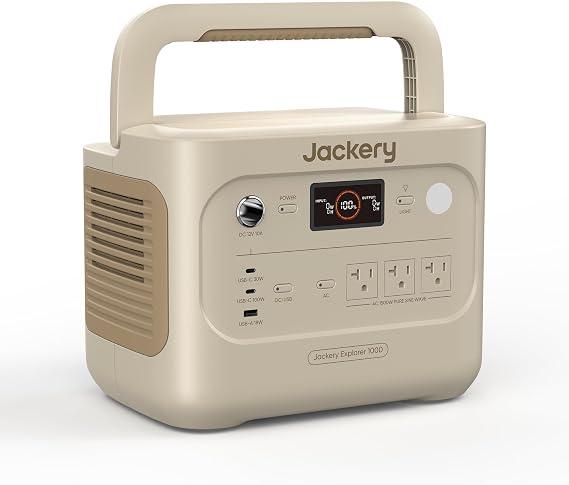
Jackery Explorer 1000 v2 (1,070Wh)
Check Price on Amazon ↗Who Should Buy the Bluetti AC180
- CPAP households wanting a full 24-hour buffer without recharging—verify your machine's DC cable and humidifier draw in our best portable power stations for CPAP machines and 1,000Wh CPAP runtime guide.
- Value-focused buyers who find it on sale near $499 ($0.43/Wh) or lower.
- Stationary home backup users keeping the unit parked in a closet, pantry, or utility corner where 35.3 lb is a non-issue.
- Existing Bluetti owners who already know the app and own compatible MC4 solar panels.
Who Should Look Elsewhere
- Frequent campers or apartment stair-climbers: At 35.3 lb, carrying it often gets old fast—look at the ~25 lb Bluetti Elite 100 V2 or 23.8 lb Jackery Explorer 1000 v2.
- Noise-sensitive bedroom sleepers running high loads: Compare quiet low-load fans in our power station noise levels comparison.
- Buyers wanting true modular expansion or six AC outlets: Look at the EcoFlow DELTA 2 or Anker SOLIX C1000X.
- Full-size refrigerator households needing 24+ hours without solar: A 1,152Wh station cannot run a fridge plus household essentials for a full day—step up to a 2,000Wh–3,000Wh+ unit in our best portable power stations for home backup.
Before You Buy: 6-Point Verification Checklist
- Calculate live price per watt-hour: Target $0.43/Wh (~$499) or lower; skip listings over $600.
- Verify authorized seller & 5-year warranty: Confirm the "Sold by" line is Bluetti or an authorized retailer before checking out.
- Check whether you really need expansion: Remember the AC180 only supports DC Power Bank recharging, not seamless parallel extra-battery cables.
- Size around 950Wh usable: Planning conservatively ensures your overnight CPAP or work gear never cuts out early.
- Store safely indoors: Keep it dry, ventilated, and out of freezing winter garages—review our cold-weather charging limits guide before storing it outside conditioned rooms.
- Confirm medical device power specs: Always match your exact CPAP model, 12V/24V DC adapter, and humidifier settings before relying on battery backup.
Frequently Asked Questions
Is the Bluetti AC180 worth buying in 2026?
Yes—strictly at sale pricing around $499 ($0.43/Wh) or less, especially if you want 1,152Wh of stationary home backup capacity for the money. At $700+, lighter newer models like the Bluetti Elite 100 V2 or Anker SOLIX C1000X are better buys.
How much usable power does the Bluetti AC180 actually deliver?
Expect roughly 950Wh to 1,030Wh of real usable AC energy from its 1,152Wh LiFePO4 battery depending on load size (with 979Wh at our standard 85% site baseline). Planning around 950Wh gives you a dependable safety margin.
How long will the Bluetti AC180 run a CPAP machine?
On a conservative 950Wh floor, it runs a typical CPAP without a heated humidifier (40–55W) for roughly 17 to 24 hours. Turning on a heated humidifier (55–130W) cuts runtime to roughly 7.3 to 17 hours, though switching to a regulated 12V/24V DC CPAP cable stretches overnight runtime noticeably.
How fast does the Bluetti AC180 charge?
At 1,440W Turbo AC input, it reaches 80% in roughly 45 minutes and 100% in about 1.3 to 1.8 hours. With 500W of solar panels in strong direct sun, expect roughly 3 to 3.5 peak sun hours from empty.
Should I buy the Bluetti AC180 or the Bluetti Elite 100 V2?
Choose the Bluetti AC180 if it stays parked in one room and you want the extra 128Wh of capacity at a lower cost per watt-hour. Choose the Bluetti Elite 100 V2 if you value a 10-pound lighter carry weight and quieter, newer hardware.
Can the Bluetti AC180 run a full-size refrigerator?
Yes—its 1,800W continuous inverter easily handles refrigerator compressor startups, running a typical full-size fridge (1,000 to 2,000Wh/day) for roughly 11.4 to 23 hours on a conservative 950Wh charge.
Final Verdict
The Bluetti AC180 delivers roughly 950Wh to 1,030Wh of real usable AC capacity, 1,800W continuous output, 1,440W fast wall charging, 500W solar input, and a 5-year LiFePO4 warranty—all at a strong ~$0.43/Wh during sales. It is heavy, louder under heavy loads than newer competitors, and lacks a true parallel expansion port, which makes the lighter Bluetti Elite 100 V2 and Jackery Explorer 1000 v2 easier picks for frequent carrying.
Park the AC180 in a closet for CPAP and storm backup when you catch it near $499, plan around 950Wh usable, and skip it if portability tops your list