Last updated: November 21, 2026
How we built this guide: Rather than hands-on lab testing, Trendifacts evaluates these gift picks using published manufacturer specifications, price-per-watt-hour value, and real-world runtime math (calculating 85% of rated capacity as usable energy after inverter losses). Seasonal holiday pricing moves fast, so always confirm current prices, delivery dates, and return windows directly on the retailer's page before checking out.
Affiliate disclosure: Some links on this page may earn Trendifacts a commission at no extra cost to you. This never influences our sizing math or recommendations.
A portable power station makes a standout gift when you match its battery capacity to how the recipient actually lives and works: a 100 to 300Wh unit for commuters and weekend campers, a 1,000Wh-class unit for a remote worker or a parent running a CPAP through an overnight outage, and a 2,000Wh or larger unit for a storm-prone household
. Shop by watt-hours and real appliance loads—not by the loudest percentage-off sticker—and always include a gift receipt. If you are buying for someone who relies on a medical device, verify the exact machine and power supply requirements before ordering, because an undersized battery turns a thoughtful gift into a frustrating one.
This guide breaks down the best gift tiers by recipient and budget, maps out realistic runtimes for each battery size, walks through a complete CPAP sizing example, and wraps up with practical stocking-stuffer add-ons and battery safety tips.
The Short Answer: Gift Sizes by Recipient
| Recipient | Size to Look At | Seasonal Price Range | What It Comfortably Runs |
|---|---|---|---|
| Commuter, student, day-tripper | 128 to 300Wh | ~$119 to $330 | Phones, tablet, laptop, camera |
| Camper, tailgater | 300 to 1,000Wh | ~$240 to $430 | Camp lights, small 12V cooler, devices |
| Remote worker, apartment renter | 500 to 1,000Wh | ~$260 to $430 | Wi-Fi router, modem, laptop, desk lamp |
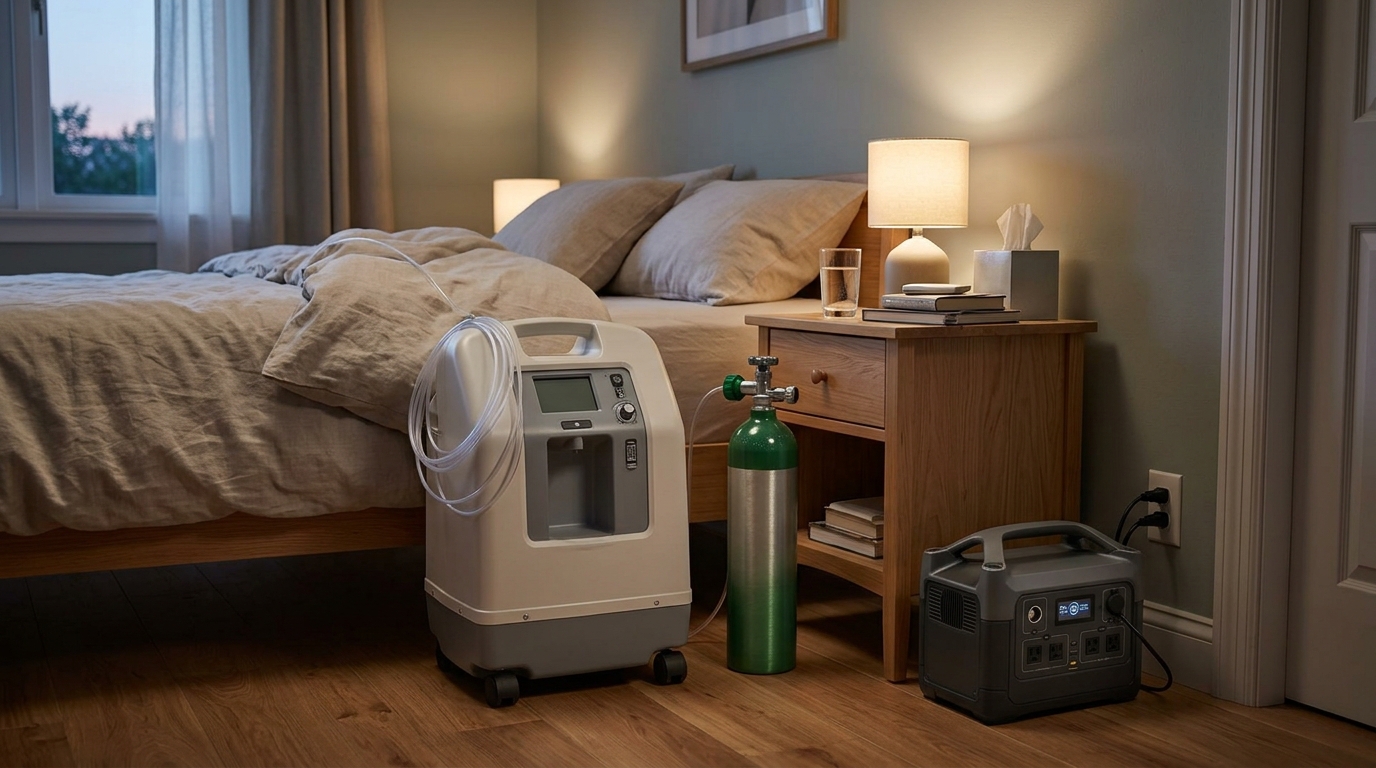
| Parent with a CPAP | 1,000 to 1,200Wh | ~$400 to $500 | Full night of CPAP plus Wi-Fi router |
| Storm-prone family | 2,000Wh or more | ~$750 and up | Household essentials for a full day or more |
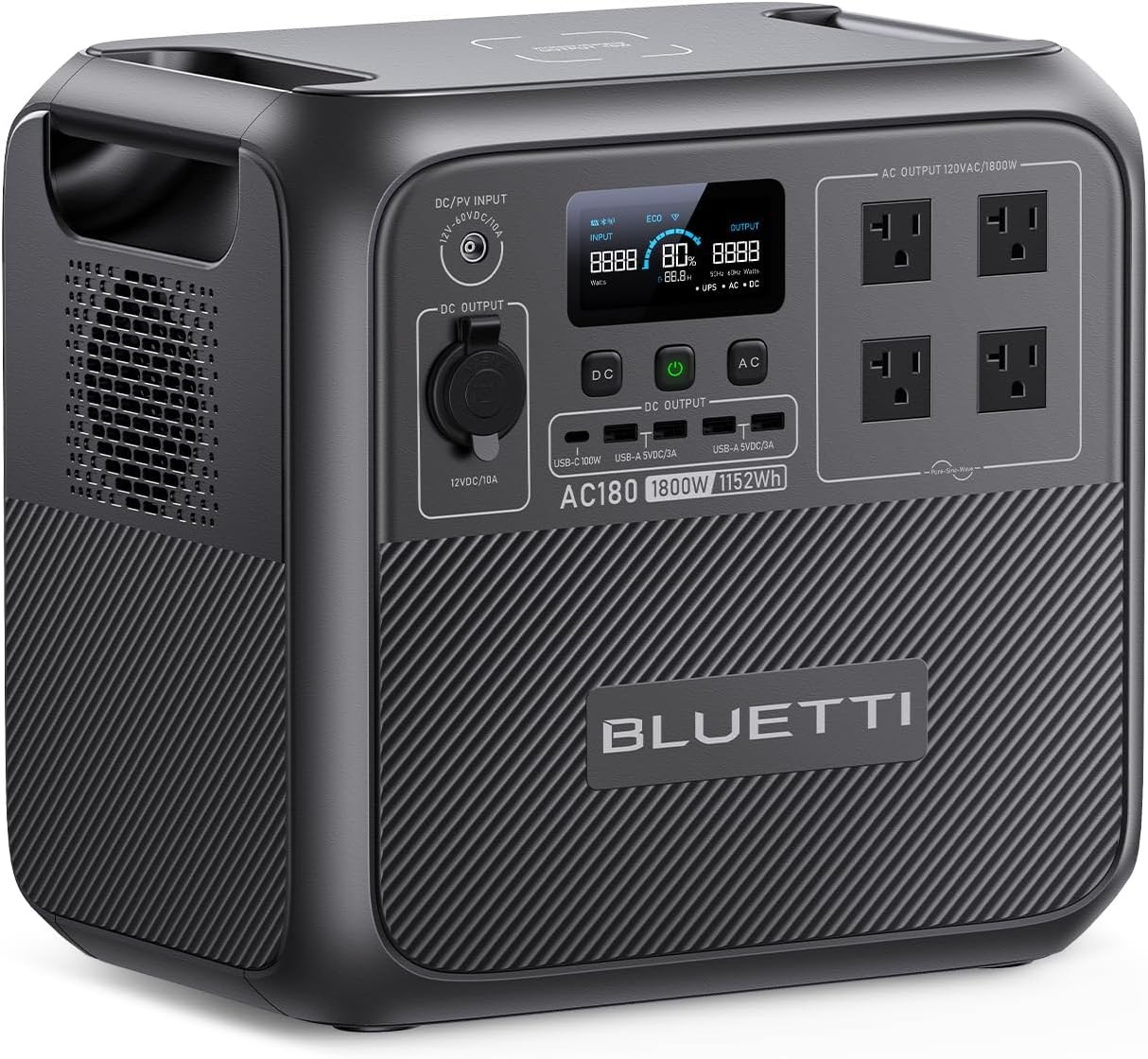
Bluetti AC180 (1,152Wh)
The safest all-around gift tier: enough usable energy for a full night of CPAP backup, a full workday at a home office desk, or weekend camping trips.
How to Choose the Right Power Station Gift
- Think about the first real use. A gift sized for an actual camping weekend, home office desk, or bedside nightstand gets used right away. An oversized brick that is too heavy to carry—or a tiny battery that dies halfway through an outage—ends up gathering dust in a closet.
- Size by daily watt-hour loads, not guesses. To keep sizing simple, group recipients into four daily load profiles:
- Profile A (Wi-Fi and phones): ~447Wh per day
- Profile B (Adds a CPAP machine): ~927Wh per day
- Profile C (Adds a laptop and LED lighting): ~1,287Wh per day
- Profile D (Adds a full-size refrigerator): ~2,787Wh per day
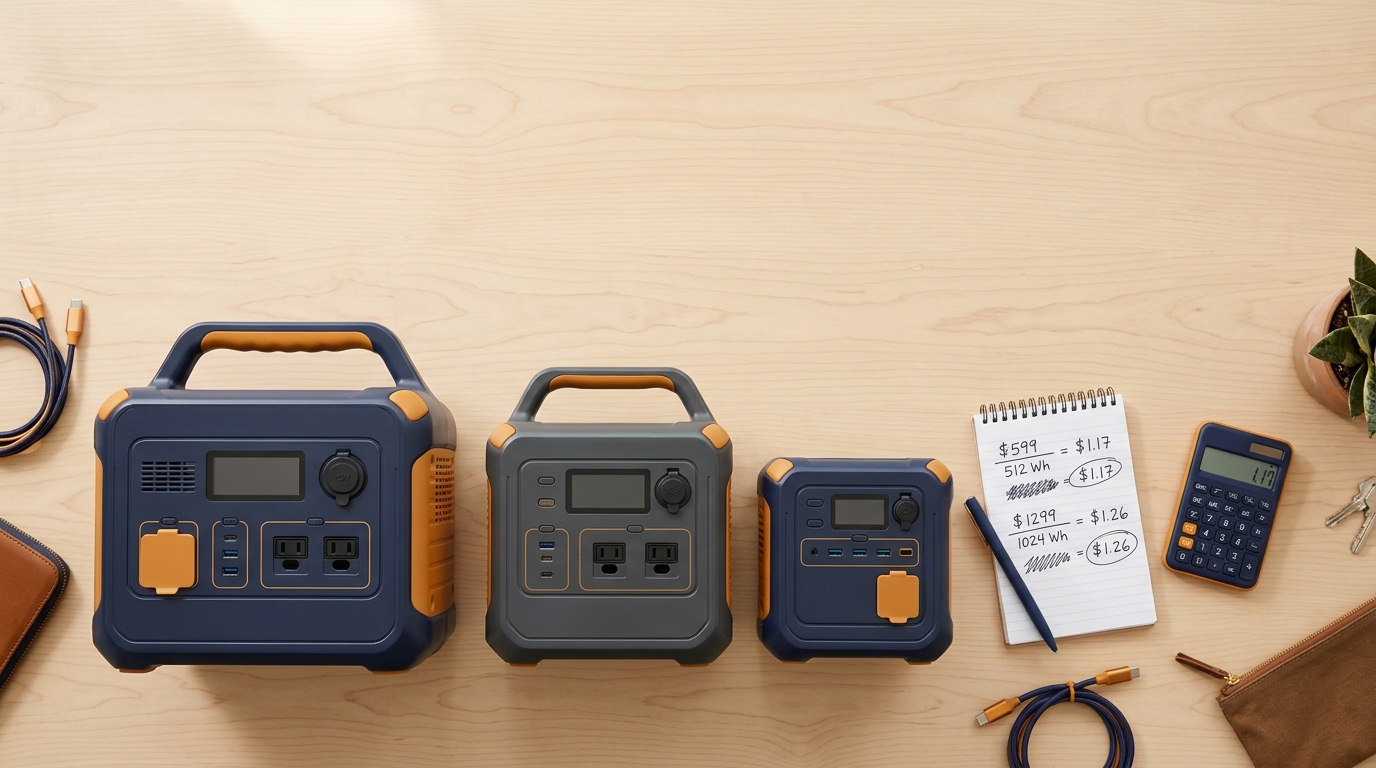
- Compare price per watt-hour ($/Wh). Divide the sale price by the rated watt-hours to see past flashy holiday discounts. In the 1,000Wh class and above, strong holiday value sits around $0.37 to $0.45 per Wh. Compact models cost more per watt-hour because you are paying for portability and components rather than raw battery cells.
- Verify warranty terms and gift return windows. Look for extended holiday return policies running into January and stick to brands offering multi-year warranties with LiFePO4 (LFP) battery chemistry where possible.
- Never buy medical backup blind. Before gifting a station for a CPAP, BiPAP, or other medical equipment, ask the recipient for the exact device model and whether they run a heated humidifier or heated tubing.
Power Station Gifts by Budget
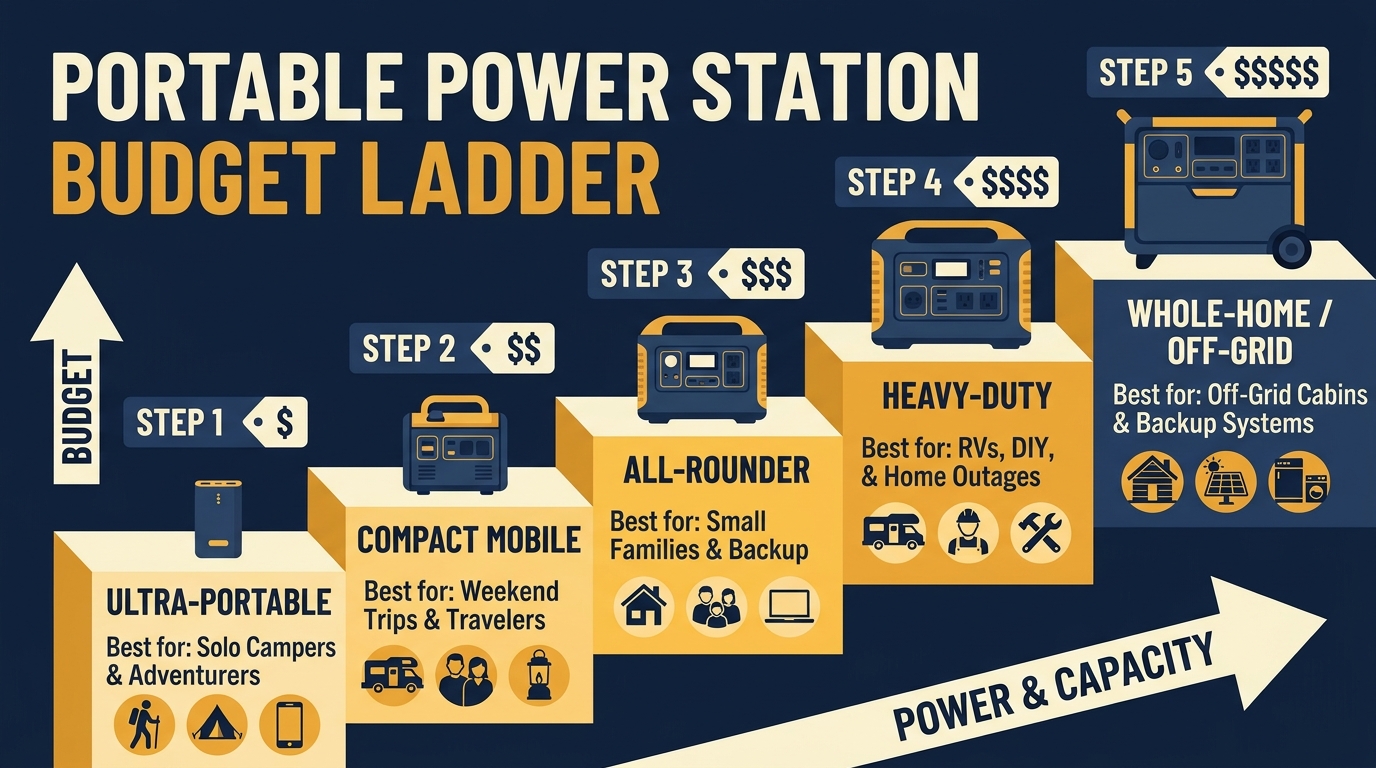
Below is a side-by-side comparison of standout models across every gift tier, ranked by capacity and price-per-watt-hour value based on early holiday pricing benchmarks:
| Model | Capacity (Wh) | Benchmark Price | Price per Wh | Best Fit |
|---|---|---|---|---|
| Bluetti Elite 10 Mini | 128Wh | $119.00 | $0.93 | Phones, tablet, camera gear |
| BougeRV Portable Station | 266Wh | $189.99 | $0.71 | Light camping and weekend trips |
| Bluetti Elite 30 Mini | 288Wh | $239.98 | $0.83 | Commuter or compact desk backup |
| EBL Portable Power Station | 519Wh | $259.99 | $0.50 | Best value mid-small unit |
| Bluetti Elite 30 V2 | 288Wh | $289.99 | $1.01 | Compact travel and solar bundle options |
| Anker SOLIX C300 | 288Wh | $329.98 | $1.15 | Portable desk, travel, and carry strap convenience |
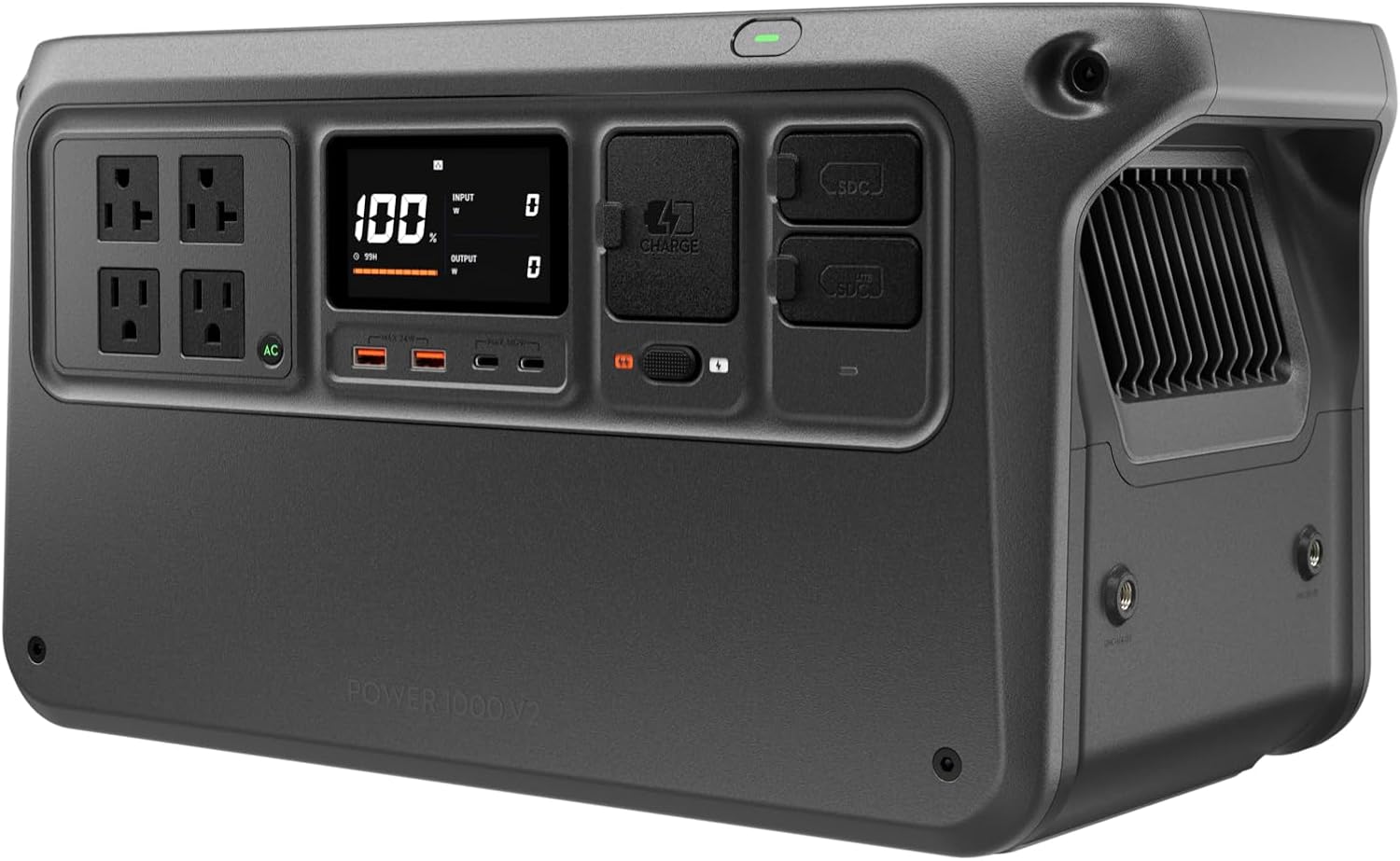
| DJI Power 1000 V2 | 1,024Wh | $399.98 | $0.39 | Best value 1,000Wh-class pick |
| EBL 1000W Class Station | 999Wh | $399.99 | $0.40 | Budget-friendly 1,000Wh option |
| Bluetti Elite 100 Mini | 1,005Wh | $428.99 | $0.43 | Compact 1,000Wh-class value |
| Bluetti AC180 | 1,152Wh | $499.00 | $0.43 | CPAP and home office step-up |
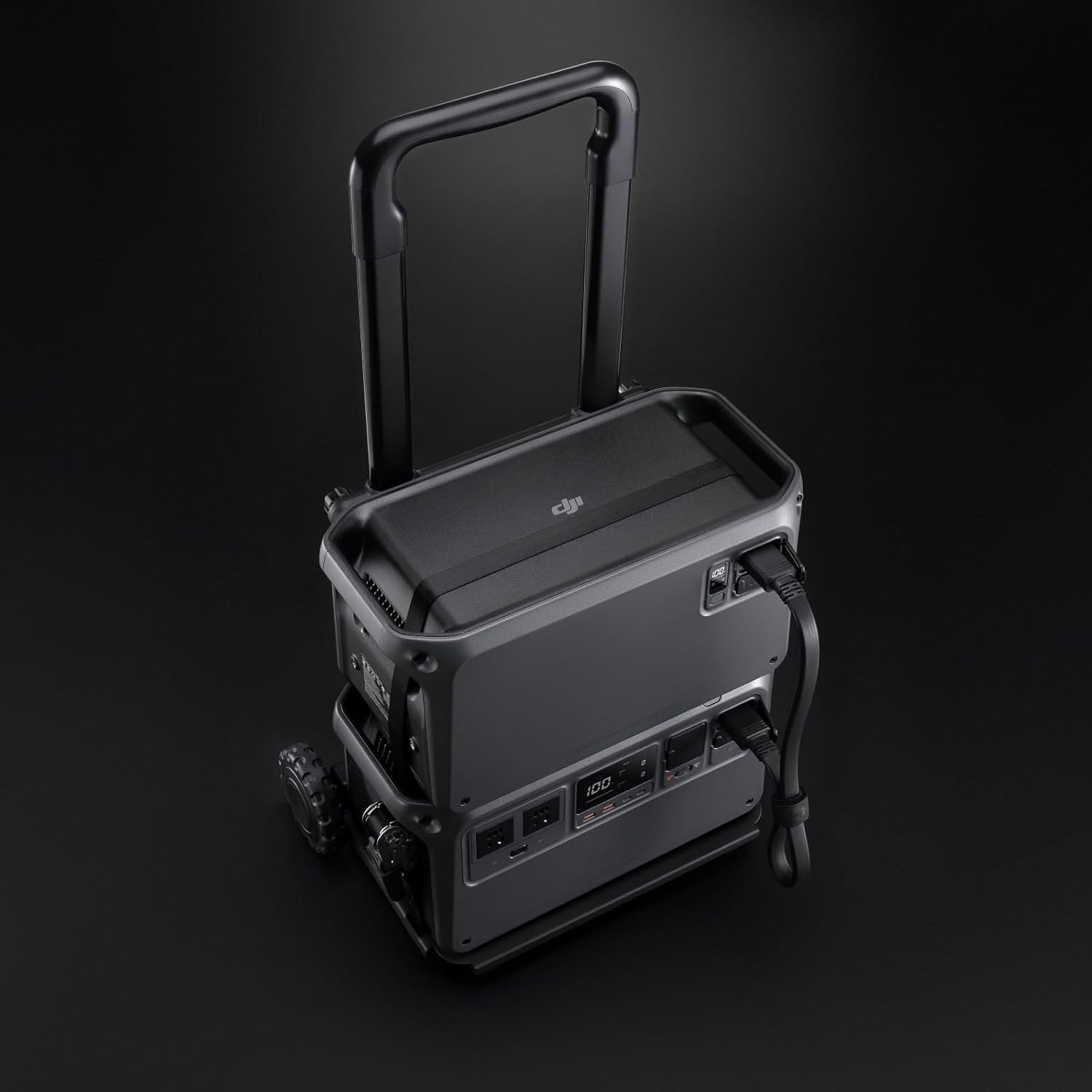
| DJI Power 2000 | 2,048Wh | $749.99 | $0.37 | Larger family and storm backup |
Note: Because holiday deals fluctuate daily, confirm exact AC output wattage, battery chemistry, solar input limits, and current checkout pricing on the product page before ordering.
What Each Battery Tier Actually Runs
A power station never delivers 100% of its sticker capacity to your wall plugs—converting DC battery power into AC household power consumes roughly 10% to 15% as inverter overhead. The table below assumes a realistic 85% usable capacity across four benchmark gift sizes:
| Gift Tier | Usable Wh (85%) | Router & Modem (18W) | Laptop (60W) | Phone Charges (~15Wh each) |
|---|---|---|---|---|
| 128Wh | ~109Wh | ~6 hours | ~1.8 hours | ~7 full charges |
| 519Wh | ~441Wh | ~24 hours | ~7.4 hours | ~29 full charges |
| 1,024Wh | ~870Wh | ~48 hours | ~14.5 hours | ~58 full charges |
| 2,048Wh | ~1,741Wh | ~97 hours | ~29 hours | ~116 full charges |
Actual laptop draw varies depending on screen brightness and workload (an ultrabook sipping 20W runs three times longer than a workstation drawing 60W), so use these figures as conservative planning baselines. Want to test your recipient's exact mix of gear? Plug their wattages into our calculator below:
⚡ Power Station Size Calculator
Enter your appliance's wattage to see exactly which portable power station you need.
Gift Ideas by Recipient
For the Camper, Tailgater, or Commuter
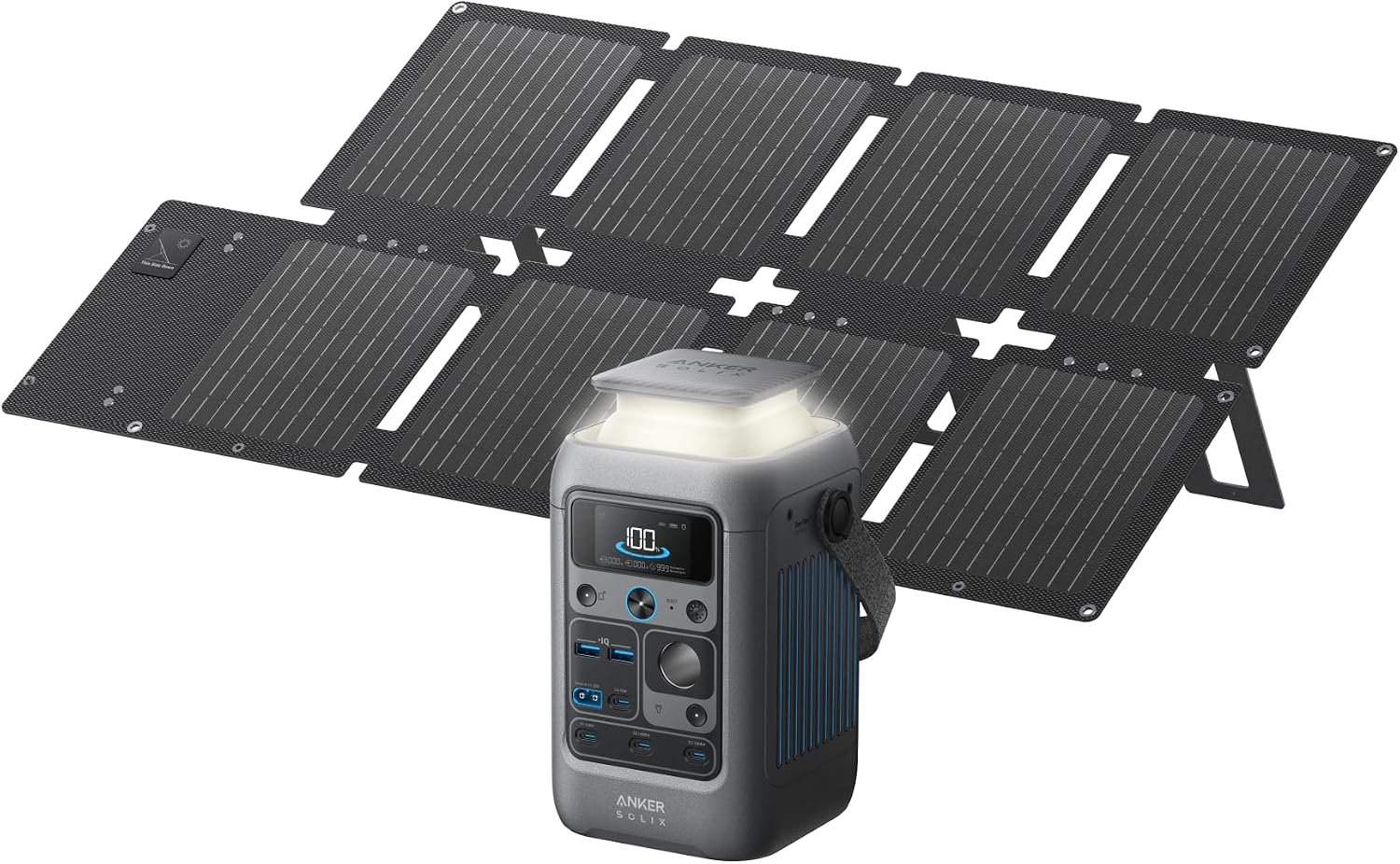
A 250 to 500Wh station hits the sweet spot for campers and weekend travelers who want quiet power without hauling 30 pounds across a campsite. It easily handles LED camp lights, phones, Bluetooth speakers, camera batteries, and a small 12V portable cooler.
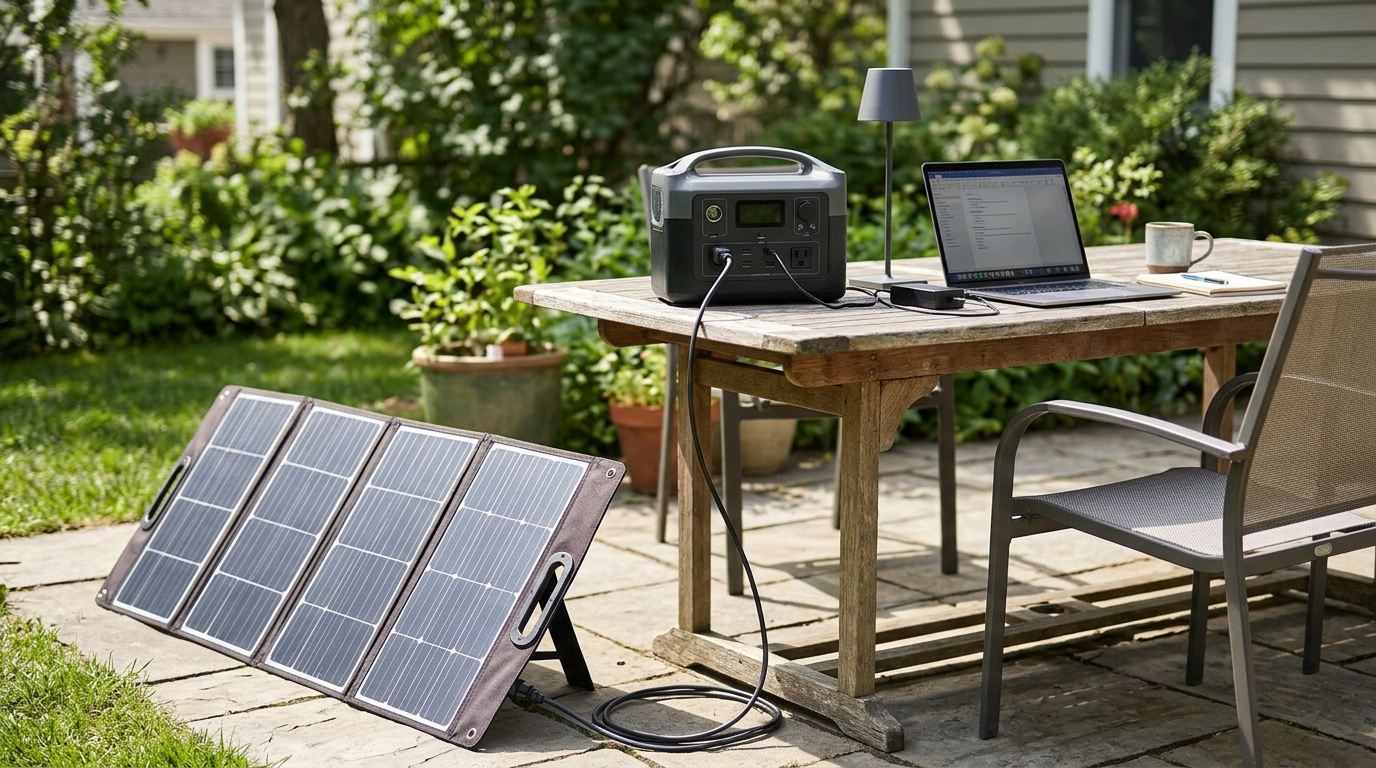
For multi-day trips off the grid, pairing the unit with a foldable 100W solar panel keeps the battery topped up—at 5 peak sun hours with standard 75% real-world panel efficiency (100W × 5 × 0.75), a single 100W panel harvests roughly 375Wh per day, enough to refill a 300Wh station from empty to full in one sunny afternoon.
For the Remote Worker or Apartment Renter
Nothing derails a workday faster than a mid-afternoon power blink that kills the Wi-Fi right before a client call. A 500 to 1,000Wh station acts as silent, fume-free indoor backup that fits neatly under a desk—critical for apartment renters who cannot run gas generators on a balcony.
A typical home Wi-Fi router and modem draw about 18W combined (see our router wattage guide for exact measurements by model), meaning even a 519Wh station keeps the internet online for a full 24 hours, while a 1,024Wh unit runs a router, modem, laptop, and desk lamp comfortably through multiple workdays.
For full desk setups and balcony recharge strategies, check our home office blackout guide and balcony solar setup tips.
For a Parent or Relative With a CPAP
This is the gift category that requires the most homework—and delivers the greatest peace of mind when sized properly. Before buying a backup battery for a CPAP user, run through four quick checks:
- Identify the CPAP model and voltage. Popular machines like the ResMed AirSense 10 and AirSense 11 run far more efficiently on a dedicated 24V DC converter cable than through the station's AC wall outlet (the AirSense 11 uses a 65W power supply). Skipping the AC inverter can stretch battery runtime by 20% to 30%.
- Ask about the heated humidifier and heated tube. This is the single biggest variable. Running a standard CPAP without heat typically draws 40 to 55W (often even less on DC), whereas turning on a heated humidifier and heated tubing can push average draw to 55 to 130W.
- Size for a full night plus buffer. A 1,000 to 1,152Wh station delivers 870 to 979Wh usable, translating to roughly 15 to 21 hours at 40 to 55W without a humidifier—enough for two nights of sleep or one full night plus Wi-Fi and phones.
- Review detailed machine runtimes. Check our CPAP power station guide before choosing between a 1,000Wh unit and a larger capacity model.
Safety note: A portable power station is not a medical device and cannot replace guidance from a sleep specialist or healthcare provider. Anyone who depends on life-sustaining medical equipment should establish an emergency power plan with their provider.
For a Storm-Prone Family
Households facing winter ice storms, summer grid strain, or hurricane season need a 2,000Wh or larger unit—ideally paired with foldable solar panels so they can recharge during multi-day blackouts.
Keep expectations realistic around kitchen appliances: a full-size refrigerator consumes 1,000 to 2,000Wh per day depending on ambient room temperature and door openings, so a standalone 2,048Wh unit (~1,741Wh usable) will only keep a fridge cycling for roughly a day before needing a recharge
. However, for Profile C essentials (CPAP, Wi-Fi router, laptop, LED lights, and phones totaling ~1,287Wh per day), a 2,048Wh station provides well over a full day of quiet indoor coverage right out of the box.
For the Enthusiast Who Wants Whole-Home Muscle
Flagship heavyweights like the EcoFlow DELTA Pro 3 and Anker SOLIX F3800 live in an entirely different category. They deliver massive battery capacity and 240V output capable of tying into a home transfer switch, but they weigh roughly 100 to 130 pounds and cost several thousand dollars. Unless you have cleared the purchase with the recipient ahead of time—and confirmed they want to handle both the weight and the storage footprint—avoid buying a 100-pound unit as a surprise gift.
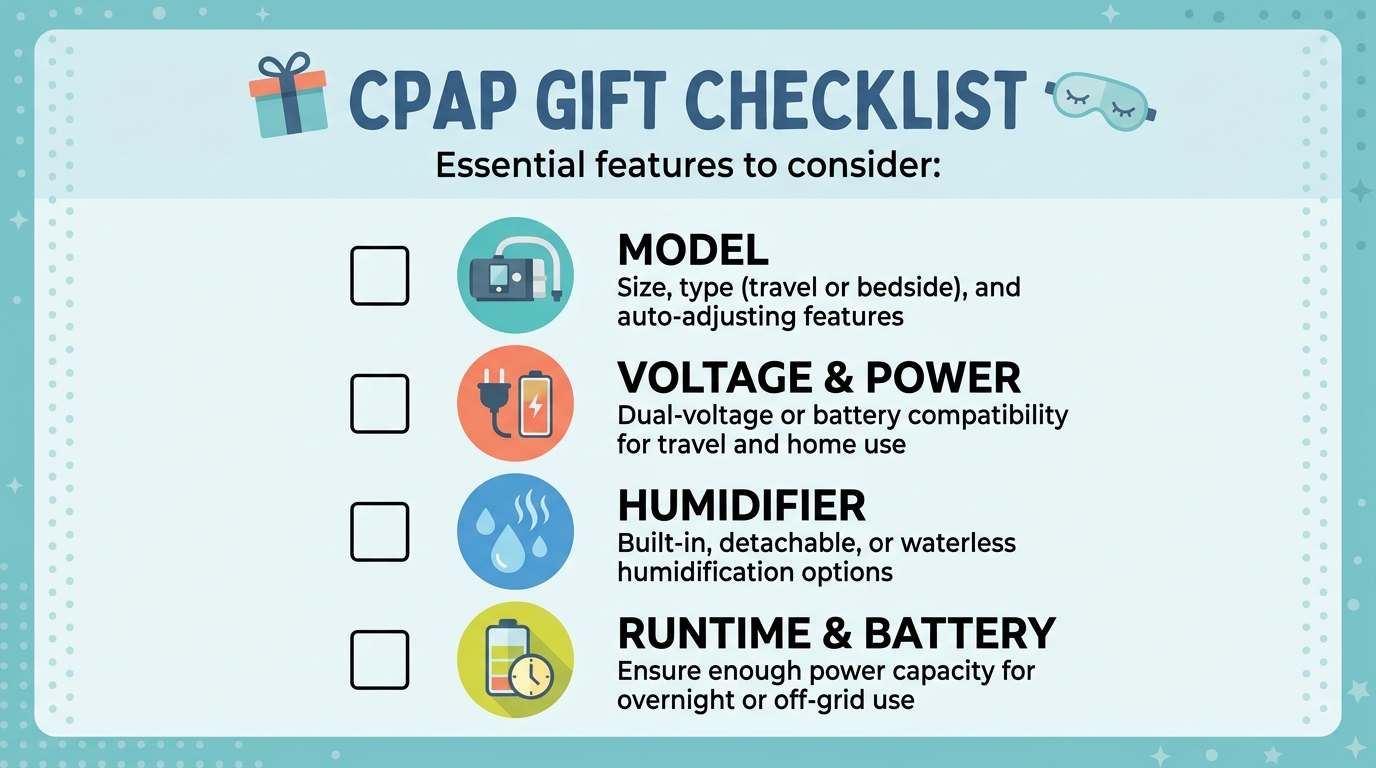
Worked Example: Sizing a $500 Gift for a Parent With a CPAP
To see how Watt-hour math prevents costly gifting mistakes, walk through a realistic holiday scenario: a parent uses a CPAP (~45W average without a humidifier) alongside a Wi-Fi router and modem (18W), and wants one full 8-hour night of uninterrupted sleep plus morning phone charging for two devices (~60Wh total).
- Total nightly load: (45W + 18W) × 8 hours = 504Wh, plus 60Wh for phones = 564Wh needed.
- Required rated capacity (accounting for 85% efficiency): 564Wh ÷ 0.85 = 664Wh. That means any 768Wh to 1,000Wh station safely clears the bar.
- Comparing two real candidates:
- A 1,024Wh unit at ~$399.98 ($0.39/Wh) offers 870Wh usable, leaving 870 - 564 = 306Wh in reserve—enough to keep the router running through the next morning or stretch into a second short night.
- The 1,152Wh Bluetti AC180 at ~$499 ($0.43/Wh) offers 979Wh usable, leaving 979 - 564 = 415Wh of extra headroom for $99 more.
- Now flip one switch—add a heated humidifier at 100W: The nightly load jumps to (100W + 18W) × 8 hours = 944Wh, plus 60Wh for phones = 1,004Wh needed. Suddenly, a 1,024Wh unit (870Wh usable) runs dry before morning, and even the 1,152Wh unit (979Wh usable) falls marginally short. In that scenario, the recipient needs either a 1,500Wh+ station, a 24V DC cable to cut conversion waste, or a plan to turn the humidifier down during an outage.
- The takeaway: One quick question—"Do you use the heated humidifier?"—is the difference between a $400 gift that works flawlessly and a $500 gift that shuts off at 4:00 AM.
Useful Stocking Stuffers and Add-Ons
If you already know the recipient owns a power station—or you want to round out a mid-size gift—these low-cost accessories add immediate practical value:
- A plug-in Kill A Watt or digital watt meter: Costs under $25 and lets the recipient measure the exact real-world wattage of their fridge, CPAP, or coffee maker instead of guessing from sticker labels.
- A heavy-duty indoor extension cord and surge-protected power strip: Makes it much easier to run power from a station tucked in a hallway or closet out to a desk or nightstand.
- A compatible foldable solar panel: Turns a one-time battery into a renewable outage kit—just double-check that the panel's open-circuit voltage (Voc) stays below the station's maximum solar input limit.
- A dedicated 12V/24V DC CPAP cable: Eliminates AC inverter losses for CPAP users, stretching overnight runtime without buying a heavier battery.
- A padded carry bag: Protects the screen and ports during trunk transport for campers and tailgaters.
- A laminated household outage checklist: Keeps emergency contacts, breaker locations, and priority appliance wattage notes taped right next to the unit.
5 Gift Safety Tips to Include in the Card
- Do not wrap it and leave it forgotten at 0% or 100%. Include a quick note telling the recipient to unbox it, read the quick-start guide, and top it up to 100% before its first outage—or store it around 60% to 80% for long-term shelf health.
- Respect temperature limits. Most lithium and LiFePO4 batteries cannot safely charge below freezing (32°F / 0°C) and degrade rapidly if left baking inside a hot car trunk or uninsulated summer garage.
- Keep vents clear and units dry. Never wrap a running power station in a blanket or run it inside an enclosed cabinet; the internal cooling fans need open airflow, and almost no portable power stations are fully waterproof.
- Never pair indoor batteries with indoor gas generators. Power stations are safe indoors precisely because they produce zero exhaust. If a household also owns a gas generator for recharging, that generator must always run outdoors, at least 20 feet away from windows, doors, and vents.
- Register the warranty immediately. Tape the gift receipt inside the manual and encourage the recipient to register the serial number on the manufacturer's site right after unwrapping.
When to Shop for the Best Holiday Deals
Black Friday falls on November 27 and Cyber Monday lands on November 30, though most major power station brands start rolling out tiered discounts two weeks early and extend them into early December. Rather than trusting inflated "was" MSRP numbers, track your target price per watt-hour ($0.37 to $0.45/Wh for 1,000Wh+ models) and set price alerts on your top two candidates so you know immediately when a deal is genuinely strong.
Frequently Asked Questions
What is the best overall power station size to give as a gift?
For most recipients, a 1,000Wh-class unit (roughly 1,000 to 1,152Wh) is the most versatile choice. It is still light enough for one person to carry, yet large enough to run a Wi-Fi router, laptop, lights, or a CPAP machine overnight.
Is a portable power station a good gift for a camper?
Yes. A 300 to 1,000Wh station paired with a 100W foldable solar panel quietly powers camp lighting, phones, fans, camera gear, and small 12V coolers without the noise or fumes of a gas generator.
Can I gift a power station for a medical device like a CPAP?
Yes, as long as you verify the device's exact model, voltage requirements, and whether a heated humidifier is used before buying. Always recommend that the recipient confirm their backup power plan with their healthcare provider.
How much should I expect to spend on a good power station gift?
Plan on roughly $120 to $330 for compact 128 to 300Wh commuter and light-camping models, $400 to $500 for versatile 1,000Wh-class units, and $750 and up for 2,000Wh+ storm-backup stations during holiday sales.
Should I include a gift receipt?
Always. Capacity needs, weight preferences, and CPAP cable compatibility can vary from person to person, so an extended holiday return window and gift receipt make exchanges painless.
Do portable power stations arrive fully charged?
No—due to lithium battery shipping regulations, most units arrive at roughly 30% to 50% charge. Remind the recipient to charge the unit fully before relying on it for a trip or storm.
Choosing the Right Unit Before Checkout
The best power station gift is never the biggest box on sale—it is the battery properly matched to the recipient's real daily loads.
Shortlist two models using usable watt-hours and price per Wh, verify humidifier and cable details if medical gear is involved, and tuck the gift receipt inside the card. When you are shopping without exact wattage numbers and want maximum versatility, a 1,000Wh-class station covers the widest range of everyday and emergency needs
⚡ Power Station Size Calculator
Enter your appliance's wattage to see exactly which portable power station you need.