Last updated: November 21, 2026
How we built this guide: Rather than hands-on lab testing or an automated live deal ticker, Trendifacts evaluates Black Friday power station deals using published manufacturer specifications, historical holiday pricing benchmarks, and price-per-watt-hour arithmetic (assuming 85% usable capacity after AC inverter losses). Holiday discounts shift by the hour, so treat every dollar figure below as a seasonal pricing benchmark and confirm live checkout prices, specs, and return policies on the retailer's page before buying.
Affiliate disclosure: Some links on this page may earn Trendifacts a commission at no extra cost to you. We rank deals strictly by price per watt-hour and household fit—never by commission rate.
The smartest way to judge a Black Friday power station deal is to ignore the crossed-out "was" price and divide the sale price by the battery's rated watt-hours (Wh). Across early-November 2026 seasonal pricing, most 1,000Wh to 3,000Wh power stations landed between $0.37 and $0.55 per Wh, with the sharpest early values ranging from $0.37 per Wh on the DJI Power 2000 to $0.39 per Wh on the DJI Power 1000 V2. Compact 288Wh units, by contrast, routinely cost $1.00 per Wh or more—the built-in premium for small size and light weight.
Your goal is not to chase the biggest percentage-off banner; it is to buy the smallest reliable station that covers your must-run loads at a strong price per watt-hour, then verify its battery chemistry, warranty, solar input ceiling, and return window before checking out.
Black Friday falls on November 27, 2026, followed by Cyber Monday on November 30, though major brands roll out early deals throughout November. Below you will find our price-per-Wh benchmark table, a year-over-year price reality check, a five-step deal test, a worked sizing example, and seven holiday traps to avoid.
The Short Answer
| Question | Answer |
|---|---|
| When are the biggest sales? | Black Friday is November 27, Cyber Monday is November 30, and early tiered sales run all week. |
| What number matters most? | Price per watt-hour (sale price ÷ rated Wh). |
| What counts as a strong 2026 deal? | Roughly $0.37 to $0.45 per Wh for 1,000Wh and larger LiFePO4 stations. |
| What should you ignore? | Crossed-out "was" prices and inflated MSRP percentage-off badges. |
| What must you verify before clicking Buy? | Battery chemistry, continuous/surge output watts, max solar input, authorized seller status, warranty length, and return window. |
| Should you wait for Black Friday itself? | Possibly—last year's holiday pricing shows some 1,000Wh and 2,000Wh models dropped $150 to $200 lower during Black Friday week, though stock and tariffs make timing unpredictable. |
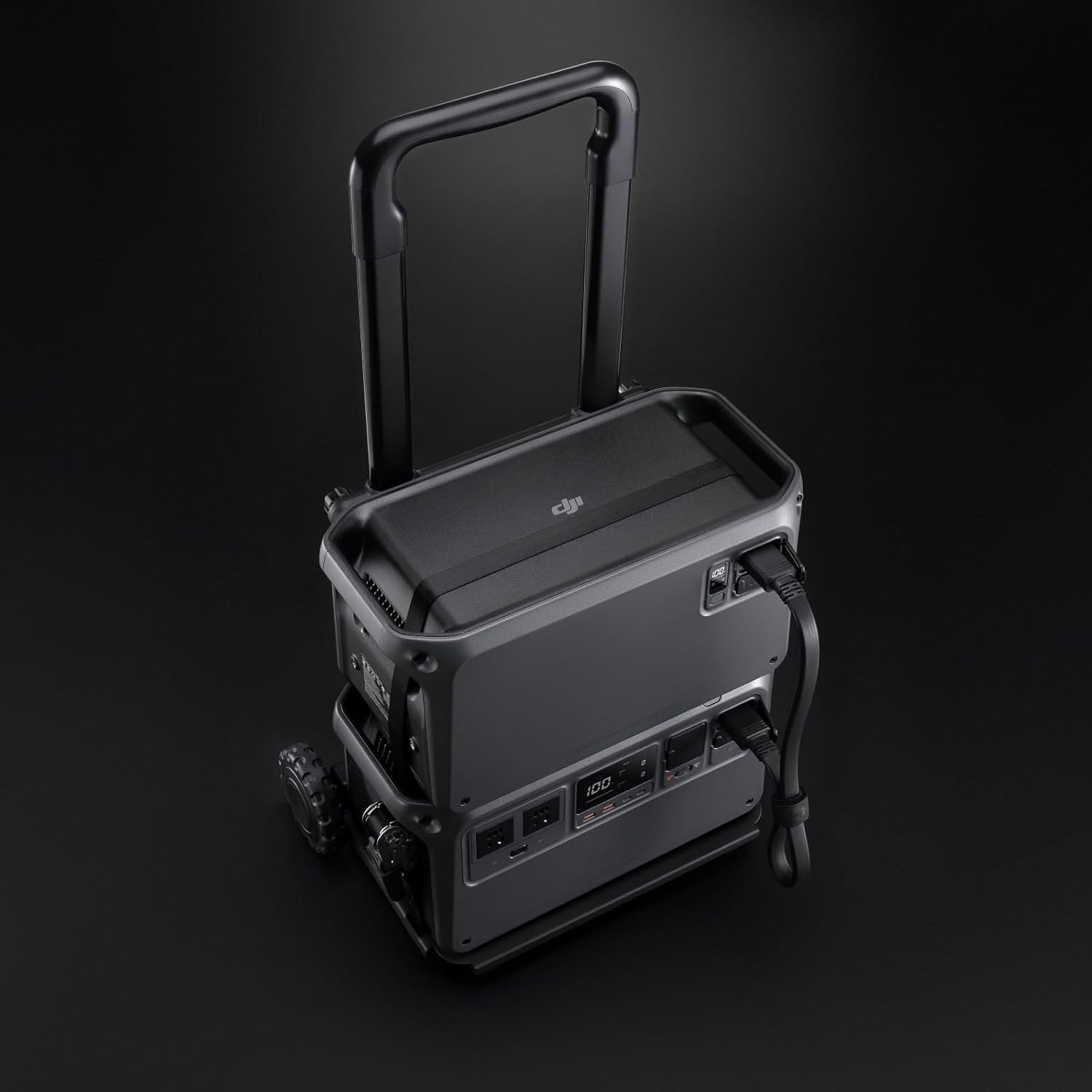
DJI Power 1000 V2 (1,024Wh)
The sharpest early-season value in the 1,000Wh class at roughly $0.39 per watt-hour—ideal for Wi-Fi, home office gear, and single-night backup if you check live pricing against your target.
Why You Should Ignore the "Was" Price
Every holiday banner advertises 35%, 45%, or 50% off, yet a percentage discount is only as honest as the reference price it starts from. Comparing 2025 and 2026 holiday listings across major power station brands shows just how fluid those "regular" list prices can be:
- The Bluetti Elite 200 V2 appeared with a $1,699 list price during last year's November sales, yet showed a $1,399 list price in early November 2026—a $300 shift in the supposed regular price for the same product line.
- The Anker SOLIX C1000 Gen 2 kept a consistent list price (~$799–$800 across both years), yet its advertised holiday sale price swung by more than $200 between November 2025 ($349) and early November 2026 ($549.99).
Under the Federal Trade Commission's Guides Against Deceptive Pricing, a former-price comparison is supposed to reflect a genuine price at which the item was actually offered to the public for a reasonable period—not an inflated anchor number invented to make a sale look dramatic.
In practice, consumer watchdogs routinely catch inflated reference prices across electronics during Black Friday week. The simplest defense is mathematical: ignore the strikethrough price completely and judge every deal by how much you pay for each watt-hour of energy you actually receive.
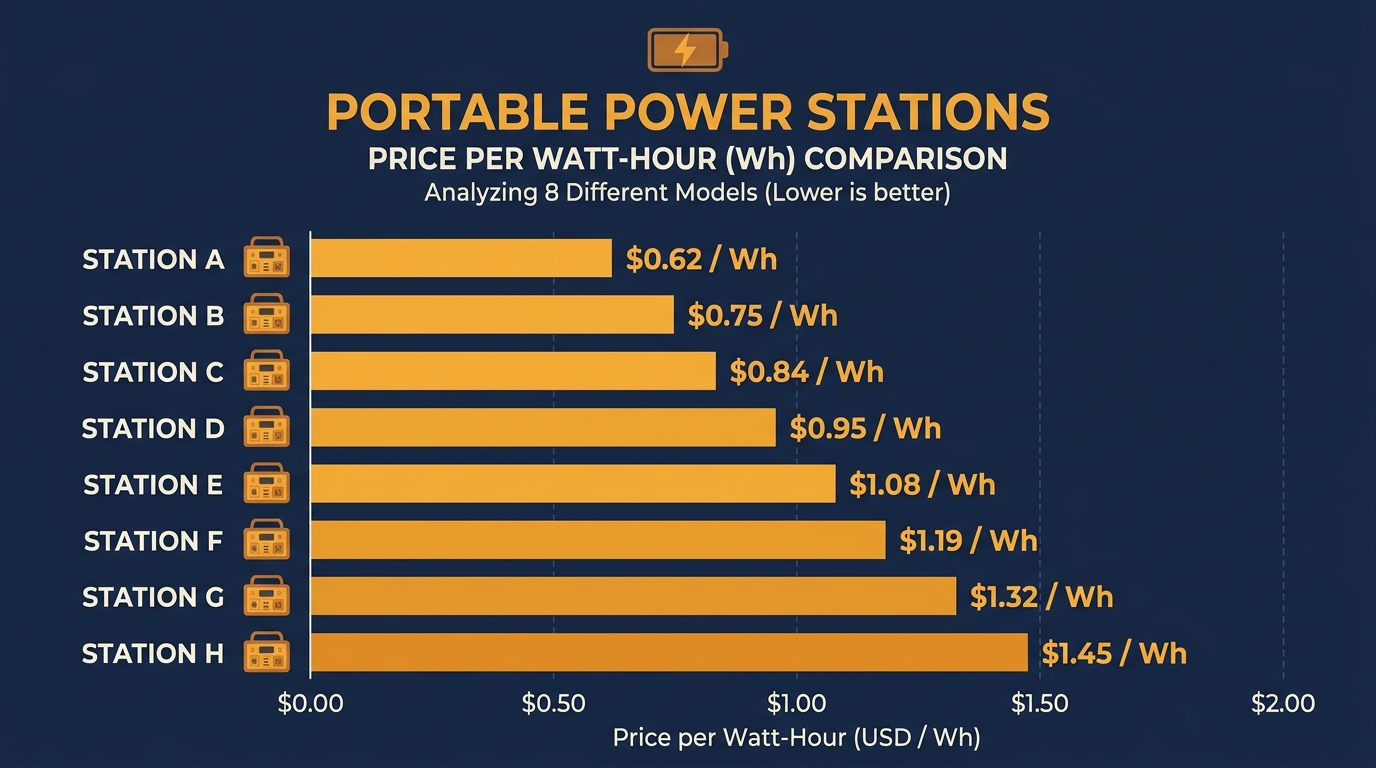
Price per Watt-Hour: The Only Fair Deal Comparison
Divide the checkout price by the battery's rated watt-hours to put every brand and size on an even playing field. The benchmark table below ranks 14 prominent models using early-November 2026 holiday sale snapshots:
| Model | Capacity (Wh) | Early-Season Benchmark | Price per Wh | Advertised Discount |
|---|---|---|---|---|
| DJI Power 2000 | 2,048Wh | $749.99 | $0.37 | 42% |
| DJI Power 1000 V2 | 1,024Wh | $399.98 | $0.39 | 43% |
| Bluetti Elite 300 | 3,014Wh | $1,199.00 | $0.40 | 25% |
| EBL Portable Station (999Wh) | 999Wh | $399.99 | $0.40 | 20% |
| Bluetti Elite 100 Mini | 1,005Wh | $428.99 | $0.43 | 46% |
| Bluetti Elite 200 V2 | 2,073Wh | $898.99 | $0.43 | 36% |
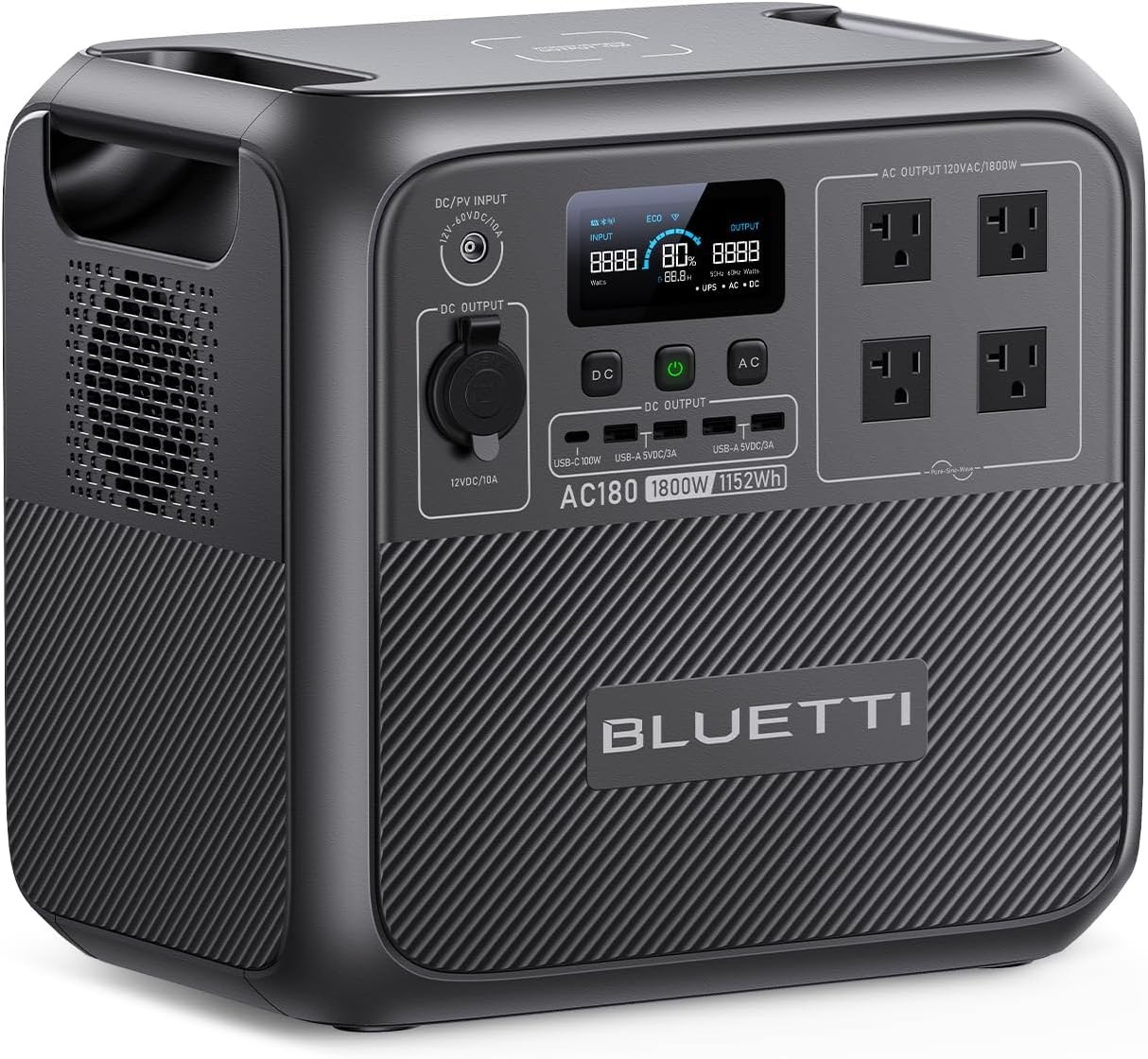
| Bluetti AC180 | 1,152Wh | $499.00 | $0.43 | 29% |
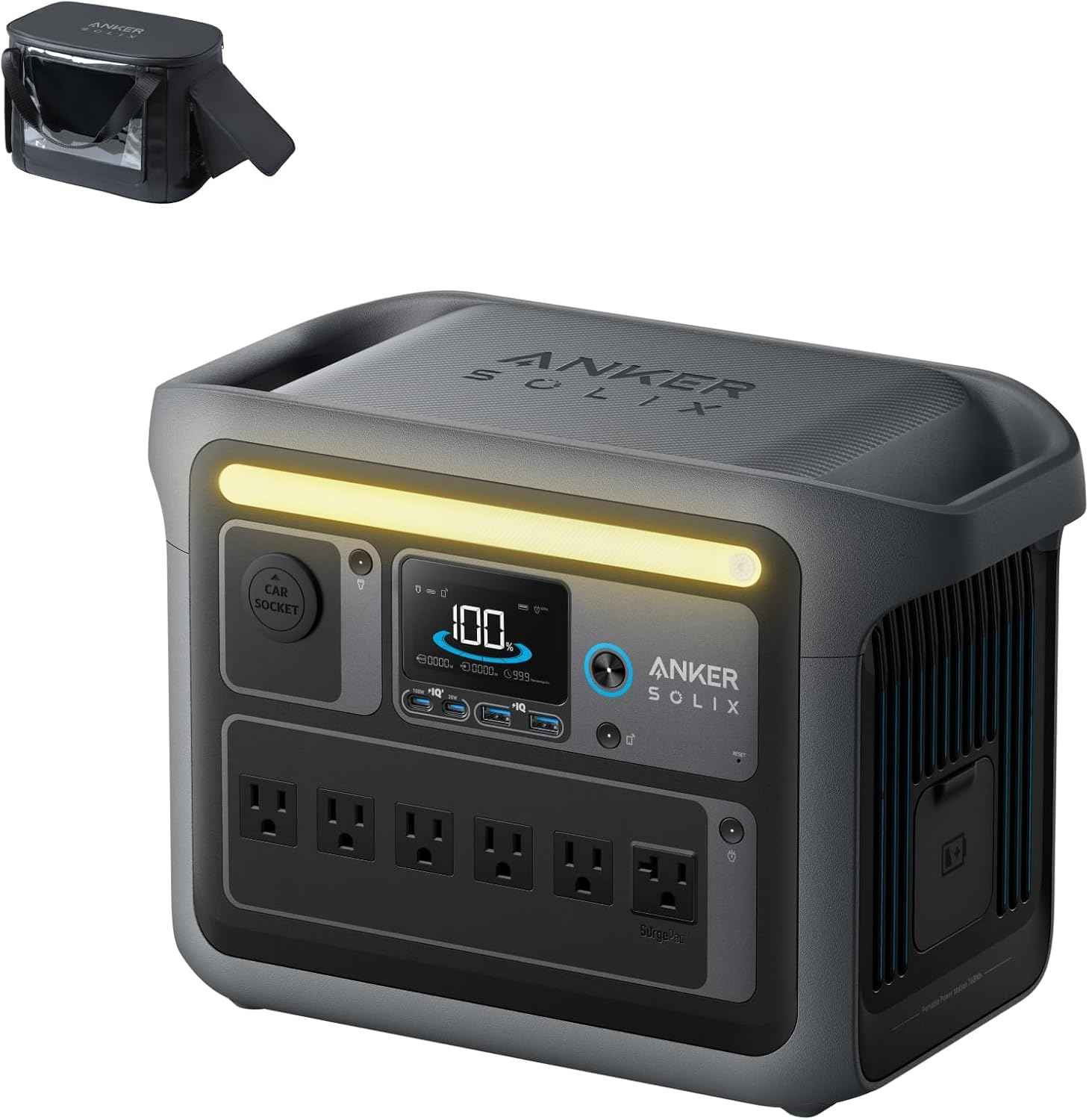
| Anker SOLIX C1000 | 1,056Wh | $499.99 | $0.47 | 17% |
| Bluetti Elite 100 V2 | 1,024Wh | $498.99 | $0.49 | 44% |
| Bluetti FridgePower | 2,016Wh | $999.00 | $0.50 | 38% |
| Anker SOLIX C1000 Gen 2 | 1,024Wh | $549.99 | $0.54 | 31% |
| Anker SOLIX S5000 | 5,024Wh | $2,939.00 | $0.59 | 18% |
| Bluetti Elite 30 V2 | 288Wh | $289.99 | $1.01 | 35% |
| Anker SOLIX C300 | 288Wh | $329.98 | $1.15 | 23% |
Three clear lessons jump straight out of those numbers:
- The loudest percentage discount is rarely the best price. The Bluetti Elite 100 V2 carries a flashy 44% off sticker, yet at $0.49/Wh it still costs more per watt-hour than the Bluetti AC180 at "only" 29% off ($0.43/Wh). Similarly, the Anker SOLIX S5000 sits at $0.59/Wh, making it pricier per unit of energy than every mid-size station on the chart.
- Compact units always carry a portability tax. A 288Wh station costs more than double per watt-hour compared to a 1,000Wh station because the inverter, display, casing, and shipping cost nearly as much on a small box as on a mid-size one. If you only need phone and router backup, check our best power stations under $500 to avoid overpaying in the compact tier.
- Price per Wh does not tell the whole story. A cheap station with weak AC output, slow wall recharging, short warranty coverage, or outdated battery cells is a poor deal even at $0.38/Wh. Pair the math above with the five-step check below—and compare charging speeds in our EcoFlow vs. Jackery vs. Bluetti recharge times breakdown.
Last Year's Prices: Is "Early Black Friday" Actually the Bottom?
Early November sales are convenient, but historical holiday pricing proves that "early Black Friday" is not always the lowest price of the season. Comparing November 2025 Black Friday week lows against early-November 2026 sale snapshots shows how wide the gap can be:
| Model | Capacity | Nov 2025 Black Friday Low | Early Nov 2026 Sale | Difference |
|---|---|---|---|---|
| Anker SOLIX C1000 Gen 2 | 1,024Wh | $349.00 | $549.99 | ~$201 higher early |
| Bluetti Elite 200 V2 | 2,073Wh | $699.00 | $898.99 | ~$200 higher early |
| EcoFlow DELTA 2 | 1,024Wh | $349.00 | Varies by retailer | Benchmark to beat (~$0.34/Wh) |
Retailers, bundles, tariffs, and inventory levels change every year, so there is no guarantee that 2026 Black Friday weekend will match 2025 lows to the dollar. Still, if either the Anker SOLIX C1000 Gen 2 or Bluetti Elite 200 V2 dips back toward last year's floor on November 27, patience could easily save $150 to $200. The disciplined move is to decide your target price per Wh right now, set alerts on two or three shortlisted units, and pull the trigger only when live checkout pricing hits your number.
The Five-Step Black Friday Deal Test
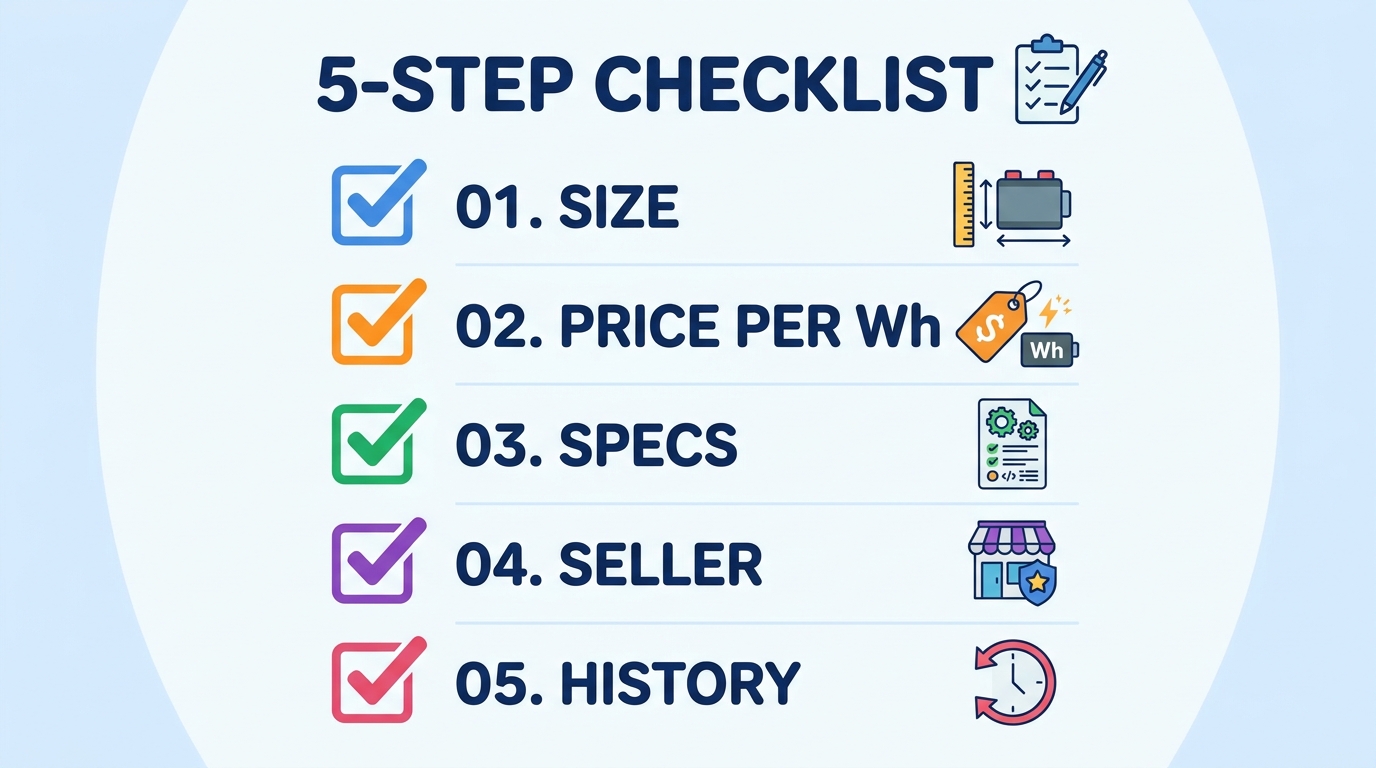
Run any tempting holiday deal through these five checks before entering your card details:
- Size your load first. Start with your actual daily watt-hour needs using our portable solar power station sizing guide. Across Trendifacts' four standard outage profiles, Profile A (Wi-Fi and phones) needs ~447Wh/day, Profile B (adds a CPAP) needs ~927Wh/day, Profile C (adds laptop and LED lights) needs ~1,287Wh/day, and Profile D (adds a full-size refrigerator) needs ~2,787Wh/day. Divide your daily need by 0.85 to find the rated watt-hours required.
- Calculate real price per Wh. Divide the final checkout price (after clip-on Amazon coupons or cart codes) by the rated watt-hours. Only compare models that actually clear your required capacity tier.
- Audit the full spec sheet. Check continuous AC output watts, peak surge watts, battery chemistry (choose LiFePO4 for multi-year longevity—see our LiFePO4 vs. lithium-ion power station guide), maximum solar input watts, wall recharge speed, and weight.
- Verify the seller, warranty, and return window. Buy directly from the manufacturer or an authorized retailer storefront. An ultra-low listing from an unknown third-party marketplace seller often voids the multi-year manufacturer warranty.
- Check price history. Compare the live price against historical lows using a price tracker or the 2025 benchmarks above. If you cannot verify the "was" price, fall back strictly on price per watt-hour.
Want to double-check your own appliance wattages before you shop? Plug them into our calculator right here:
⚡ Power Station Size Calculator
Enter your appliance's wattage to see exactly which portable power station you need.
A Worked Buying Example: Sizing a Profile B Renter Setup
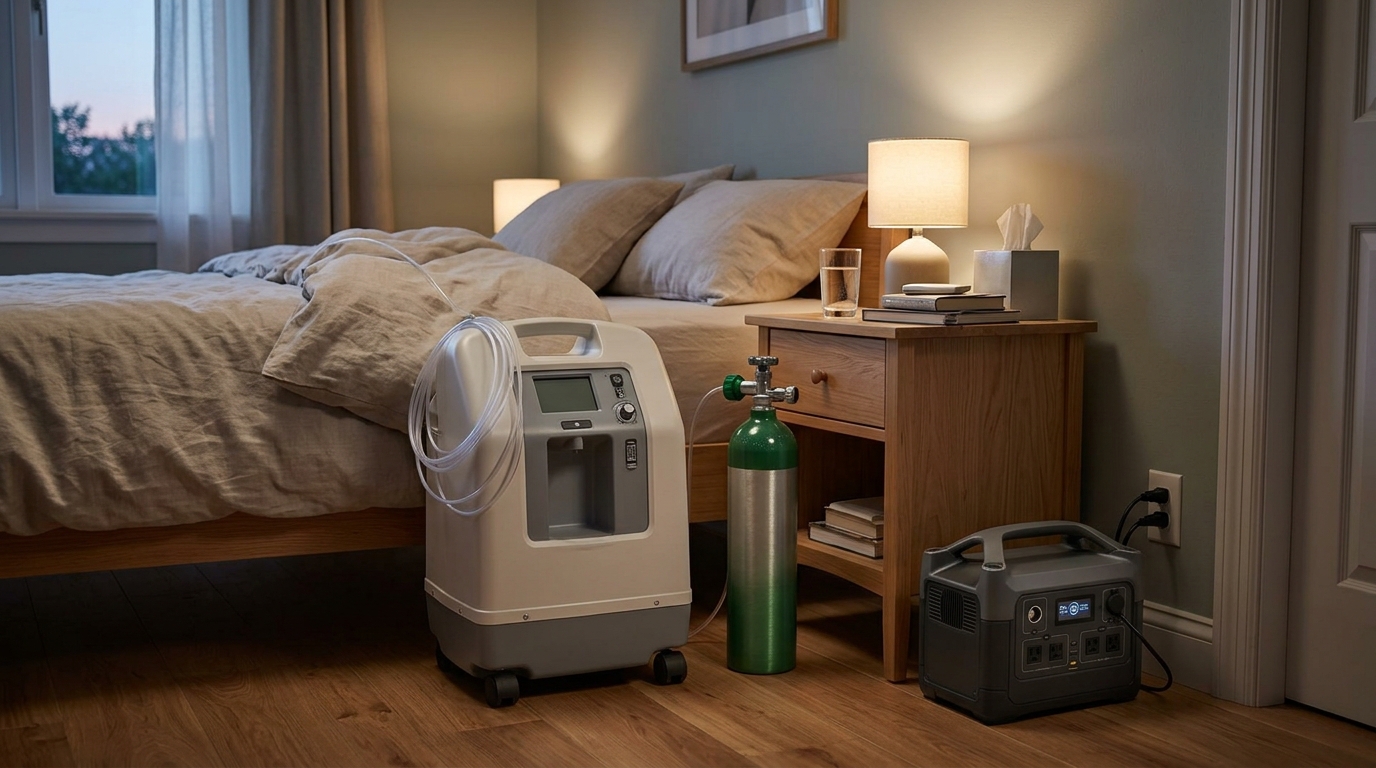
Consider an apartment renter preparing for winter blackouts under Profile B: a CPAP machine (~45W without a heated humidifier), a Wi-Fi router and modem (~18W), and daily phone charging—totaling roughly 927Wh per day. They want one full day of coverage with no recharging needed.
- Rated capacity required: 927Wh ÷ 0.85 = ~1,090Wh.
- Shortlist from early-season benchmarks:
- DJI Power 1000 V2: 1,024Wh at $399.98 ($0.39/Wh) — ~870Wh usable
- Bluetti Elite 100 V2: 1,024Wh at $498.99 ($0.49/Wh) — ~870Wh usable
- Anker SOLIX C1000: 1,056Wh at $499.99 ($0.47/Wh) — ~898Wh usable
- Bluetti AC180: 1,152Wh at $499.00 ($0.43/Wh) — ~979Wh usable
- Jackery Explorer 1000 v2 + 100W Solar Panel Bundle: 1,070Wh at $639.00 — ~910Wh usable
- Which unit covers the full 24 hours? Only the Bluetti AC180 clears the 1,090Wh threshold with room to spare (~979Wh usable vs. 927Wh needed). The 1,024Wh to 1,070Wh models cover 94% to 98% of the full day—plenty for an 8-hour CPAP night plus morning phones, though they require trimming daytime router hours or topping up via solar to complete a full 24 hours.
- The buying decision: If the renter wants zero compromises on a full 24-hour Profile B outage, the Bluetti AC180 wins on both capacity and strong value ($0.43/Wh). If they strictly need overnight CPAP coverage and want to save $100, the DJI Power 1000 V2 at $0.39/Wh is the sharper buy. Before committing to any station for medical sleep therapy, verify DC cable compatibility (many ResMed AirSense machines run far longer on a 24V DC cable) in our best power stations for CPAP machines and 1,000Wh CPAP runtime breakdown.
The takeaway is simple: price per watt-hour narrows your shortlist, but load fit chooses the winner.
What to Buy by Household Profile
Use this quick-reference matrix to match your household outage profile to the right Black Friday tier and dig into the exact head-to-head comparisons on Trendifacts before buying:
| Household Profile | Rated Wh Needed (1 Day, No Recharge) | Black Friday Tier to Shop |
|---|---|---|
| Profile A: Wi-Fi router & phones | ~525Wh | 288Wh for several hours; 500 to 1,000Wh for a full day |
| Profile B: Adds a CPAP machine | ~1,090Wh | 1,000 to 1,200Wh class |
| Profile C: Adds laptop & LED lights | ~1,515Wh | 1,500 to 2,100Wh class |
| Profile D: Adds a full-size refrigerator | ~3,280Wh | 3,000Wh+ class, or a 2,000Wh unit paired with solar recharging |
To narrow down individual models inside your tier, check these deeper breakdowns:
- Budget & compact buyers: Best Power Stations Under $500
- Mid-size 1,000Wh to 2,000Wh buyers: Jackery Explorer 1000 v2 vs. 1500 v2 and EcoFlow Delta 2 vs. Bluetti AC200P
- Heavy-duty & multi-day household backup: EcoFlow DELTA Pro 3 Review, Anker SOLIX F3800 Review, and What a 4,000Wh Power Station Can Run
- Whole-home or fuel backup shoppers: Compare portable batteries against fuel and wall-mounted options in our Power Station vs. Generator Guide and Home Battery Backup Systems Guide
- Shopping for someone else? Use our Power Station Gift Guide 2026
Solar Bundles: Are the "Free" Panels Actually Worth It?
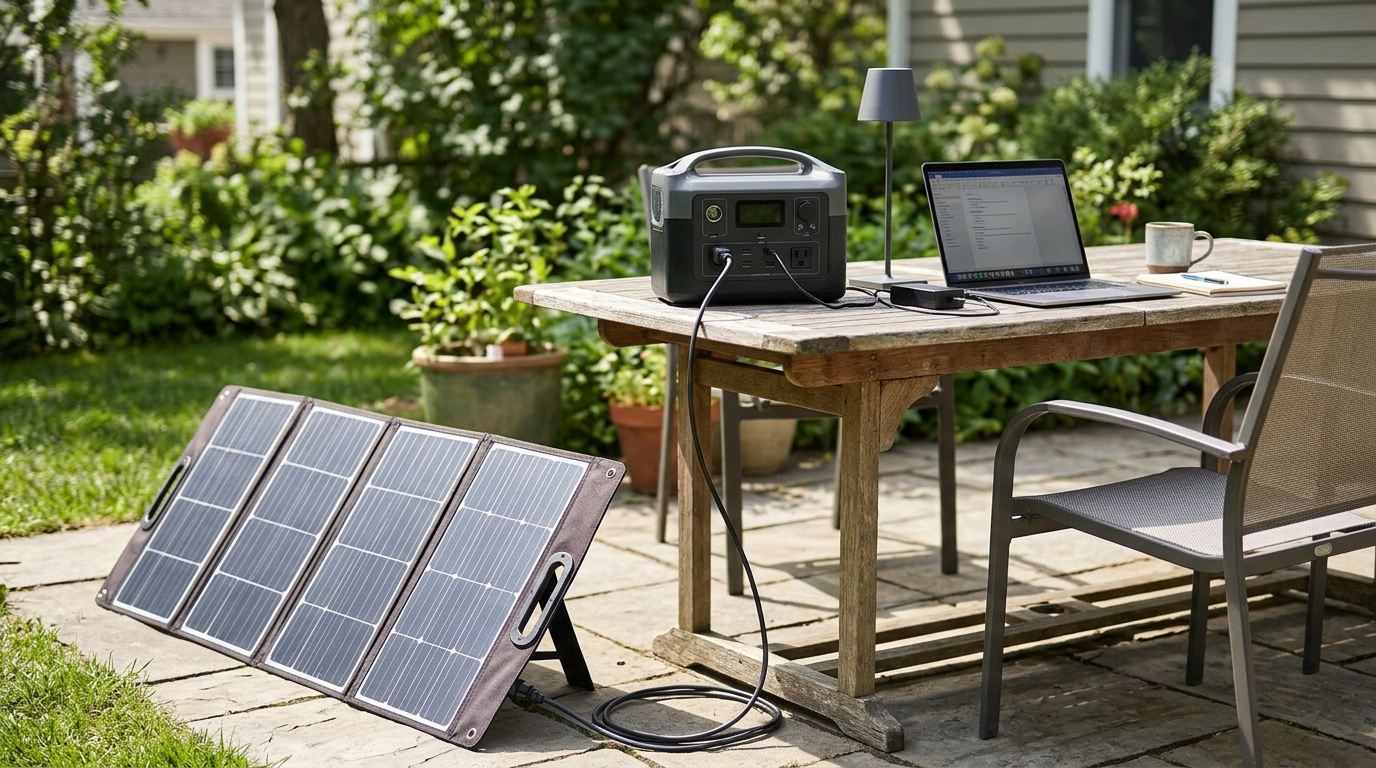
Black Friday is packed with station-plus-panel bundles claiming hundreds of dollars in savings. A solar bundle is genuinely worthwhile only if two conditions hold true: you actually have a sunny patio, yard, or balcony to deploy the panel (apartment dwellers should read our balcony solar kits for renters guide first), and the bundle price beats buying the standalone station plus a compatible third-party panel separately.
Always check the station's maximum solar input wattage and open-circuit voltage (Voc) before paying extra for a larger panel. If a 1,000Wh unit caps solar input at 400W, paying for a 600W bundle wastes money. For realistic daily recharge math by panel size, see our portable solar panels guide and solar panels for a 4,000Wh power station.
Seven Black Friday Power Station Traps to Avoid
- Chasing the percentage badge. Always compute sale price ÷ rated Wh instead of trusting a "50% off" tag.
- Buying heavy capacity you will never carry or use. A 60-pound 2,000Wh station is not a "better deal" if you only need to keep a Wi-Fi router and CPAP running in an upstairs bedroom.
- Ignoring continuous and surge output watts. A bargain 1,000Wh battery with a low inverter ceiling will trip instantly on a coffee maker, sump pump, or space heater—see why in our space heater runtime guide and sump pump surge-watt breakdown.
- Overlooking the solar input ceiling. Never pay for a bundled solar array larger than the station's MPPT charge controller can accept.
- Buying from unauthorized third-party sellers. Warranty coverage and hassle-free returns are part of the price you pay—verify the "Sold by" line at checkout.
- Confusing older NMC clearance stock with LiFePO4 models. Clearance deals on previous-generation units can be smart buys, provided you confirm battery chemistry, remaining manufacturer support, and warranty terms.
- Waiting forever for the theoretical rock-bottom price. If a reputable LiFePO4 station in your size hits your target price per watt-hour ($0.37 to $0.45/Wh for 1,000Wh+), buy it. Winter storms do not wait for Cyber Monday.
A Simple Shopping Timeline for Black Friday Week
- Now through Wednesday (Nov 25): Calculate your Profile A–D capacity need, set your target price per Wh, shortlist two or three units, and turn on price alerts.
- Thanksgiving & Black Friday (Nov 26–27): Compare both the manufacturer's direct store and Amazon (brands occasionally stack extra clip-on coupons or bundle accessories exclusively on one storefront).
- Cyber Monday (Nov 30): Your second window if a flagship unit sold out on Friday—and frequently the best day for standalone foldable solar panels, expansion batteries, and carrying cases.
- Right after delivery: Unbox the station, charge it to 100%, test it against your real appliances with a plug-in watt meter, and register the warranty. Follow our winter storm power outage prep guide and cold-weather charging limits guide before freezing temperatures hit.
Frequently Asked Questions
When is Black Friday 2026?
Black Friday lands on November 27, 2026, and Cyber Monday follows on November 30, 2026, with early deals active throughout mid-to-late November.
Are early Black Friday power station deals worth buying?
Sometimes. Compare the live price per watt-hour against your target rather than the advertised discount percentage—just keep in mind that several popular 1,000Wh and 2,000Wh models dipped up to $200 lower on Black Friday weekend last year.
What is a genuinely good price per watt-hour in 2026?
For 1,000Wh and larger LiFePO4 units, $0.37 to $0.45 per Wh represents strong seasonal value. Compact 250 to 300Wh stations naturally cost more per watt-hour ($0.70 to $1.15/Wh) due to fixed hardware overhead.
Should I buy a power station bundle with a solar panel?
Only if you plan to recharge outdoors or from a sunny balcony during multi-day outages, the panel stays within the station's maximum solar wattage and voltage limits, and the bundle costs less than buying the pieces separately.
Is it safe to buy a power station from a third-party marketplace seller?
It carries extra risk. Stick to the brand's official store or verified authorized retailers so your multi-year battery warranty and holiday return policy stay intact.
What size power station should I target on Black Friday?
Size by daily loads: roughly 525Wh for Wi-Fi and phones, 1,090Wh for a CPAP household, 1,515Wh for a home office plus CPAP and lights, and 3,280Wh+ (or a 2,000Wh station with solar panels) to cover a full-size refrigerator for a full day.
Making the Final Call
Treat Black Friday as a price-per-watt-hour math problem, not a percentage-off contest. Size your daily appliance load first, calculate real cost per Wh, verify battery chemistry and seller authorization, and buy as soon as a shortlisted model hits your target price instead of chasing the flashiest banner. Always confirm live checkout pricing, specifications, and warranty terms directly on the retailer's page before ordering.