Jackery Explorer 1000 v2 Review: Specs, Runtime Math, and Who Should Buy It
Last updated: November 27, 2026
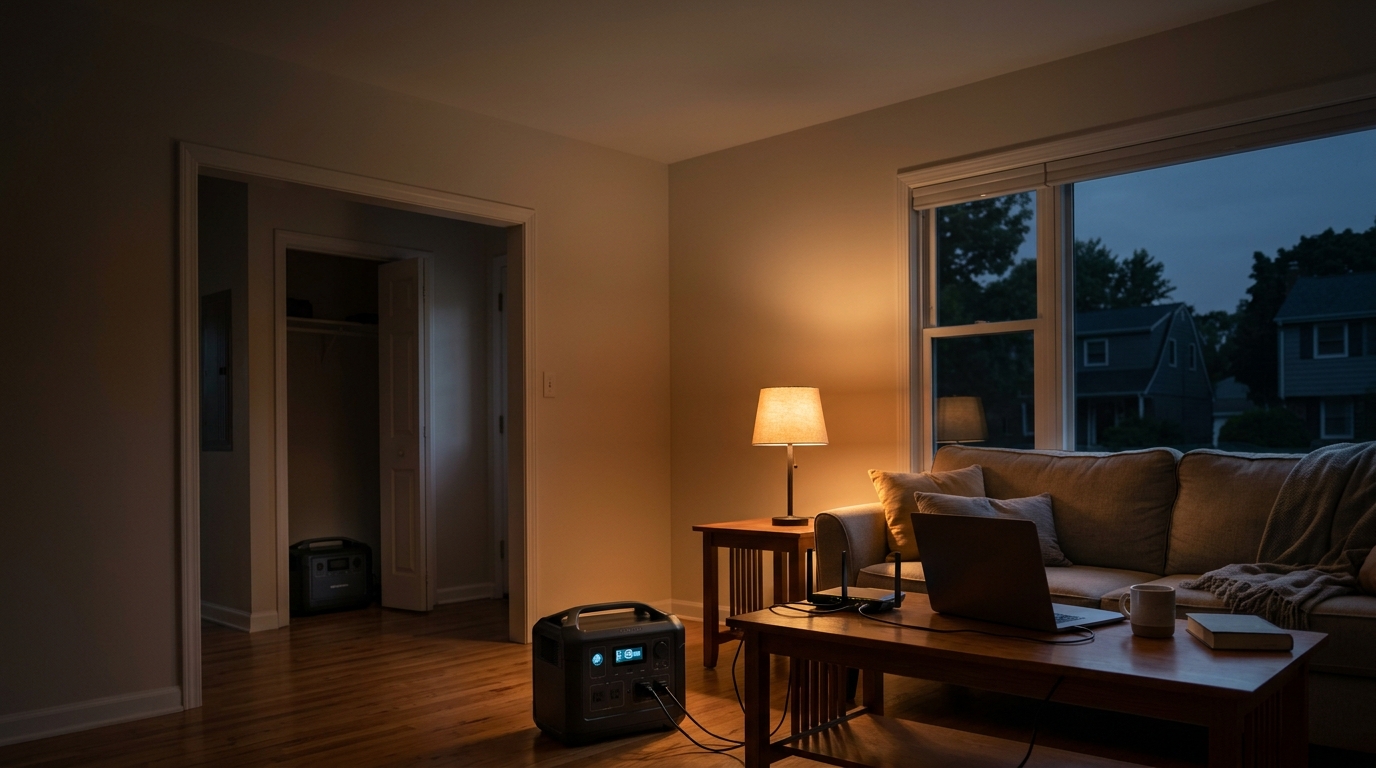
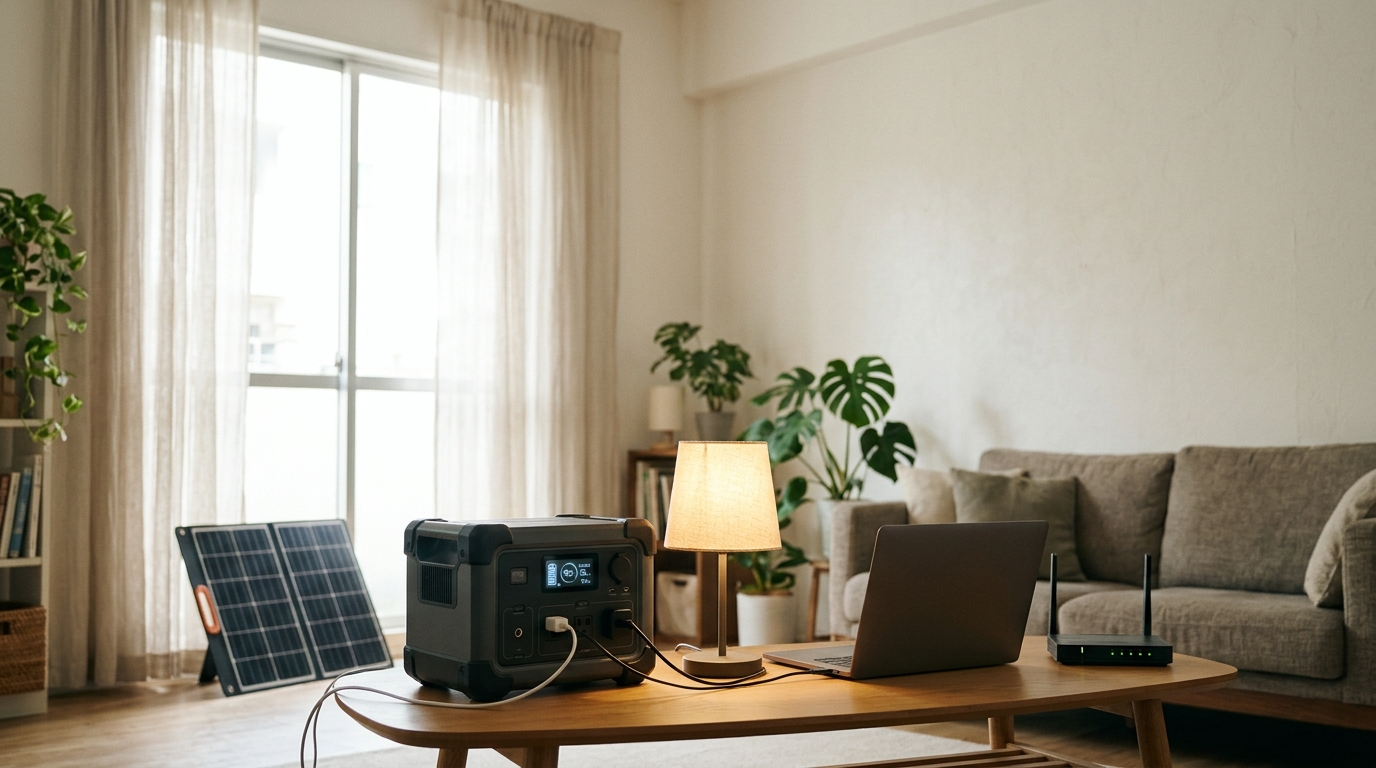
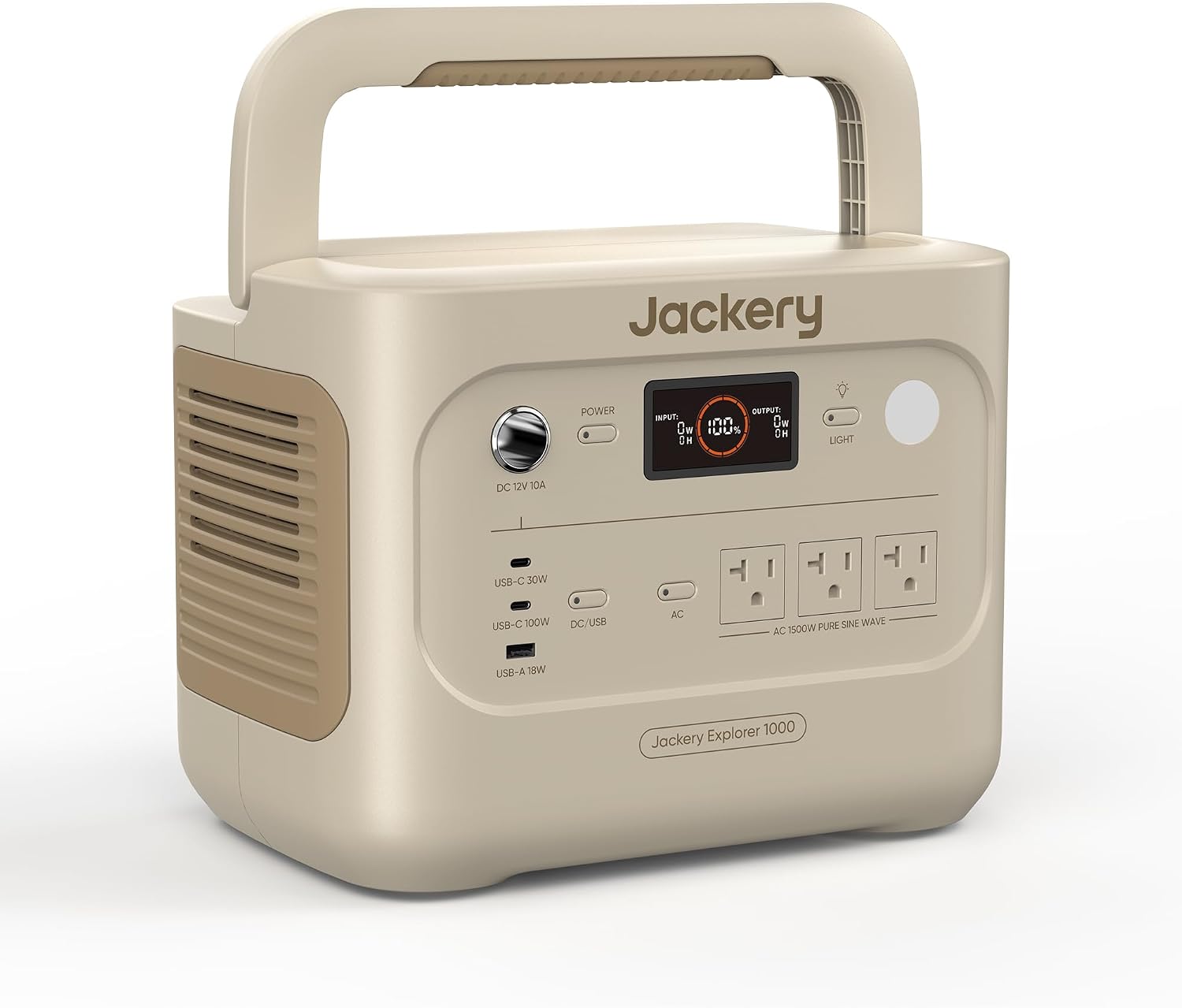
The Jackery Explorer 1000 v2 is a lightweight, quiet 1,070Wh LiFePO4 portable power station delivering 1,500W continuous AC output (3,000W surge) in a compact 23.8 lb frame backed by up to a 5-year warranty (3 years standard plus 2 extended upon registration). It is easy to carry up stairs, nearly silent in low-noise charging mode, and straightforward to operate—making it a strong fit for overnight CPAP backup, keeping a Wi-Fi router and laptop online through a storm, or weekend camping.
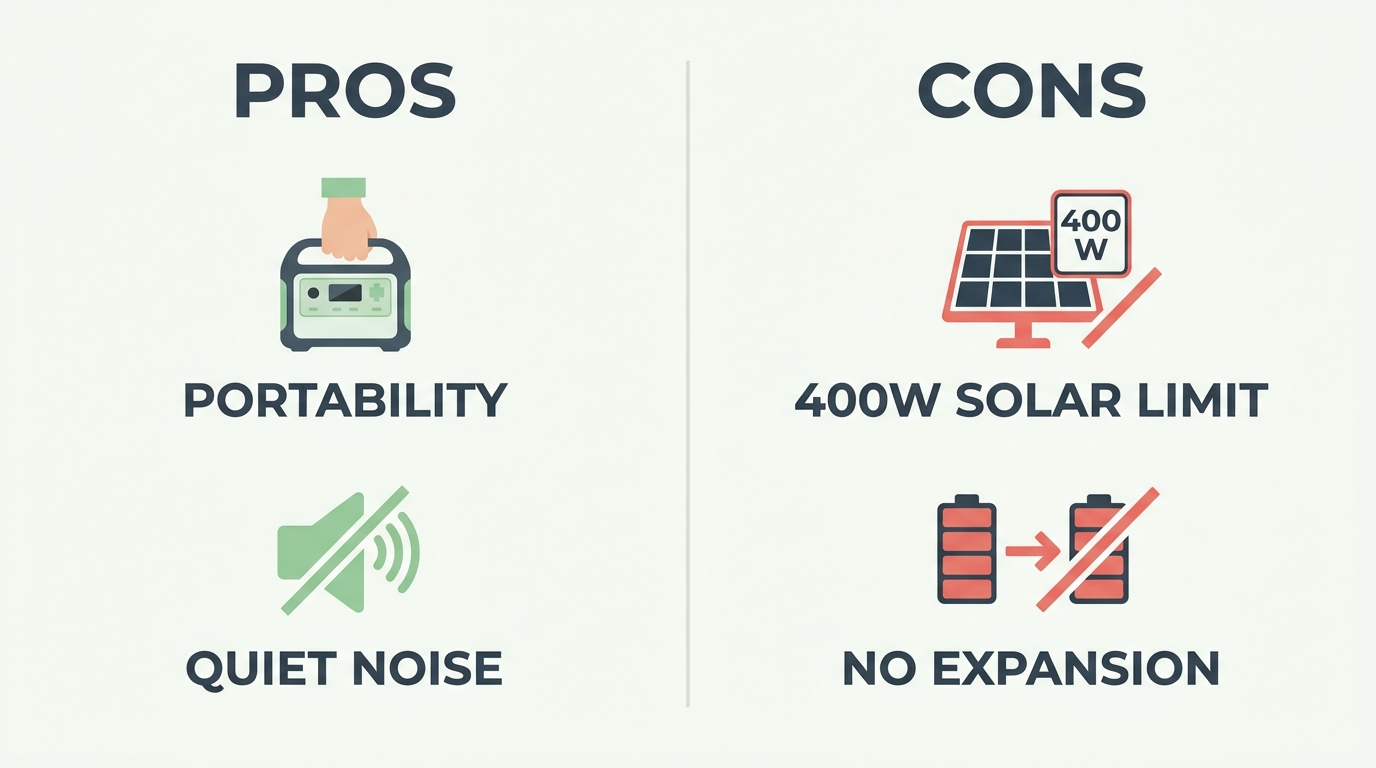
Its real trade-offs are fixed capacity with no expansion battery support, a 400W solar input ceiling, slower standard wall charging than top-speed rivals, and steep price swings between its ~$799 MSRP and sale pricing. If you want the lowest price per watt-hour, expandable storage, or 1,800W+ continuous output, competing 1,000Wh stations beat it. If you prioritize low weight, quiet bedroom operation, and plug-and-play simplicity—and catch it on sale near $0.47 per Wh or lower—it is a dependable everyday pick.
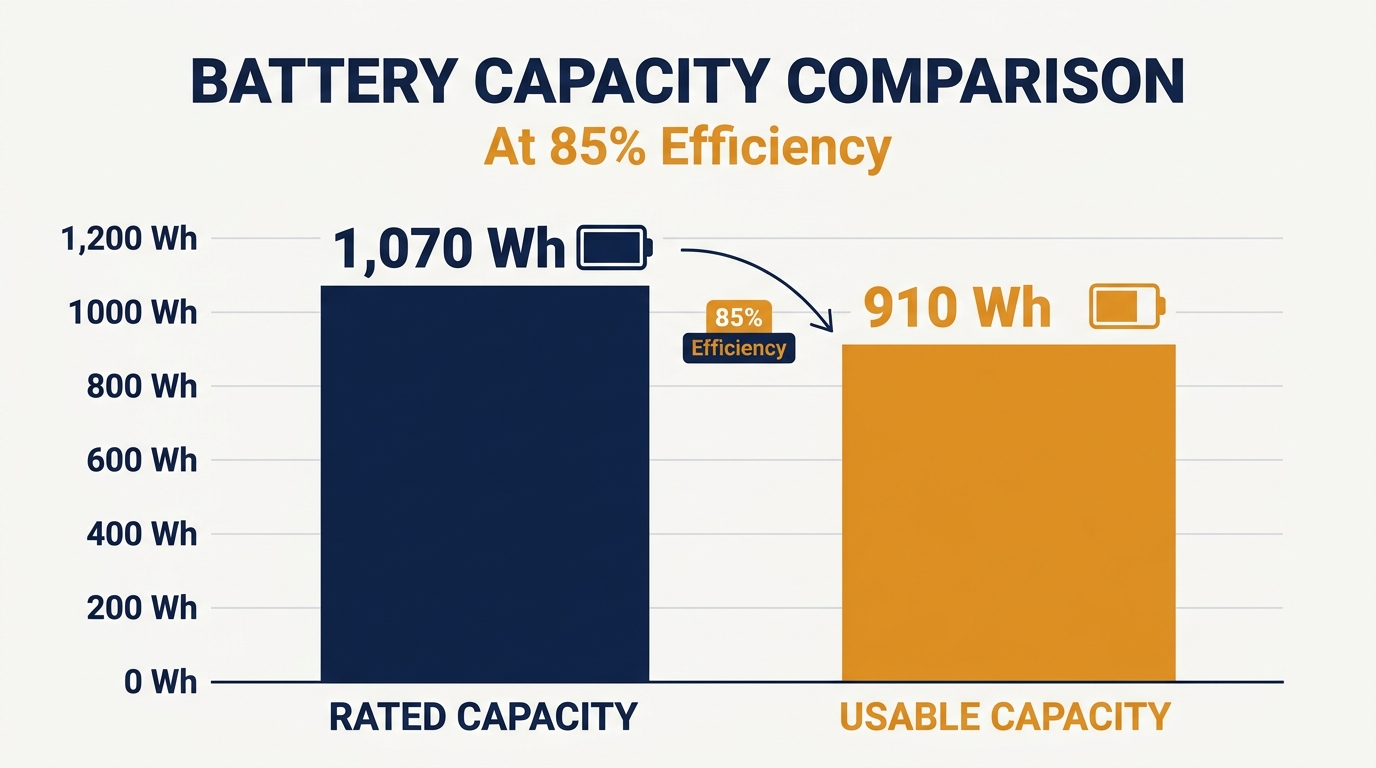
How we built this review: Rather than in-house bench testing, Trendifacts evaluates the Explorer 1000 v2 using Jackery's published technical specifications, independent efficiency benchmarks (which align closely with our conservative 85% usable capacity standard, or roughly 910Wh delivered from a 1,070Wh pack), and worked appliance runtime math. Pricing fluctuates frequently, so always confirm current checkout prices and exact capacity ratings before buying.
Jackery Explorer 1000 v2 (1,070Wh)
One of the lightest, quietest 1,000Wh-class LiFePO4 stations for bedside CPAP backup, apartment blackouts, and weekend camping—best bought on sale under $500.
The Short Answer
| Feature | Jackery Explorer 1000 v2 |
|---|---|
| Rated Capacity | 1,070Wh (~910Wh usable at 85% efficiency)* |
| AC Output | 1,500W continuous / 3,000W peak surge |
| Battery Chemistry | LiFePO4 (LFP), rated for 4,000 cycles to 70%+ capacity |
| Weight | 23.8 lb (10.8 kg) rated |
| Wall Recharge Time | ~1.7 hours standard / ~1 hour via app Emergency Super Charge |
| Max Solar Input | 400W (dual DC8020 ports) |
| UPS / EPS Switchover | ≤20 ms (10 ms on updated 1,024Wh revision) |
| Warranty | 5 years (3 years standard + 2 years extended; verify at checkout) |
| Biggest Strengths | Lightest-in-class handling, ≤22 dB Quiet Charging Mode, flat folding handle, simple app |
| Biggest Drawbacks | Not expandable, 400W solar cap, slower standard AC charging than top rivals, not weatherproof |
| Best For | Simplicity-first buyers, bedroom CPAP & Wi-Fi backup, apartment renters, light campers |
*Version watch: Jackery recently introduced an updated Explorer 1000 v2 revision rated at 1,024Wh (with faster ~1.25-hour standard AC charging and 10 ms UPS switchover) alongside the widely stocked 1,070Wh version. Check the exact Wh rating on the product listing before ordering—the 1,024Wh version yields roughly 870Wh usable instead of 910Wh.
Full Specifications
| Specification | Published Value | Practical Note |
|---|---|---|
| Battery Capacity | 1,070Wh (1,024Wh on newer revision) | ~910Wh usable AC energy at 85% efficiency |
| Battery Chemistry | LiFePO4 (LFP) | 4,000 cycles to ≥70% capacity (10+ years of regular use) |
| AC Output | 1,500W continuous / 3,000W surge | Pure sine wave; handles fridges and laptops, caps heavy heaters |
| Weight | 23.8 lb (10.8 kg) | Easy single-hand carry with flat-folding top handle |
| Dimensions | 12.87 × 8.82 × 9.72 in | Compact enough for closets, nightstands, and car trunks |
| Output Ports | 3× AC outlets (US 120V) / 2× AC (UK/EU 230V), 2× USB-C (100W + 30W), 1× USB-A (18W), 1× 12V car port | US outlets sit close together, which can crowd bulky power bricks |
| Wall Recharge | ~1.7 hours standard; ~1 hour Emergency Mode | Emergency Super Charge must be toggled in the Jackery app |
| Solar Input | Up to 400W max (DC8020 ports) | Older DC7909 panels require an adapter |
| UPS Switchover | ≤20 ms (10 ms on 1,024Wh revision) | Fine for routers and CPAPs; not rated for sensitive NAS/servers |
| Operating Noise | ≤22 dB in Quiet Charging Mode | Nearly silent at low loads; fans ramp up above ~1,000W |
| Operating Temp | Charge: 32°F–113°F (0°C–45°C); Discharge: 14°F–113°F | Standard LFP freezing cutoff; keep indoors in winter |
| Expansion | Not expandable | Fixed capacity—step up to the Explorer 1000 Plus if you need add-on packs |
| Weatherproofing | None (indoor/sheltered use only) | Keep dry and away from rain or damp ground |
Why some listings show two AC outlets instead of three: The US 120V model ships with three AC outlets, while the UK and EU 230V versions ship with two AC sockets. Always confirm the port layout on your regional product page before relying on a specific plug count.
Pricing & Price-per-Watt-Hour Reality Check
Jackery power stations swing dramatically between full MSRP and holiday or seasonal promotions. Judging the Explorer 1000 v2 strictly by price per watt-hour (sale price ÷ rated Wh) tells you immediately whether a listing is worth buying:
| Pricing Tier | Example Price | Price per Wh (1,070Wh) | Value Verdict |
|---|---|---|---|
| Full List / MSRP | ~$799 | $0.75/Wh | Overpriced—wait for a sale or buy a rival |
| Typical Sale Price | ~$499 | $0.47/Wh | Fair buy if you prioritize weight and low noise |
| Strong Holiday Deal | ~$399–$449 | $0.37–$0.42/Wh | Competitive with top value 1,000Wh rivals |
| 1× 100W Solar Bundle | ~$639 | Includes panel | Worthwhile only if you need the panel and verify standalone pricing |
| 2× 100W Solar Bundle | ~$749 | Includes 2 panels | Check whether third-party panels + standalone unit cost less |
Across the 1,000Wh class, strong sale pricing generally falls between $0.39 and $0.54 per Wh. At full $799 MSRP ($0.75/Wh), the Explorer 1000 v2 is poor value; near $450 to $499 ($0.42–$0.47/Wh), you are paying a modest, reasonable premium for Jackery's lighter chassis, quiet fans, and clean app experience.
Use our power station price-per-watt-hour guide and Black Friday power station deals 2026 guide to check live pricing against current benchmarks.
What It Runs: Worked Runtime Math
Using 910Wh of usable energy (85% of the 1,070Wh battery after AC inverter losses—the standard efficiency benchmark for 1,000Wh LiFePO4 stations), here is what the Jackery Explorer 1000 v2 realistically powers on a single charge:
| Appliance / Load | Typical Power Draw | Estimated Runtime on 910Wh |
|---|---|---|
| Wi-Fi Router & Modem | ~18W | ~50 hours |
| CPAP (no heated humidifier) | 40 to 55W | ~16.5 to 22.8 hours |
| CPAP (with heated humidifier) | 55 to 130W | ~7 to 16.5 hours |
| Laptop (active work/charging) | ~60W | ~15 hours |
| Mini Fridge | 70 to 150W (cycling) | ~6 to 13 hours |
| Full-Size Refrigerator | ~1,000 to 2,000Wh/day | ~11 to 22 hours |
| Space Heater (1,500W high) | 1,500W | ~36 minutes (hits output ceiling) |
Household Outage Profiles (No Recharging)
Mapping 910Wh of usable energy against the four daily outage profiles in our power station outage sizing chart:
- Profile A (Wi-Fi router and phones — ~447Wh/day): ~2.0 days
- Profile B (Adds a CPAP without humidifier — ~927Wh/day): ~1.0 day (98%)
- Profile C (Adds a work laptop and LED lights — ~1,287Wh/day): ~0.7 days (~17 hours)
- Profile D (Adds a full-size refrigerator — ~2,787Wh/day): ~0.33 days (~8 hours)
Want to calculate runtime for your own exact appliance wattages? Plug them straight into our calculator below:
⚡ Power Station Size Calculator
Enter your appliance's wattage to see exactly which portable power station you need.
Worked Example: An 8-Hour CPAP Night
Suppose you run a 45W CPAP (no humidifier), an 18W Wi-Fi router and modem, and a 10W LED bedside lamp—a combined draw of 73W.
- Without heated humidifier: 73W × 8 hours = 584Wh. Out of 910Wh usable, you finish the night with roughly 326Wh in reserve—plenty for phone charging and morning Wi-Fi.
- With a heated humidifier (~100W CPAP draw): Total load climbs to 100W + 18W + 10W = 128W. Over 8 hours, that requires 1,024Wh, which exceeds the Explorer 1000 v2's 910Wh usable capacity by 114Wh. You would need to dial down or turn off the heated humidifier, switch to a 12V/24V DC CPAP cable (which eliminates AC inverter waste on machines like the ResMed AirSense 10 and 11), or step up to a larger battery. See our 1,000Wh CPAP runtime breakdown and best portable power stations for CPAP machines for model-specific cable details.
Solar Recharging Math
Using conservative real-world solar yield (Daily Wh = Panel Watts × 5 Peak Sun Hours × 0.75) and accounting for ~90% charging efficiency (1,070Wh ÷ 0.90 = 1,189Wh input needed from empty):
- With a 200W solar panel array: Generates ~750Wh per sunny day, taking roughly 1.6 sunny days to refill from empty (1,189 ÷ 750).
- With a single 100W solar panel: Generates ~375Wh per sunny day, taking roughly 3.2 sunny days (1,189 ÷ 375).
- With the full 400W max solar input: Generates ~1,500Wh per sunny day, refilling the battery in a single clear afternoon.
Keep expectations realistic around clouds, window angles, and partial shade—real-world portable panels rarely hold their sticker wattage for five straight hours. Check our solar panel wattage vs. recharge time chart and portable solar panels guide before sizing panels for multi-day storms.
Strengths
- Easy one-hand portability: At 23.8 lb with a fold-flat carry handle, it is noticeably lighter and easier to move between rooms or stack in a trunk than 28–35 lb rivals.
- Bedroom-friendly quiet operation: Rated at ≤22 dB in Quiet Charging Mode and very quiet under light 50W–100W loads, making it one of the least intrusive options next to a bed—see how it stacks up in our power station noise levels comparison.
- Long-life LiFePO4 upgrade: Moving from the original Explorer 1000's NMC cells to 4,000-cycle LiFePO4 turns this into a decade-long backup appliance—read why chemistry matters in our LiFePO4 vs. lithium-ion power station guide.
- Built-in UPS switchover: Automatic ≤20 ms switchover (10 ms on the newer 1,024Wh revision) keeps Wi-Fi routers, modems, and most desktop gear online through brief grid blinks—though mission-critical NAS servers and high-end workstations still belong on a dedicated computer UPS.
- Clean interface and emergency fast charge: The bright front display, built-in LED flashlight, dual USB-C ports (including 100W PD for laptops), and app-controlled 1-hour Emergency Super Charge mode keep daily operation simple.
- Up to 5-year warranty: Standard 3-year coverage extends to 5 years when purchased through Jackery or an authorized retailer and registered.
Weaknesses
- Slower standard wall charging than top rivals: Standard AC charging takes roughly 1.7 hours (nearly 1.9 hours in conservative real-world tests), whereas competing models like the Anker SOLIX C1000 Gen 2 and EcoFlow DELTA series routinely finish faster without needing to toggle an app mode.
- 400W solar input ceiling: Enough for apartment balconies and weekend camping, but lower than the 500W–600W solar limits on several 1,000Wh competitors.
- No battery expansion path: Capacity is permanently locked at 1,070Wh (or 1,024Wh). If your household backup needs grow later, you have to buy a second unit rather than snap on an extra battery—see our expandable battery power stations guide.
- 1,500W continuous output ceiling: Plenty for refrigerators, CPAPs, and home offices, but high-wattage appliances—like 1,500W–1,800W space heaters on high, hair dryers, or heavy kitchen cookware—sit right at or above the trip threshold and drain a 1kWh battery in minutes. See our space heater power station guide for exact wattage limits.
- Tightly spaced AC outlets & no weatherproofing: Bulky wall warts can crowd adjacent AC plugs, and like most portable stations, it must stay sheltered from rain and moisture.
- Inconsistent street pricing: It is only a smart buy during sales; paying full MSRP puts its cost per watt-hour far behind competing LiFePO4 models.
Who Should Buy It
- CPAP and Wi-Fi backup buyers who want a quiet, light station they can easily carry into a bedroom during an outage.
- Apartment renters looking for compact, fume-free desk and blackout backup—pair it with our power outage checklist for apartment renters.
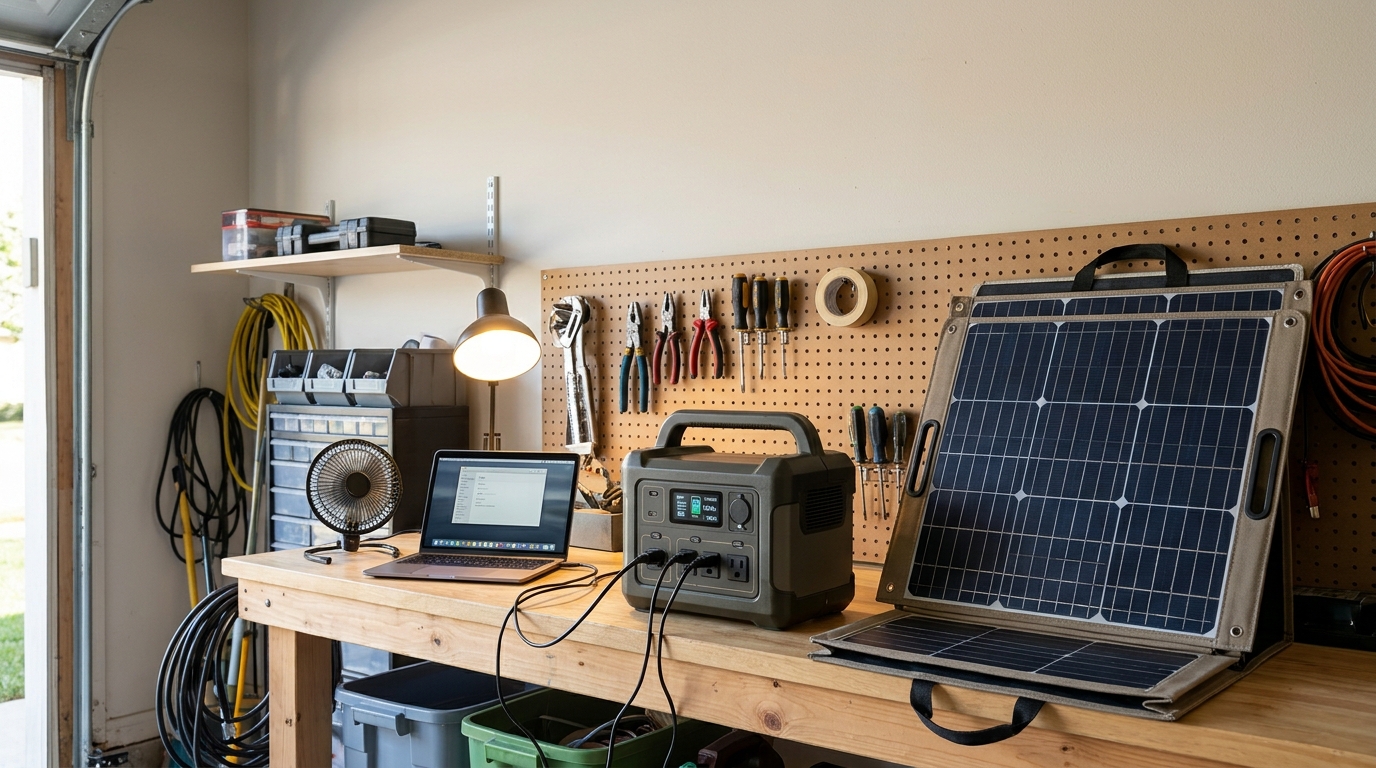
- Weekend campers and car travelers who value a 24-pound carry weight, flat-stacking handle, and straightforward display over maximum inverter wattage.
- Existing Jackery owners who already own compatible Jackery solar accessories (just confirm DC8020 connector compatibility).
Who Should Look Elsewhere
- Value-first price-per-Wh shoppers: Models like the DJI Power 1000 V2 and Bluetti AC180 frequently deliver lower cost per watt-hour or more usable capacity—compare all top tiers in our best portable power stations for home backup.
- Fast-recharge buyers: If you need the fastest possible wall turnaround between rolling blackouts, check our EcoFlow vs. Jackery vs. Bluetti recharge times comparison.
- Buyers who want room to expand later: Look at the Anker SOLIX C1000X (1,800W output, 600W solar input, expandable to 2,112Wh)—read our Anker SOLIX C1000X review for the full breakdown.
- Fridge-and-appliance households or tight budgets: Step up in capacity with our Jackery Explorer 1000 vs. 1500 comparison, or explore compact sub-$400 options in our best power stations under $500 guide.
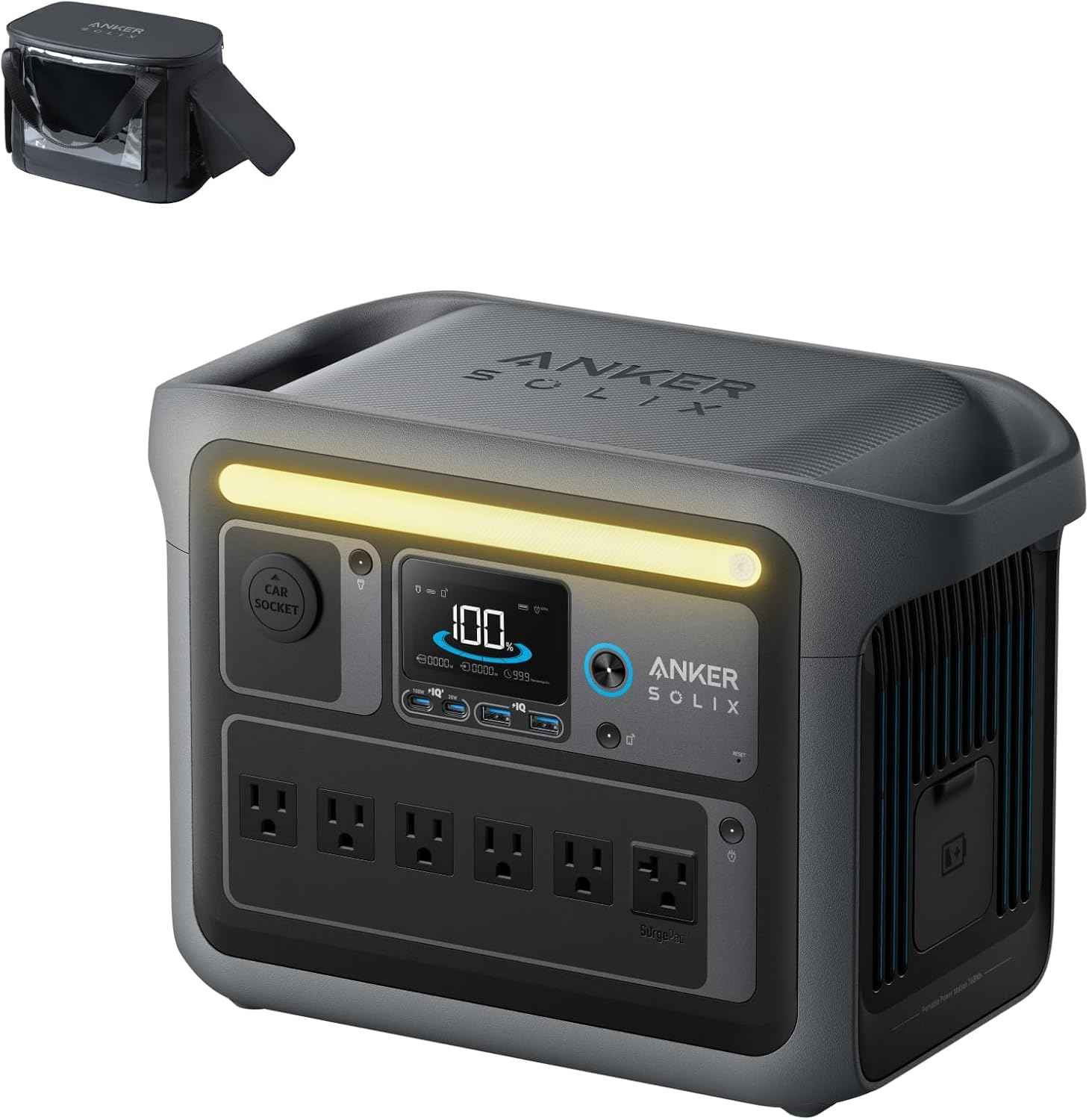
Anker SOLIX C1000 (1,056Wh)
Check Price on Amazon ↗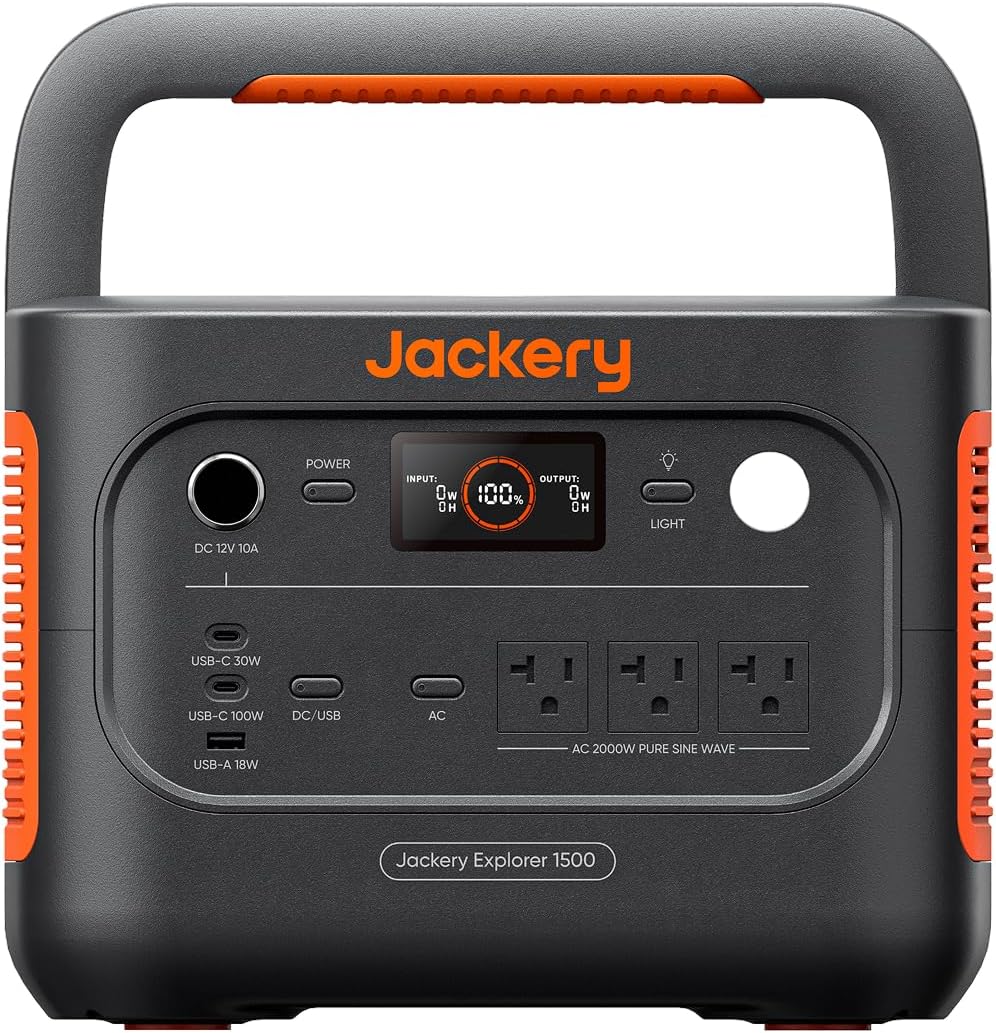
Jackery Explorer 1500 v2 (1,536Wh)
Check Price on Amazon ↗Before You Buy: 5-Point Verification Checklist
- Compute live price per watt-hour: Divide the final checkout price by the listed Wh (target $0.47/Wh or lower).
- Confirm capacity & outlet count: Check whether the listing is the 1,070Wh or updated 1,024Wh version, and confirm 3 US AC outlets (or 2 UK/EU sockets).
- Check seller authorization & warranty: Buy from Jackery's official store or an authorized retailer so the 3+2-year warranty applies.
- Verify solar connector compatibility: Confirm your panels use DC8020 (or include an adapter) and stay within the 400W / voltage ceiling.
- Plan safe indoor storage: Keep the unit dry, ventilated, and out of freezing garages—review our cold-weather charging limits guide before winter storage.
Frequently Asked Questions
Is the Jackery Explorer 1000 v2 worth it?
On sale around $450 to $499 (~$0.42–$0.47/Wh), yes—it is a strong buy if you prioritize lightweight portability, quiet operation, and simple controls. At its full $799 list price, competing 1,000Wh LiFePO4 stations offer far better value.
How long will the Jackery Explorer 1000 v2 run a CPAP?
Using 910Wh of usable energy, it runs a typical CPAP without a heated humidifier (40–55W) for roughly 16.5 to 22.8 hours. Turning on a heated humidifier (55–130W) cuts runtime to roughly 7 to 16.5 hours, though using a dedicated 12V/24V DC CPAP cable stretches runtime significantly.
Can the Jackery Explorer 1000 v2 run a full-size refrigerator?
Yes—its 1,500W continuous / 3,000W surge inverter handles most standard refrigerator startups, delivering roughly 11 to 22 hours of runtime depending on kitchen temperature and compressor draw (1 to 2 kWh/day).
Does the Jackery Explorer 1000 v2 use a LiFePO4 battery?
Yes. Unlike the older first-generation Explorer 1000 (which used NMC lithium-ion cells), the Explorer 1000 v2 uses LiFePO4 (LFP) cells rated for 4,000 cycles to 70%+ capacity.
Can you add an expansion battery to the Jackery Explorer 1000 v2?
No. The Explorer 1000 v2 is a fixed-capacity unit with no expansion port. If you want modular expansion from Jackery, look at the Explorer 1000 Plus series instead.
How fast does the Jackery Explorer 1000 v2 charge from a wall outlet?
Standard AC charging takes roughly 1.7 hours on the 1,070Wh version (or ~1.25 hours on the updated 1,024Wh revision). Enabling Emergency Super Charge in the Jackery app cuts a full recharge to roughly 1 hour.
Final Verdict
The Jackery Explorer 1000 v2 is an easy-to-live-with, genuinely portable 1,000Wh LiFePO4 power station that delivers roughly 910Wh of usable energy, whisper-quiet bedroom charging, and hassle-free daily operation. It is not the fastest-charging, highest-output, or cheapest-per-watt-hour station on the market, and its lack of battery expansion limits future growth. Catch it on sale near $0.47/Wh or less for a quiet CPAP, router, and laptop outage plan—or step over to the Anker SOLIX C1000X or Jackery Explorer 1500 v2 if faster solar charging, expandability, or heavy appliance headroom matter more.