Transparency note: the wattage figures below come from published HVAC guides, and the runtimes are our own arithmetic using the 85% usable-capacity assumption we apply across this site. We did not bench-test a central air conditioner on a power station.
One of our main sources is a manufacturer page whose numbers are inconsistent with each other, and we point that out where it matters.
Affiliate disclosure: if you buy through links on this page, Trendifacts may earn a commission at no extra cost to you. It does not change what we recommend, and this article largely tells you what a power station cannot do.
A power station can run a central air conditioner, but only for a short time, and only if the station is very large and connected through a transfer switch installed by a licensed electrician. A typical 3-ton central unit draws about 3,000 to 3,600 watts while running, and far more for a split second at startup.
Even a 4,096Wh station empties in roughly two hours at that rate. For most households, the honest answer is that a power station should cool a room, not a house.
This guide shows the numbers for 1.5-ton, 3-ton and 5-ton systems, how long a big battery really lasts against each, why startup surge is the real problem, what a soft-start kit does, and what to do instead.
It is the companion to our reviews of the EcoFlow DELTA Pro 3 and the Anker SOLIX F3800.
The Short Answer
- Whole-house central air: not realistic for more than one to three hours on the largest portable stations.
- A single window or portable AC: realistic for many hours. See our window AC blackout guide.
- Blower fan only (no cooling): realistic for a day or more, which can still move air through a house.
- Safety: never plug a power station or generator into a wall outlet to feed the house, and never wire one into your panel yourself.
How Much Power Does Central Air Use?
Central air conditioners are sized in tons. Jackery's HVAC wattage guide lists these approximate figures:
| System size | Running watts | Startup (surge) watts |
|---|---|---|
| 1.5-ton | 1,400-1,800W | 6,000-8,000W |
| 3-ton | 3,000-3,600W | 12,000-15,000W |
| 5-ton | 4,900-6,000W | 24,000W or more |
| Blower fan alone | roughly 300-500W | modest |
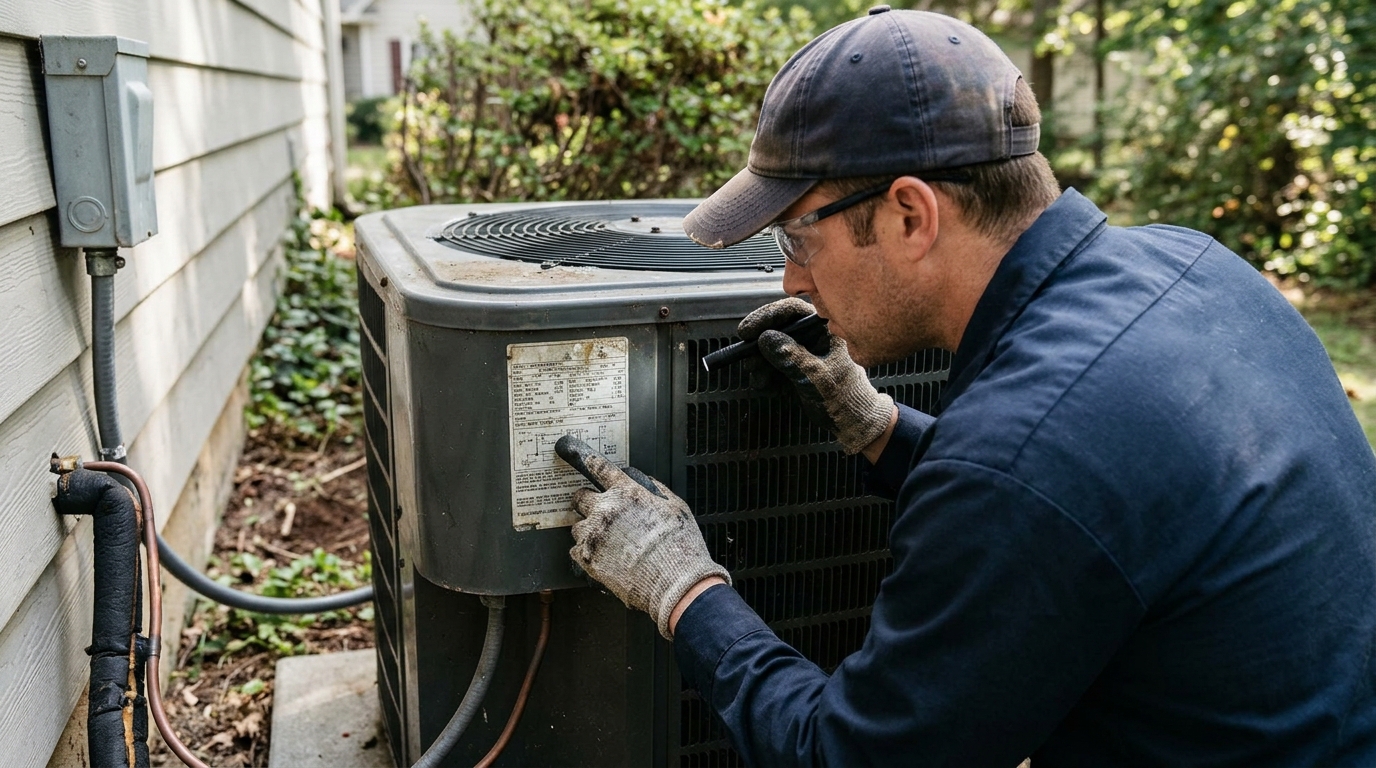
A caution about that source. Jackery's page gives 12,000 to 15,000W of startup for a 3-ton unit in its table, but 15,000 to 18,000W in its body text, and it pairs a 3-ton unit with a 3,600W station and a soft-start kit without reconciling the two. Treat the surge numbers as a rough range. The only reliable figure is the one on your own unit: check the nameplate on the outdoor condenser for the minimum circuit ampacity and the rated load amps, then multiply by voltage (typically 240V) for a running-watt estimate.
Generator-sizing guidance gives a cross-check. PickHVAC's generator minimums, which are written for generators rather than batteries, are about 6kW for a 1.5-ton unit, 8kW for 2 tons, 12kW for 3 tons and 18kW for 5 tons. Those are much higher than the running watts above because they include startup surge and a safety margin.
Why Startup Surge Is the Real Problem
The compressor in an air conditioner is a motor with a heavy load on it. When it starts, it can draw several times its running current for a fraction of a second. A power station's inverter has to supply that peak, or it shuts down on overload. This is the same effect that makes sump pumps and refrigerators harder than their running watts suggest, which we explain in our sump pump guide.
Our two largest reviewed stations illustrate the gap. The EcoFlow DELTA Pro 3 lists 4,000W continuous and up to 8,000W with X-Boost. The Anker SOLIX F3800 lists up to 6,000W. A 3-ton unit's running watts alone nearly fill the DELTA Pro 3's continuous rating, and its startup figure is well beyond both stations' surge ratings if the Jackery range is right. That is why a soft-start kit matters.
What a Soft-Start Kit Does
A soft-start device is installed on the compressor to ramp it up gradually, so it avoids the initial current spike. Jackery's page says a 5-ton system needs one, and it pairs a soft-start kit with its 3-ton example. Soft-start kits are sold by HVAC suppliers and installed by a technician.
They can sharply reduce startup draw, but the reduction varies by model, and we do not have a measured figure for your system. Ask an HVAC professional, and do not install one yourself.
How Long Will a Big Battery Run Central Air?
Here is the arithmetic. We use 85% of rated capacity as usable energy, and a compressor that cycles on and off, which we model at a 60% duty cycle. Your real duty cycle depends on temperature, insulation, sun and thermostat settings, so this is an assumption, not a measurement.
| Battery | Usable (85%) | 1.5-ton (1,400-1,800W) | 3-ton (3,000-3,600W) | 5-ton (4,900-6,000W) | Blower only (300-500W) |
|---|---|---|---|---|---|
| EcoFlow DELTA Pro 3 (4,096Wh) | about 3,480Wh | about 3.2-4.1 hours | about 1.6-1.9 hours | about 1.0-1.2 hours | about 7-11.6 hours |
| Anker SOLIX F3800 (3,840Wh) | about 3,260Wh | about 3.0-3.9 hours | about 1.5-1.8 hours | about 0.9-1.1 hours | about 6.5-10.9 hours |
The F3800 row scales the same formula by its smaller usable energy. In plain language: a 3-ton system on a very large battery gets you under two hours. Add a second battery and you double that, to about three to four hours, at a cost that rises quickly. Compare that to what you would pay for a window unit and a smaller battery, and the math tilts hard toward cooling less space.
What Happens When Duty Cycle Changes
The runtimes above assume the compressor runs about 60% of the time. On a mild day it might run 30%, and on a 100°F afternoon it might run nearly continuously. Because runtime scales inversely with duty cycle, a 3-ton unit running continuously at 3,300W drains a 3,480Wh usable battery in about 1.05 hours. If your area has extreme heat, plan on the short end.
Do You Need a Transfer Switch?
Yes, for central air. A central system is hardwired into your home's electrical panel, so there is no outlet to plug into. Feeding it from a power station requires a properly installed transfer switch or a manufacturer's home-integration panel, which isolates your house from the utility grid.
Guadalupe Valley Electric Cooperative's generator safety page explains why: backfeeding can electrocute utility workers who believe a line is dead, and it can damage your equipment. It advises never plugging a generator or backup source into a wall outlet or panel, and having a licensed electrician install a transfer switch. Check with your utility and your local code office before you begin. We do not give wiring instructions on this site.
Better Options Than Whole-House Cooling
If the goal is to survive a hot outage safely, there are cheaper approaches:
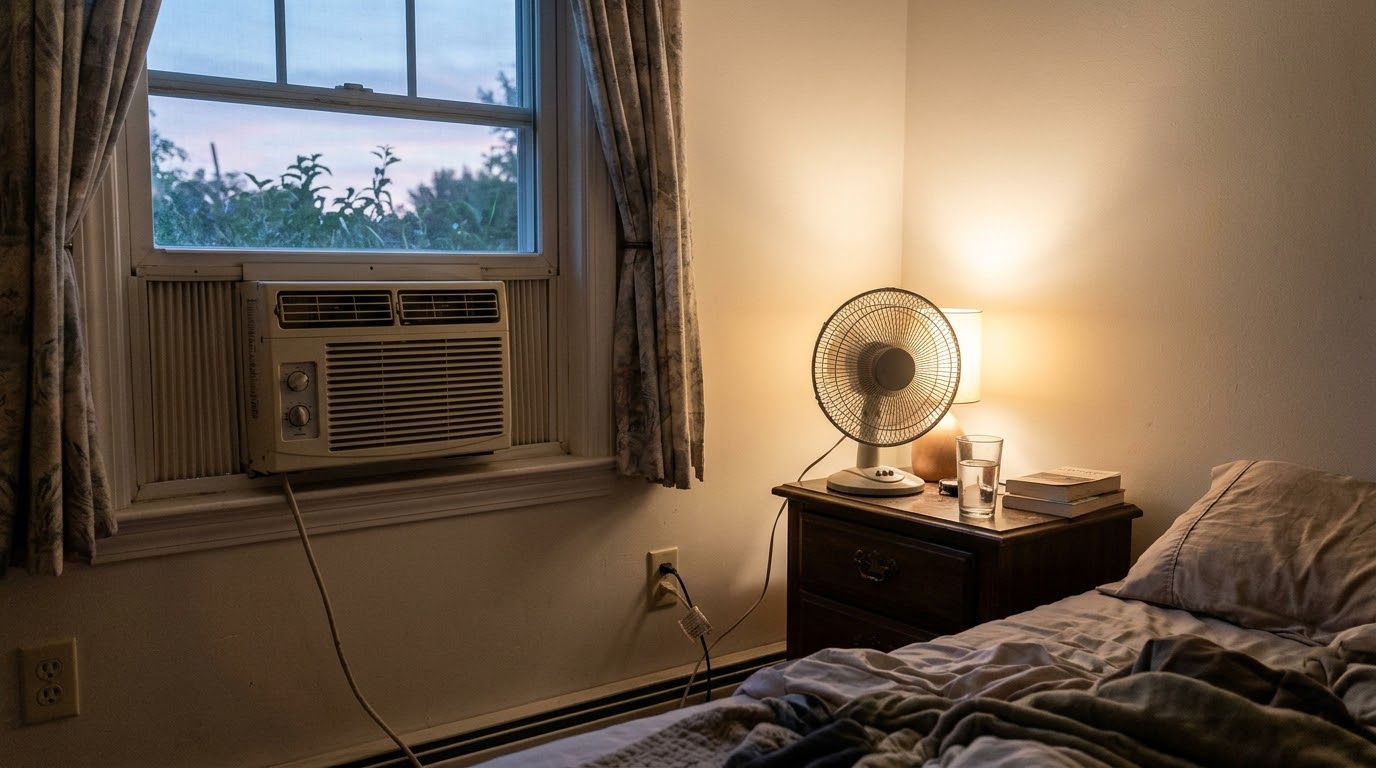
- Cool one room. A window air conditioner draws far less. A 5,000 BTU unit averages about 290W and an 8,000 BTU unit about 480W on our cycling assumption, which on a 3,480Wh usable battery gives roughly 12 and 7 hours. The details are in our window AC guide.
- Run fans. Fans use 20 to 100W. On the same battery, that is 35 to 174 hours.
- Run the blower only. Moving air through the house without cooling uses 300 to 500W.
- Shade and seal. Close blinds, cover west-facing windows, and open windows at night when it is cooler outside.
- Know your cooling sites. If heat becomes dangerous, community cooling centers are the safer plan than trying to power a house. Ready.gov's power outage page covers general preparation.
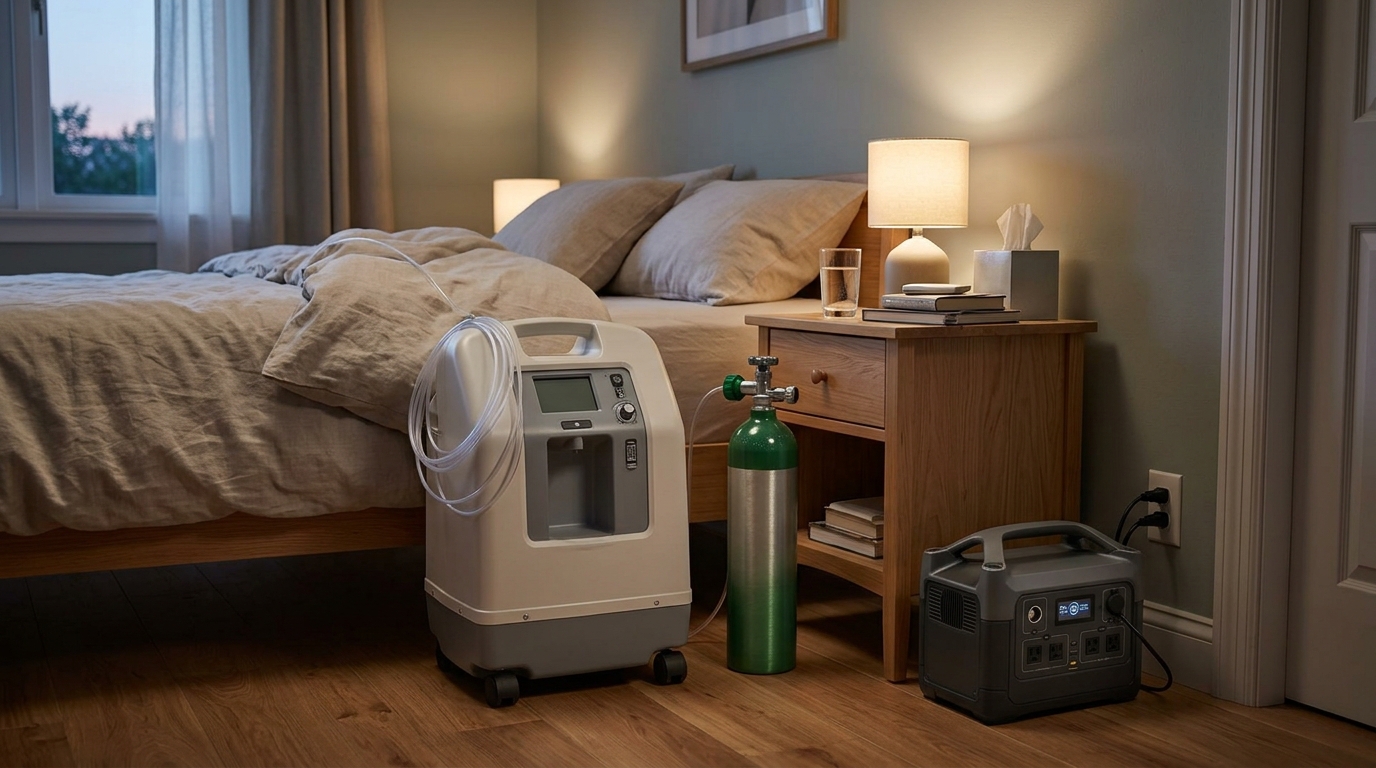
If you need to protect someone with a heat-sensitive medical condition, talk to their clinician about a plan, and do not rely on a power station as the only safeguard. Our oxygen concentrator backup article covers the medical-device side with the proper cautions.
Cost: Is It Worth It for Central Air?
If you only need central air for an occasional outage, buying a very large power station for that purpose is hard to justify. A battery that costs thousands of dollars buys under two hours of 3-ton cooling.
A fuel generator costs less per hour of runtime but has its own safety rules; we weigh both in our power station vs. generator guide. Many households get a better result from a mid-size station for essentials plus a window unit.
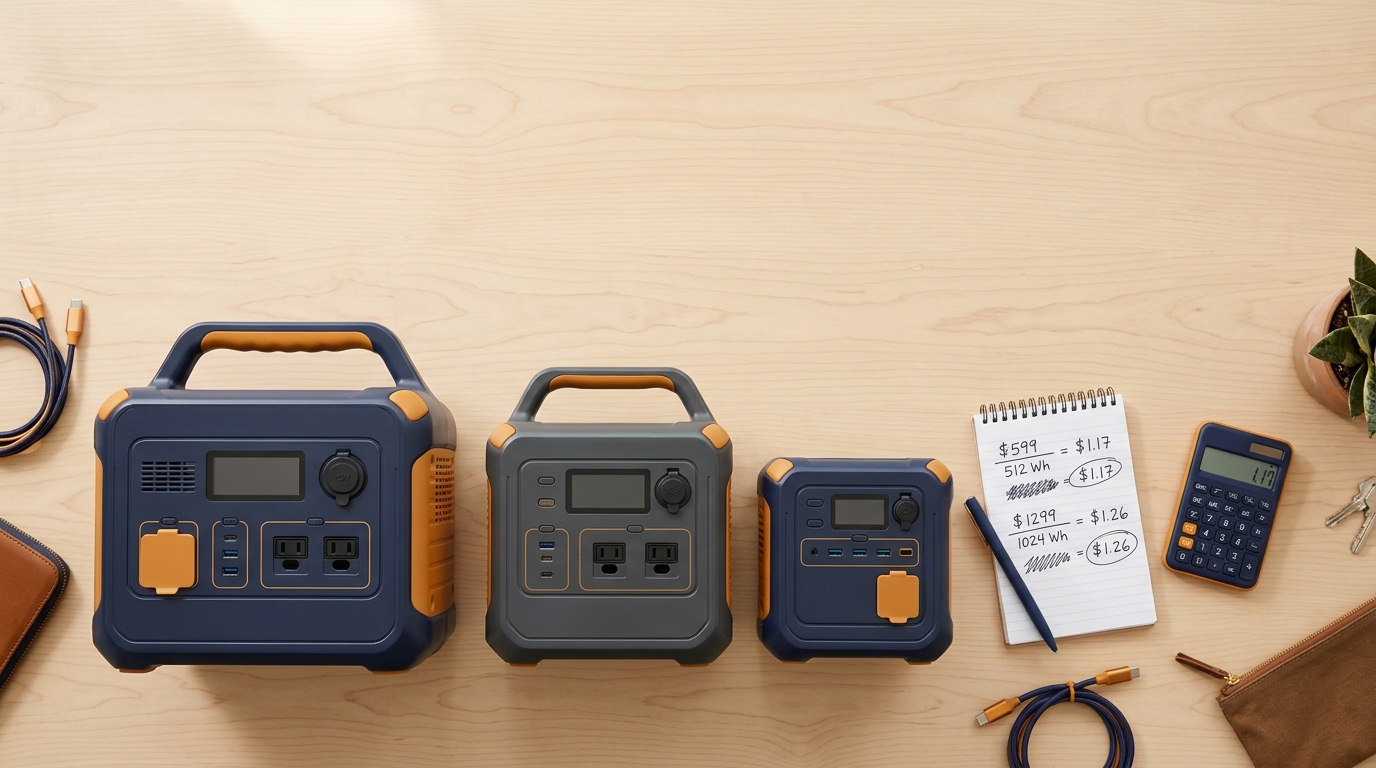
To compare, divide the price by usable watt-hours. For example, a $3,500 station with 3,480Wh usable costs about $1.01 per usable Wh, and the 3-ton unit uses about 3.3 Wh per second of operation. Run the numbers for your system before you spend.
Sizing If You Insist
If you do want central air on battery power, work through these steps with an electrician:
- Read the nameplate on your condenser for rated load amps and voltage.
- Estimate running watts by multiplying amps by voltage.
- Check surge capacity of the station and ask about a soft-start kit.
- Decide how many hours you want, and divide by the duty cycle you expect.
- Add everything else you plan to run. Our size chart and 4,000Wh appliance chart show how quickly other loads add up.
- Plan recharging. A big battery that runs out in two hours needs a long time to refill. See our solar panel sizing guide.
Common Mistakes
- Using the running watts and ignoring surge. The station may start the compressor once and trip on the next cycle.
- Assuming tons equal watts. Efficiency ratings and age change the draw. Read the nameplate.
- Plugging into a wall outlet. This is dangerous and never acceptable for a hardwired system.
- Running the air handler's electric heat strips. If your system has heating strips, they can draw several kilowatts. Do not let them kick in on battery power.
- Forgetting the indoor unit. The blower or air handler needs power too, not just the outdoor condenser.
FAQ
Can a 2,000Wh power station run central air?
Almost certainly not. A 1.5-ton unit would be at the edge of the inverter's output, and runtime would be about an hour or less.
Can the EcoFlow DELTA Pro 3 run a 3-ton central air conditioner?
Its 4,000W continuous rating is close to the running watts, and startup is the question. With a soft-start kit it may be possible, but runtime is under two hours. Read our full DELTA Pro 3 review.
What about a 240V air conditioner?
Many central systems run on 240V. Confirm that the power station's 240V output supports it, and that its split-phase configuration matches. The F3800 lists 240V output in the US, as covered in our F3800 review.
Will solar panels run central air?
A solar array large enough to run a 3-ton unit is a significant installation. See our guide to panels for a 4,000Wh station for realistic recharge numbers.
Is it cheaper to run central air on a generator?
Fuel generators can run central air for longer at a lower upfront cost, but they require safe placement, fuel and a transfer switch. Generators must run outdoors and at least 20 feet from windows, doors and vents, according to the CPSC.
The Bottom Line
A power station can run central air for a short time if it is very large, if its inverter can handle the startup surge, and if an electrician has installed the connection correctly.
For most households, the better answer is to cool one room, run fans, and save the big battery for the fridge, medical equipment and communications. If you are shopping, start with what you actually need to keep running, and use our guide to what a 4,000Wh power station can run to decide whether you need this much battery at all.
Wattage figures are estimates from published sources and vary by model, age and conditions. Check your own unit's nameplate and consult a licensed electrician and HVAC technician before connecting any backup source.