Transparency note: the sizing formulas and tables below are our own arithmetic using stated assumptions, not field measurements. Panel output figures come from an independent test cited below. Your results will differ with weather, panel angle, shade and temperature.
Affiliate disclosure: if you buy through links on this page, Trendifacts may earn a commission at no extra cost to you. It does not change our recommendations.
To fully recharge a 4,000Wh-class power station in one sunny day, you need roughly 1,200 to 1,600 watts of real solar panels in a sunny state, and more in cloudy or northern regions. With a more modest 400-watt array, expect about three to five days. The number depends on how many hours of strong sun your location gets, how much of the panel's rating you actually capture, and what the power station's solar input can accept.
This guide gives you the formula, a recharge table for five array sizes across four sunlight levels, panel voltage limits on the EcoFlow DELTA Pro 3, state-by-state sun hours, and the mistakes that waste money. It pairs with our reviews of the EcoFlow DELTA Pro 3 and the Anker SOLIX F3800.
The Short Answer
- One-day recharge in good sun: about 1,200 to 1,600W of panels.
- Two-day recharge: about 800W.
- Weekend-warrior setup: 400W, roughly 3 to 5 days.
- Bottleneck check: your station's maximum solar input, not just your panels, sets the speed.
The Formula
We use a simple model:
Daily solar energy (Wh) = panel watts x peak sun hours x 0.75
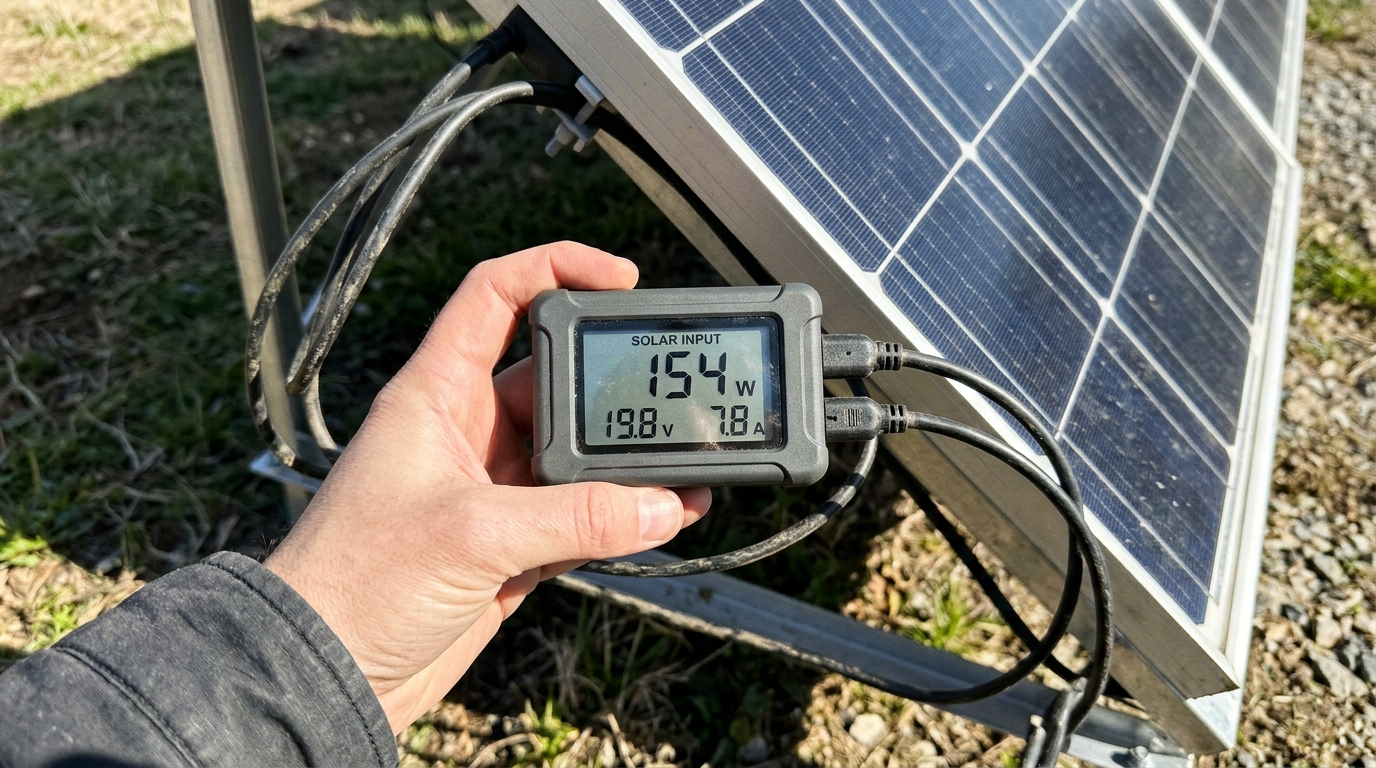
The 0.75 factor is an assumption that accounts for real-world losses from heat, cables, angle and charge controller efficiency. Independent testing shows why we do not use 1.0: OutdoorLife measured an Anker SOLIX 400W panel at about 330W in direct sun (about 83% of rating) and only about 77W under clouds. Our 0.75 sits below the sunny-day result to leave room for imperfect angles and conditions.
Energy needed to refill = battery Wh / 0.9
We assume about 90% charging efficiency, so refilling a 4,096Wh battery takes about 4,551Wh of solar energy.
What Are Peak Sun Hours?
A peak sun hour is one hour of sunlight at 1,000 watts per square meter. A day with six peak sun hours delivers the same energy as six hours at that standard intensity, even if the sun is weaker in the morning and evening. The NREL PVWatts calculator lets you look up solar resource data for your address, which is more accurate than a state average.
Approximate yearly averages by location, from Unbound Solar's published figures:
| Location | Peak sun hours per day |
|---|---|
| Arizona, New Mexico | about 6.5 |
| Nevada | about 6.4 |
| Texas, Florida | about 5.3 |
| US average | about 5.0 |
| Michigan, New York, Vermont | about 4.0 |
| Washington | about 3.8 |
| Alaska | about 3.0 |
Winter can run 25 to 50% below the yearly average, which matters because many outages happen during winter storms. Plan with your winter number, not your annual one.
Days to Refill a 4,096Wh Battery
This table applies the formula above. Values are days to refill from empty.
| Panel array | 3.0 sun hours | 4.0 sun hours | 5.0 sun hours | 6.5 sun hours |
|---|---|---|---|---|
| 400W | 5.1 days | 3.8 days | 3.0 days | 2.3 days |
| 800W | 2.5 days | 1.9 days | 1.5 days | 1.2 days |
| 1,200W | 1.7 days | 1.3 days | 1.0 days | 0.8 days |
| 1,600W | 1.3 days | 0.9 days | 0.8 days | 0.6 days |
| 2,400W | 0.8 days | 0.6 days | 0.5 days | 0.4 days |
Read it this way: in a state with five peak sun hours, a 1,200W array refills a 4,096Wh unit in about one day. In a northern winter at three hours, the same array takes about 1.7 days.
Matching Panels to the Power Station's Solar Input
More panels do not help if the station cannot accept the power. Two examples:
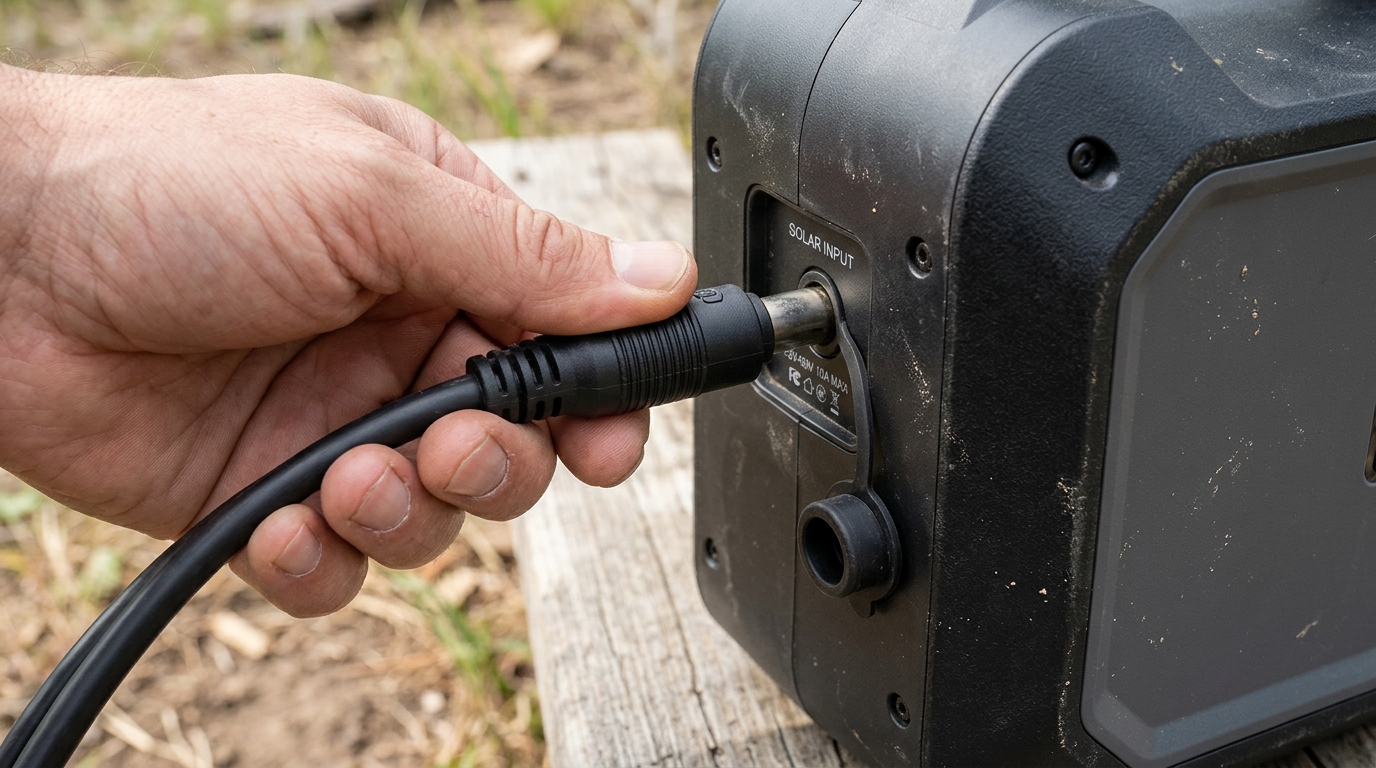
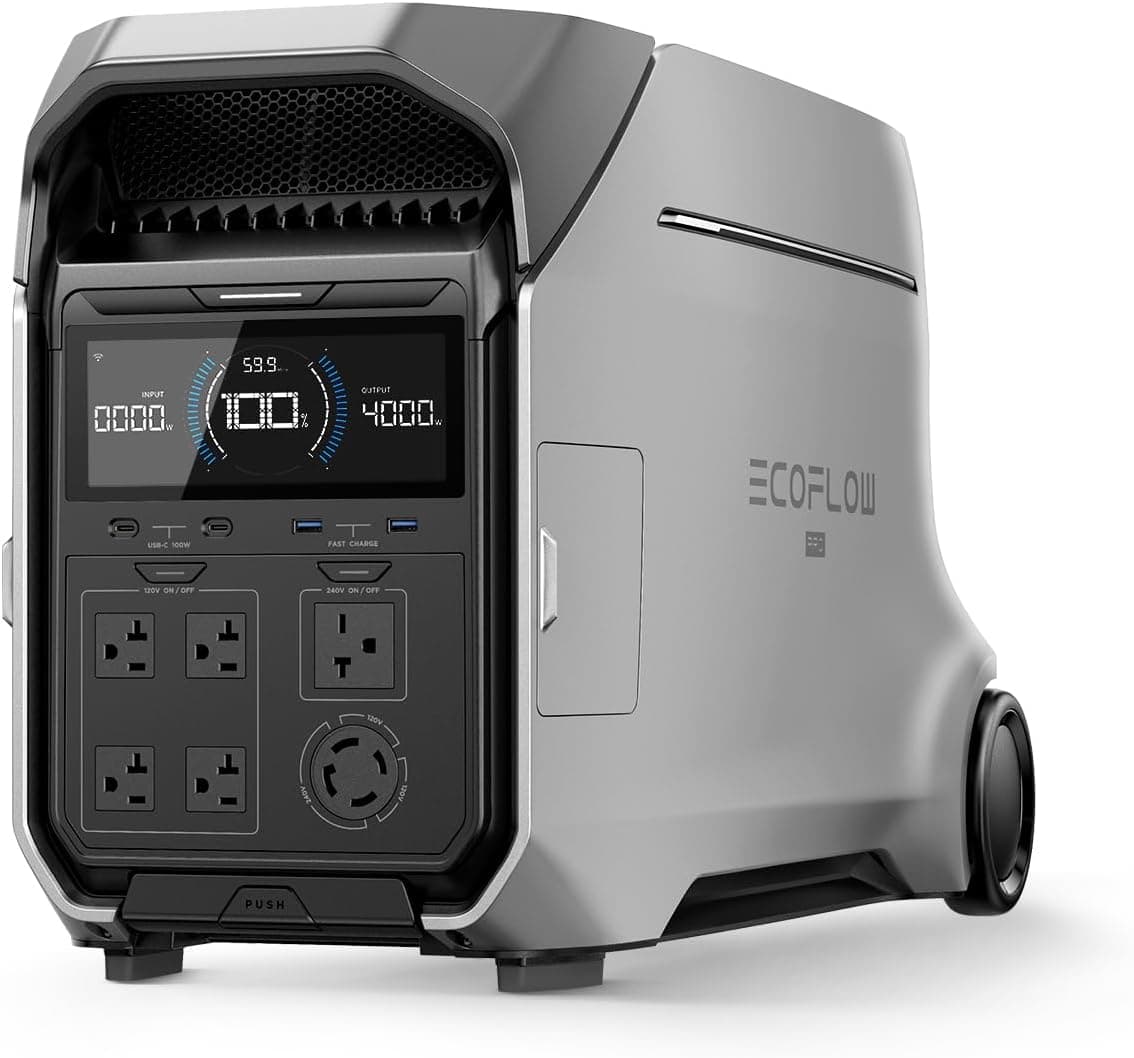
EcoFlow DELTA Pro 3. According to Cybershack's review, the unit has two solar inputs. The high-voltage input accepts 30 to 150V at up to 15A (up to 1,600W). The low-voltage input accepts 11 to 60V at up to 20A (up to 1,000W). Combined, that is up to 2,600W. A panel array has to sit inside those voltage and current windows. A series string that exceeds the voltage limit can damage the station, and cold weather raises panel voltage, so leave margin.
Anker SOLIX F3800. TechRadar's review lists about 2,400W for the standard unit and 3,200W for the Plus. Anker's panels use XT-60 connectors, which the OutdoorLife test noted, so check connector compatibility before you buy panels from another brand.
If your array's rated power exceeds the input limit, the station simply takes what it can. Overpaneling slightly can help in cloudy conditions, but there are diminishing returns.
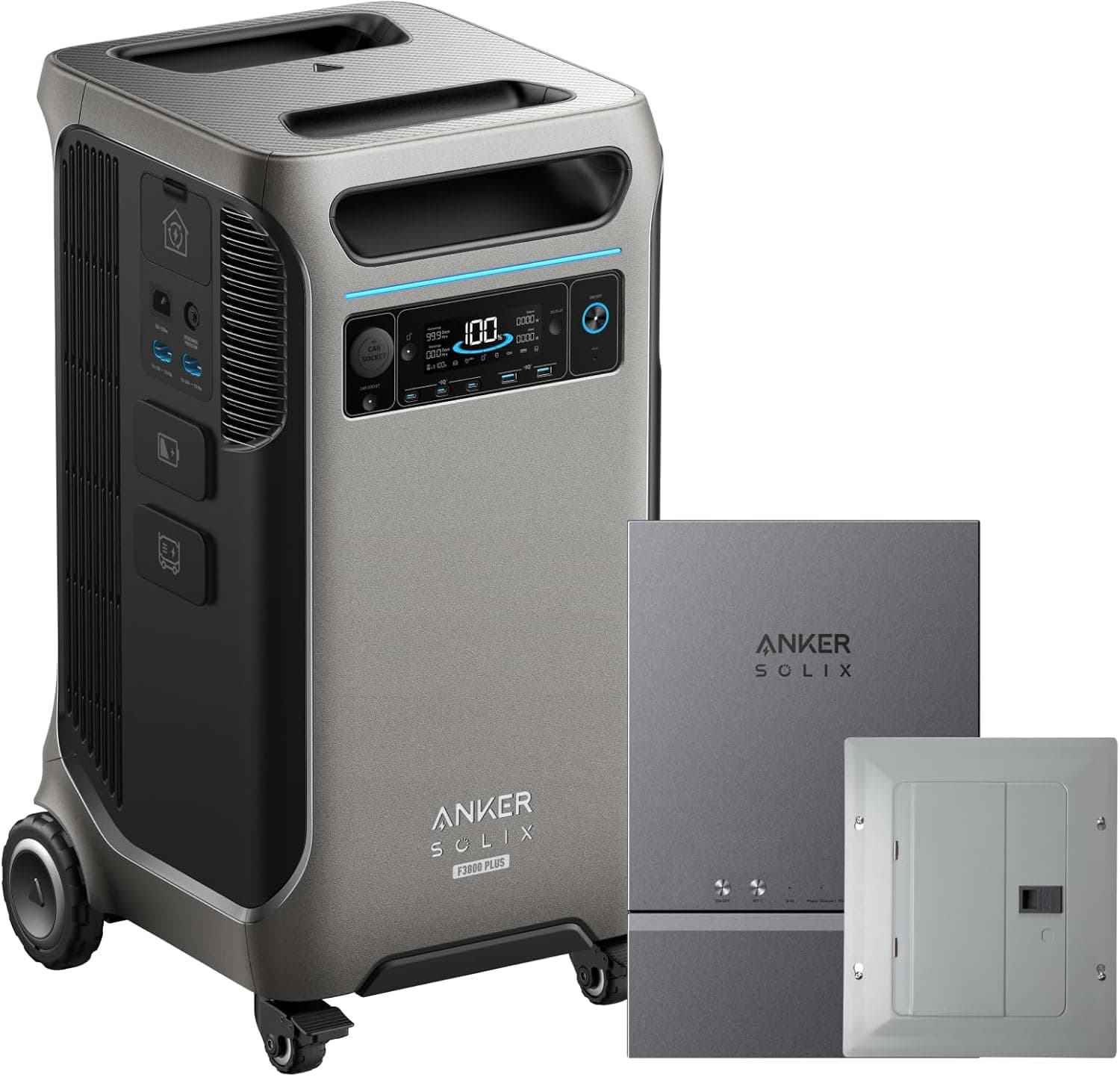
Anker SOLIX F3800 Plus Portable Power Station
Check Price on Amazon ↗Connectors and Compatibility: The Expensive Mistake
The most common solar buying error is buying panels that do not connect or do not match the voltage window. In the same OutdoorLife test, the Zendure 400W panel measured about 359W but is not compatible with standard power stations, and the BLUETTI PV200 uses MC4 connectors. Before you buy, verify:
- Connector type (MC4, XT-60, Anderson) and whether you need an adapter cable.
- Voltage window of the station's solar input.
- Current limit of the input.
- Series or parallel wiring and the resulting voltage and current.
- Open-circuit voltage in cold weather, which is higher than the rated voltage.
Our solar panel buying guide goes deeper on picks and measured output, and our recharge-time chart covers smaller stations.
How Much Space Do You Need?
A 400W portable panel is large, and it must be positioned toward the sun. A 1,200W array needs several panels and enough open ground, a roof or a clear yard. Apartment dwellers often cannot do this, which is why our balcony solar generator picks focus on smaller setups. Never leave panels unattended in high wind.
Series vs. Parallel: How Wiring Changes Voltage and Current
When you connect panels in series, voltages add and current stays the same. In parallel, current adds and voltage stays the same. This matters because your power station's solar input has both a voltage window and a current limit. Using the DELTA Pro 3's published windows from Cybershack as an illustration, the high-voltage input accepts 30 to 150V at up to 15A, and the low-voltage input accepts 11 to 60V at up to 20A.
Suppose a panel's datasheet lists an open-circuit voltage of 40V and a short-circuit current of 11A (an invented example for illustration, not a specific product). Two in series give 80V at 11A, which fits the high-voltage input. Two in parallel give 40V at 22A, which exceeds the 20A limit of the low-voltage input. The point is not the specific numbers but the habit: read the datasheet, do the series and parallel arithmetic, and compare against the station's limits before you buy a second panel. If the manual gives a different range for your model, the manual wins.
Angle, Direction and Shade
Panels produce the most when they face the sun squarely. In the northern hemisphere, that generally means facing south and tilting toward the sun, with a steeper tilt in winter. Reposition portable panels a few times a day if you can, and keep them clear of shadows from trees, railings and neighboring buildings. A partly shaded panel can lose far more than the shaded fraction would suggest, so a clear spot matters more than a perfect angle. Use the NREL tool above to compare how sun hours change with location and tilt.
Three Sample Builds
These are illustrative setups, not product recommendations, using our formula and a 3,480Wh usable battery.
| Build | Panels | Best case (6.5 sun hours) | Typical (5.0 sun hours) | Winter (3.0 sun hours) |
|---|---|---|---|---|
| Light | 400W | about 1,950Wh/day | about 1,500Wh/day | about 900Wh/day |
| Balanced | 800W | about 3,900Wh/day | about 3,000Wh/day | about 1,800Wh/day |
| Heavy | 1,600W | about 7,800Wh/day | about 6,000Wh/day | about 3,600Wh/day |
The light build offsets roughly half a day of essentials in good sun and not much in winter. The balanced build roughly matches an essentials day (about 2,820Wh) in typical sun. The heavy build fully recharges the battery in a day in most conditions and leaves surplus for extra loads, but it needs space and money. Pick the build that matches your outage plan, not the biggest number.
A Realistic Recharge Plan for an Outage
Take a household using the essentials: a fridge, router, CPAP, lights and a laptop, about 2,820Wh per day by our estimates in our 4,000Wh appliance chart. To keep a 4,096Wh station from running down, your panels must produce at least that much per day.
| Sun hours | Panel watts needed for 2,820Wh/day (at 0.75 factor) |
|---|---|
| 3.0 | about 1,250W |
| 4.0 | about 940W |
| 5.0 | about 750W |
| 6.5 | about 580W |
So in a sunny state, about 600 to 750W of panels roughly breaks even on a day of essentials. In a northern winter, you need about 1,250W and a clear forecast.
If the sky is overcast, output can drop to a fraction of that, as the cloud reading of 77W from a 400W panel suggests. That is why a battery that large and a solar plan have to be designed together.
Charging From Other Sources
Solar is not the only input. On the DELTA Pro 3, a US wall outlet provides 1,600W of AC input per the B&H listing, and EcoFlow lists total input up to 7,000W across sources. Once grid power returns, wall charging is far faster than solar. A car charging cable is slower. Do not run a vehicle in a closed garage. See the CPSC's carbon monoxide guidance.
Cold Weather and Heat
Solar panels are more efficient in cool weather but produce less in short winter days. The station itself has temperature limits. Do not charge a lithium battery below freezing, as we explain in our cold-weather charging guide. Anker lists 32°F to 104°F for recharging the F3800. In the heat, keep the unit shaded, and read our hot garage guide.
Cost Check: Is Solar Worth It?
Solar does not pay back through savings in a short outage, but it extends how long a battery can carry you. To evaluate, add up the panel cost and compare it to the cost of a second battery or a generator.
The OutdoorLife test priced the Anker 400W panel at about $900. At that price, a 1,200W array of three panels is about $2,700 before cables and stands. Compare to the cost of an expansion battery in our expandable power station analysis. For a short outage, extra battery wins. For a long one, solar wins.
Common Mistakes
- Counting on rated watts. Plan around 75% or less.
- Using annual sun hours for a winter outage.
- Ignoring shade. A shadow across part of a panel cuts output sharply.
- Buying panels that exceed the voltage window.
- Skipping a test. Set up the system on a sunny weekend, and see what it actually produces.
- Leaving the AC output on. The unit's idle draw (15 to 18W on the DELTA Pro 3, according to Cybershack) eats part of your solar gain.
FAQ
How many solar panels does it take to charge a 4,000Wh power station? About 1,200 to 1,600W of panels for a one-day charge in good sun, or 400W for roughly three to five days.
How long does a 400W panel take to charge a 4,096Wh battery? About 3 days at 5 peak sun hours and 3.8 days at 4, by our formula.
Can I charge while running appliances? Yes, if the station supports pass-through. Power that goes to your appliances is not going into the battery, so recharge takes longer.
Do I need a charge controller? Most power stations include one. Check the manual.
Can solar panels work on cloudy days? Yes, at a fraction of output. OutdoorLife's test saw about 77W from a 400W panel under clouds.
The Bottom Line
To recharge a 4,000Wh-class power station in a day, plan for about 1,200 to 1,600W of panels in a sunny state, and size for your winter sun hours, not your annual average. Match the array to the station's voltage and current limits, buy compatible connectors, and test before you need it. If your needs are smaller, our smaller-station guides have lighter solutions.
Figures are estimates based on stated assumptions and published sources, and actual results vary. Check your station's manual for solar input limits before connecting panels.