Most power outage checklists are written for homeowners — people with a garage for a generator, a yard for solar panels, and an electrical panel they’re allowed to modify. If you rent, several of the standard recommendations simply don’t apply to you, and a few of them are genuinely dangerous to try anyway. Here’s the checklist built around what actually works in an apartment.
What Renters Can’t Do (and Why)
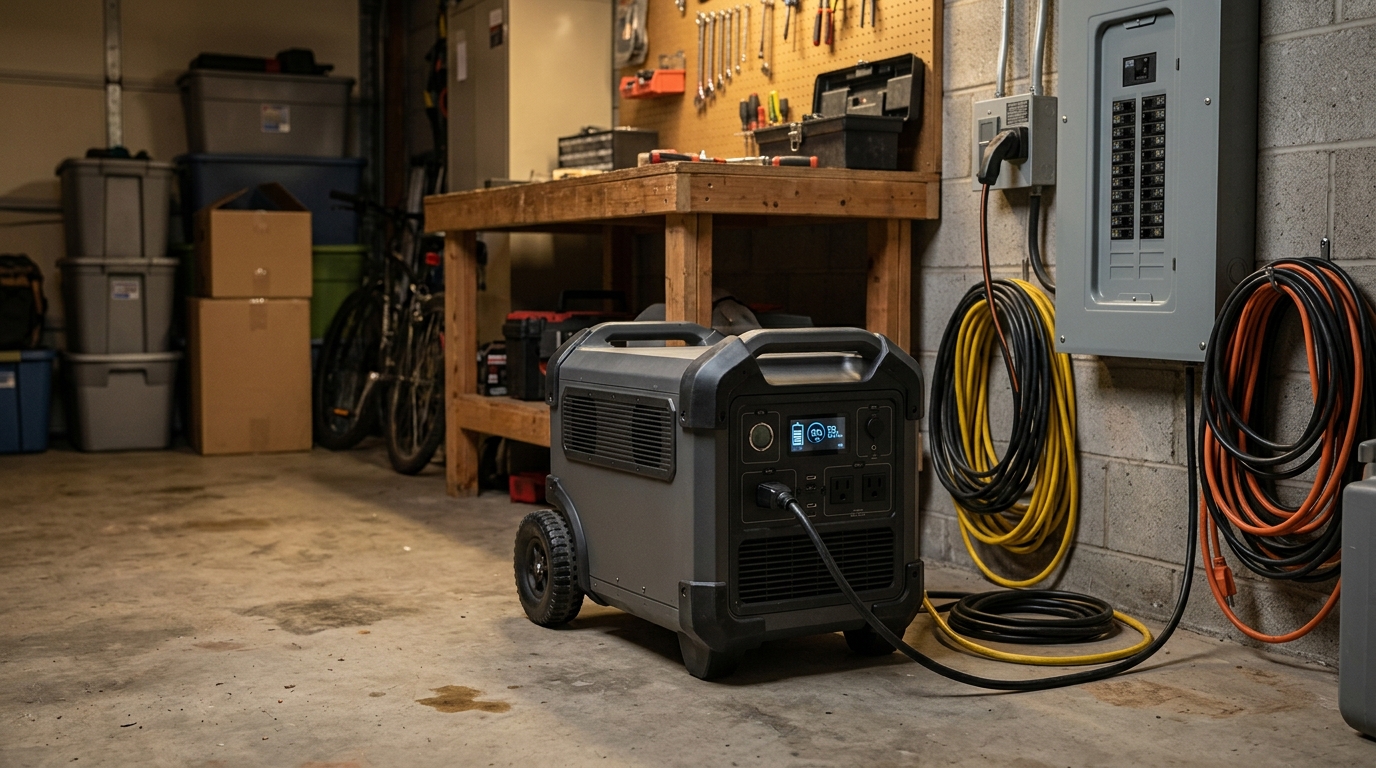
No gas, propane, or dual-fuel generators — including on the balcony. Generators produce carbon monoxide, and an apartment doesn’t have the ventilation to clear it safely. FEMA and Ready.gov both prohibit indoor generator use for exactly this reason, and that prohibition extends to balconies and other semi-enclosed spaces, not just fully indoor use. There’s also nowhere safe to store the fuel in most apartments.
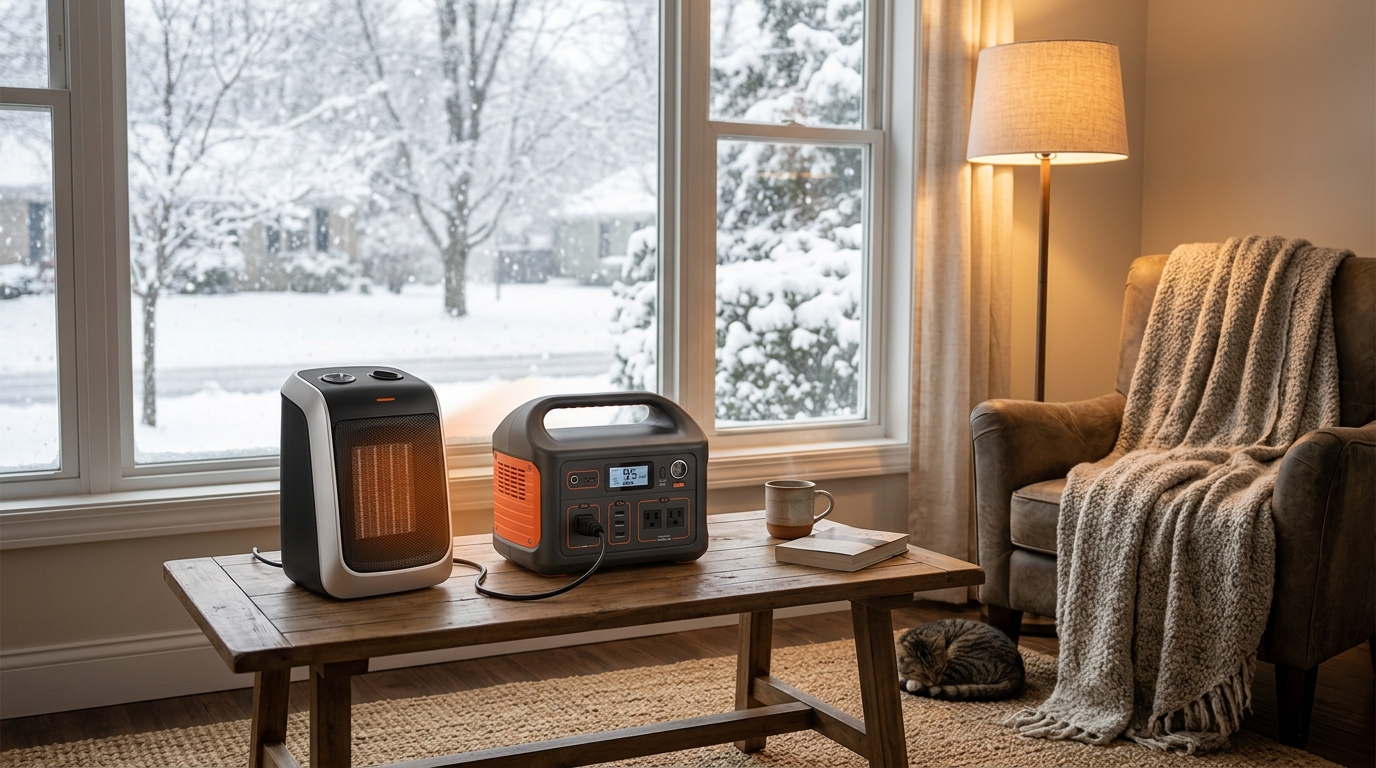
No permanent whole-home battery backup. Systems like a Tesla Powerwall require permanent installation through your electrical panel — not something you can do without landlord approval, and not something most leases allow at all. This is exactly why the portable power station approach we’ve covered throughout this series is the realistic option for renters, not a consolation prize.
Elevators stop working. Elevators run on building power, so if you’re above the ground floor, plan on stairs — both for evacuation and for carrying supplies up. If you or someone in your household has mobility limitations, this is worth planning around specifically rather than assuming it’ll sort itself out in the moment.
Shared infrastructure can fail too. Water pressure in many buildings depends on electric pumps, so don’t assume running water is guaranteed just because your own outlets are dead. Hallway lighting, intercoms, and parking garage doors may also lose power along with everything else.
The Renter-Friendly Backup Power Stack
Pulling together what we’ve covered across this series, here’s what a realistic renter setup looks like:
- A portable power station, sized using our sizing chart based on what you actually need to keep running
- A portable solar panel that plugs directly into the power station — not a grid-tied balcony solar kit, which won’t work during an outage anyway due to mandatory safety shutoffs
- No installation, no permits, no landlord approval needed for either — everything in this stack is portable and reversible, which is the whole point for a rental
The Checklist
- Flashlights and battery-powered lanterns, not candles. Candles are a real fire risk, especially in a smaller space.
- Unplug major electronics (TV, computer) to protect them from a power surge when electricity returns.
- Move refrigerated essentials early. The USDA sets 4 hours as the maximum safe hold time for a closed refrigerator at or above 40°F — after that, perishables like meat, dairy, eggs, and leftovers should be discarded unless you’ve moved them to active cooling. A full freezer holds safely for about 48 hours. This is exactly why we built out real power station math for a fridge earlier in this series — 4 hours goes by fast.
- Keep your phone and wifi charged, using the low-wattage router math we covered earlier — this is one of the cheapest, longest-lasting things a small power station can do.
- If anyone in your household depends on a CPAP or refrigerated medication, those go first in your power planning, not last — see our CPAP runtime and medication cold-storage guides.
- Check on neighbors, especially anyone elderly or with medical needs — apartment buildings put you in closer proximity to people who might need help than a standalone house does.
- Tune in a battery-powered or hand-crank radio for local updates if cell service is affected.
- Know your building’s stairwells, not just the elevator, before you need them in the dark.
How Long Should You Actually Prepare For?
Most outages are short — the average U.S. home experiences roughly 7 to 8 hours of outages per year in total, and many individual events resolve within a few hours. But FEMA’s general guidance is to be prepared for a minimum of 72 hours without power, with contingency planning for up to a week in severe weather-prone areas. That gap between “typical” and “worst case” is exactly why the recharge strategy we covered earlier matters — a single power station charge comfortably handles a typical short outage, but a genuine multi-day event needs a plan beyond one battery, whether that’s solar recharging or rationing which devices actually get power.
The Bottom Line
Being a renter doesn’t mean being under-prepared — it means being prepared differently. Skip anything that requires permanent installation or produces carbon monoxide, lean into the portable power stack that needs zero landlord approval, and build your plan around the actual numbers — a 4-hour fridge window, an 8-hour CPAP night, a router that’ll outlast almost everything else on this list. The building may impose real constraints, but none of them are a reason to be less ready than a homeowner down the street.