Transparency note: every runtime below is our own arithmetic, using the 85% usable-capacity assumption we apply across this site, not a bench test. Appliance wattages are typical ranges, so use a plug-in watt meter on your own equipment for exact numbers.
Affiliate disclosure: if you buy through links on this page, Trendifacts may earn a commission at no extra cost to you. It does not change our recommendations.
A 4,000Wh-class power station, like the 4,096Wh EcoFlow DELTA Pro 3 or the 3,840Wh Anker SOLIX F3800, has about 3,260 to 3,480Wh of usable AC energy.
That is enough to run a router for about eight days, a CPAP for a day or two, and a full-size refrigerator for about two days. It is not enough to run central air or an electric heater for more than a few hours.
This chart shows runtime for 16 common household loads, an essentials-day budget, and which loads fit within a 4,000W output limit. If you are still deciding on size, start with our power station size chart, and for smaller units use our 1,000Wh appliance chart.
The Short Answer
- Runs for days: router and modem, phone charging, lights, laptop, CPAP, small TV.
- Runs for about a day or two: a full-size fridge, a mini fridge, a fan.
- Runs for hours only: coffee maker, microwave, kettle, space heater, window AC, well pump, sump pump.
- Does not fit: central air for any meaningful time. See our central air guide.
How We Calculated This
Runtime equals usable watt-hours divided by watts. We use 4,096Wh x 0.85 = about 3,480Wh usable for the DELTA Pro 3, and 3,840Wh x 0.85 = about 3,260Wh for the F3800.
The 85% accounts for inverter losses and is a conservative planning figure. Cybershack found closer to 3,800 to 3,900Wh usable in its test of the DELTA Pro 3, so your result may be better. The table below uses the 3,480Wh figure.
The Runtime Chart (3,480Wh Usable)
| Appliance | Typical watts | Estimated runtime |
|---|---|---|
| Phone charger | 10-20W | 174-348 hours |
| LED lights | 5-15W | 232-696 hours |
| Wifi router + modem | about 18W | about 193 hours |
| Laptop | 60-100W | 35-58 hours |
| Small TV | 30-50W | 70-116 hours |
| Fan | 20-100W | 35-174 hours |
| CPAP | 40-130W | 27-87 hours |
| Mini fridge | 70-150W | 23-50 hours |
| Coffee maker | 600-900W | 3.9-5.8 hours |
| Microwave | 1,000-1,500W | 2.3-3.5 hours |
| Electric kettle | 1,200-1,800W | 1.9-2.9 hours |
| Space heater | 750-1,500W | 2.3-4.6 hours |
| 5,000 BTU window AC (about 290W average) | about 290W | about 12 hours |
| 8,000 BTU window AC (about 480W average) | about 480W | about 7.3 hours |
| 3/4 HP well pump | 1,000-1,500W | 2.3-3.5 hours |
| 1/2 HP sump pump | 800-1,000W | 3.5-4.4 hours |
Notes on the table. Ranges reflect different models and settings, so the long end of each runtime belongs to the low-watt end. CPAP numbers assume a range from no humidifier to a heated humidifier; see our CPAP runtime guide and the best power stations for CPAP.
The window AC averages use a cycling duty cycle of about 65%, as we explain in the window AC article. Pump runtimes are continuous-run figures; pumps cycle in practice, and the well pump figures come from a weak source, so check your pump's nameplate.
The Refrigerator Question
A full-size refrigerator uses about 1 to 2 kWh per day. On 3,480Wh usable, that is roughly 1.7 to 3.5 days if nothing else is running, with 1.5 kWh per day giving about 2.3 days. The compressor's startup surge is two to five times its running watts, which a 4,000W inverter handles easily.
Our fridge runtime article walks through it. A chest freezer is more efficient: BLUETTI lists about 0.59 kWh per day for a chest model and 1.08 kWh per day for an upright, which means a chest freezer can run about five days on this battery.
Food safety matters too. A closed refrigerator keeps food safe for about four hours without power, and a full freezer for about 48 hours, per the CDC and FoodSafety.gov guidance we summarize in our food safety article (general preparedness advice is at Ready.gov), though a half-full freezer holds only about 24 hours.
See our food safety guide. Do not run the battery to zero just for the fridge if medicine or communications need power.
An Essentials Day
Most outage planning is about essentials, not everything. Here is a typical budget:
| Load | Daily energy |
|---|---|
| Full-size fridge | 1,500Wh |
| Router + modem (24 hours at 18W) | 432Wh |
| CPAP (8 hours at 60W) | 480Wh |
| LED lights | 50Wh |
| Laptop (about 6 hours at 60W) | 360Wh |
| Total | about 2,822Wh |
On 3,480Wh usable, that is about 1.23 days without solar. With a modest 800W solar array in decent sun, the unit recharges most of that each day, which is why we pair large batteries with panels in our solar sizing guide.
Output Limits: What Fits Within 4,000W
Energy (Wh) is how long the battery lasts. Power (W) is how much it can deliver at once. The DELTA Pro 3 lists 4,000W continuous and up to 8,000W with X-Boost; the F3800 lists up to 6,000W. Loads add up:
- Fridge (150W) + router (18W) + lights (15W) + laptop (60W) + CPAP (60W) = about 300W. Easy.
- Add a microwave (1,200W) and a coffee maker (800W) and you reach about 2,300W. Still fine.
- Add a space heater (1,500W) and you are at 3,800W, near the limit, and the battery would last under an hour on the heavy loads.
The limit that usually bites first is energy, not output. High-draw appliances drain the battery in hours. Use them briefly, and then switch them off.
See our sump pump guide for how surge interacts with output.
A Priority Plan: What to Power First
When energy is limited, decide in advance what gets power and what does not. A simple three-tier plan:
Tier 1, must stay on. Medical equipment, refrigerated medication, the router and modem if you need communications, phone charging, and a few lights. Together these draw well under 200W on average.
Tier 2, run on a schedule. The refrigerator and freezer (they cycle anyway), a laptop, a fan. These make up most of the daily energy in an essentials day.
Tier 3, short bursts only. Microwave, kettle, coffee maker and any space heater. Run them for minutes, not hours, and only when the battery has a margin or solar is producing. A 1,500W kettle running for 10 minutes uses about 250Wh, roughly 7% of a 3,480Wh battery.
The numbers make the case: ten minutes of kettle equals about four hours of router and modem. Many households find that heating water on a camping stove outdoors is the better use of their energy, with the usual caution to never use combustion appliances indoors.
Scenarios: Three Outage Lengths
Using the essentials-day budget of about 2,820Wh and 3,480Wh usable energy:
| Outage | What you do | Result |
|---|---|---|
| 8 hours (overnight) | Fridge, router, CPAP, lights | About 1,000Wh used, roughly 70% left |
| 2 days, no solar | Essentials, trimming laptop use | Battery runs out around the end of day 2 if you stay near the budget |
| 3 days with 800W of solar in decent sun | Essentials, one Tier 3 burst per day | Solar covers most of each day's use, so the battery stays above half |
The overnight figure is our arithmetic: fridge about 500Wh, router 144Wh, CPAP 480Wh and lights about 20Wh over eight hours, totaling roughly 1,150Wh.
The point is that a battery this size usually covers a one-night outage with room to spare, which is why the main question for longer outages is recharging. The solar guide gives the numbers.
Phantom Loads and Small Drains
Small constant draws add up. A power strip with several chargers, a smart speaker, a game console in standby and a television in standby can add 20 to 50W together, which is 480 to 1,200Wh a day.
Unplug what you do not need. Likewise, remember the inverter's own idle draw, which Cybershack measured at 15 to 18W on the DELTA Pro 3.
Switching the AC output off when you are not using it, and using USB and DC outputs for phones and small devices, is the easiest way to stretch your battery.
Heating and Cooling
Electric heating and cooling are the hardest loads for a battery:
- Space heaters draw 750 to 1,500W, so on 3,480Wh you get 2.3 to 4.6 hours. They are not a plan for a winter outage. For winter strategy, read our winter storm prep guide.
- Window AC is manageable: about 12 hours for a small unit.
- Central air is not practical, as we show in the central AC guide.
Medical Devices
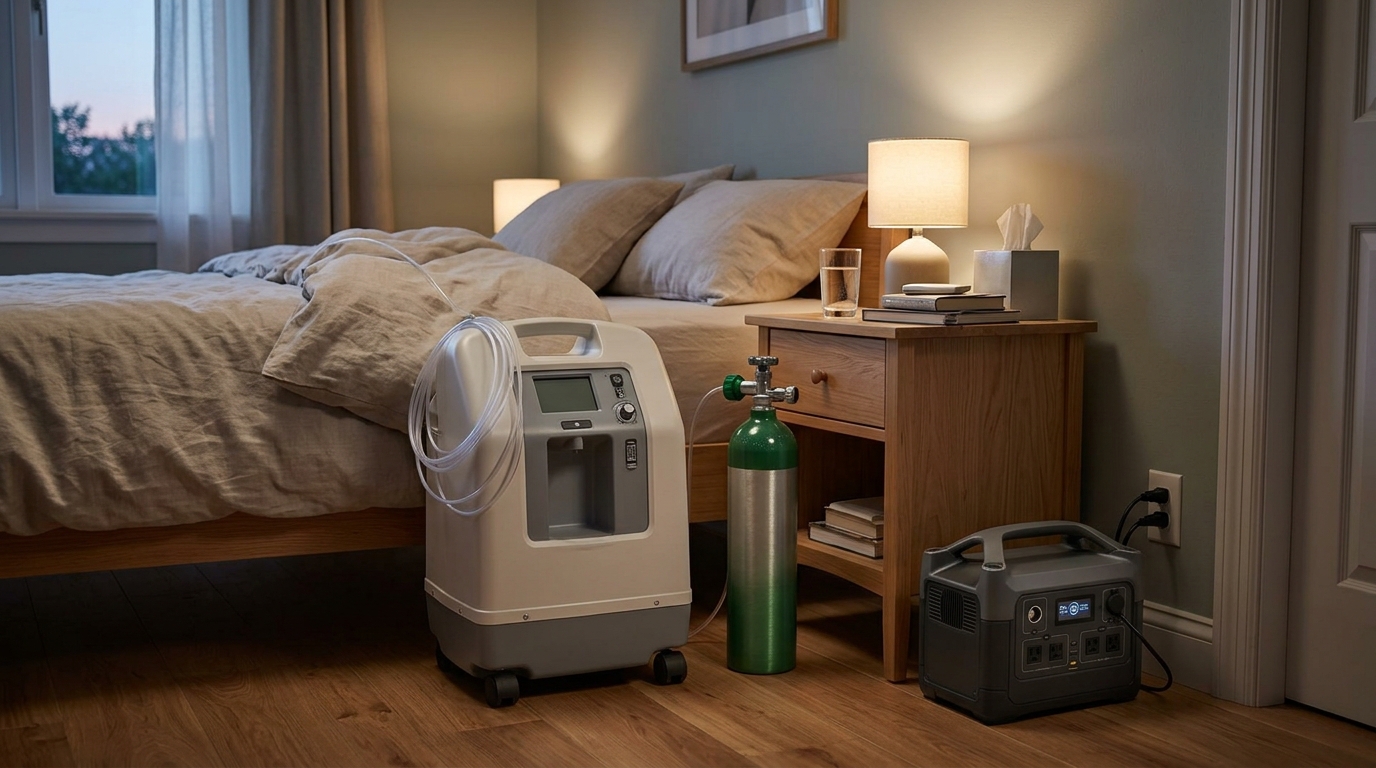
For CPAP machines, the draw is modest and a 4,000Wh unit can run one for days. For oxygen concentrators, the draw is higher (about 280 to 350W for a 5-liter model, per our concentrator article), and the stakes are higher.
Always keep your supplier's backup oxygen cylinders as the primary backup, and talk to your doctor or equipment supplier before relying on a power station. Our guide on keeping medication cold covers refrigerated medicine.

Working From Home
A laptop, monitor, router and modem together draw roughly 100 to 150W, which on this battery runs for 23 to 35 hours. For specifics, see our home office blackout guide.
Idle Draw and Standby Loss
Large inverters draw power even when nothing is plugged in. Cybershack measured 15 to 18W for the DELTA Pro 3. Over a day, that is 360 to 430Wh, about 10% of the battery.
Turn off the AC output when you do not need it. Power stations also lose charge slowly in storage; Anker cites about 3% per month in its guidance, so top up periodically. See our annual cost guide.
How to Measure Your Own Loads
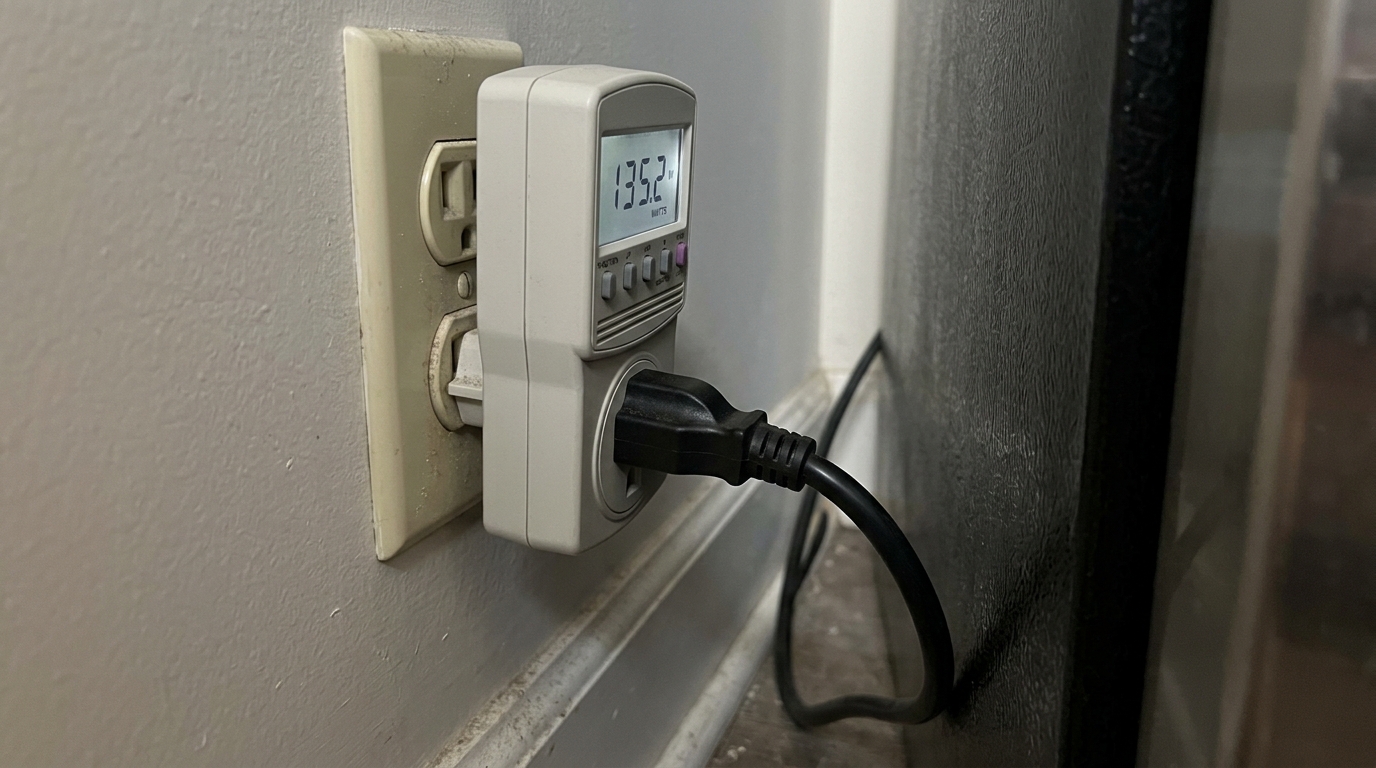
- Buy a plug-in watt meter (about $20).
- Plug the appliance into the meter and run it through a normal cycle.
- Record watts, and for cycling appliances, record energy (Wh) over 24 hours.
- Replace our typical numbers with your own.
The U.S. Department of Energy explains how to estimate appliance energy use if you prefer to calculate from nameplate ratings.
Which Size Do You Need?
If your list is mostly in the first half of the chart, you may not need 4,000Wh. A 1,000Wh unit handles a CPAP, router and laptop for a night or two, and costs far less.
See our under-$500 picks and the Anker SOLIX C1000X review. If you want more than a day of fridge, freezer and essentials, 4,000Wh is a sensible size, and the EcoFlow DELTA Pro 3 and Anker SOLIX F3800 are the two units we compare. Compare against a generator in our power station vs. generator article.
FAQ
Can a 4,000Wh power station run a refrigerator for a week?
Not on one charge. About 2.3 days at 1.5 kWh per day. With solar, it can last longer.
Can it run a whole house?
Only selected circuits through an electrician-installed panel, and heavy loads drain it fast.
How long does a 4,000Wh power station last with a CPAP?
About 27 to 87 hours, depending on settings.
Can it run a space heater?
Yes, for a few hours. It is not a sustainable winter plan.
Can it run a well pump?
A 3/4 HP pump draws 1,000 to 1,500W running and more at startup. Check the nameplate; many deep-well pumps are 240V.
Does it work as a UPS?
Yes, with a fast switchover. The DELTA Pro 3 lists 10 milliseconds or less.
The Bottom Line
A 4,000Wh power station covers a day or two of essentials and several days of low-power loads, and it handles heavy appliances for short bursts.
It is not a whole-house system. Decide what must stay on, add up the watt-hours, and plan how you will recharge. Use your own meter readings to replace our estimates.
Appliance wattages are typical ranges. Confirm your own equipment's draw and your power station's specifications before relying on any figure here.